Ford Ranger Sunliner Camper – FMJ Graphene Coating Before a Long Road Trip
Deborah brought in her Ford Ranger Sunliner camper before heading off on a trip to Melbourne.
A camper like this is not the same as coating a normal car. You have the Ranger cabin, the camper box, the roof, the solar panel, and different surfaces that all need to be treated properly instead of pretending one process suits everything.
The cabin was polished first, as per normal coating preparation.
That polishing stage matters because it permanently refines the clear coat surface. That is where a lot of the clarity, sharper reflections and cleaner shine starts.
But polished paint is still exposed paint.
Without some form of protection, the environment slowly starts wearing away at that surface again — UV, washing, road grime, bird droppings, tree sap, heat and weather. Like everything in this world, exposed surfaces slowly erode over time.
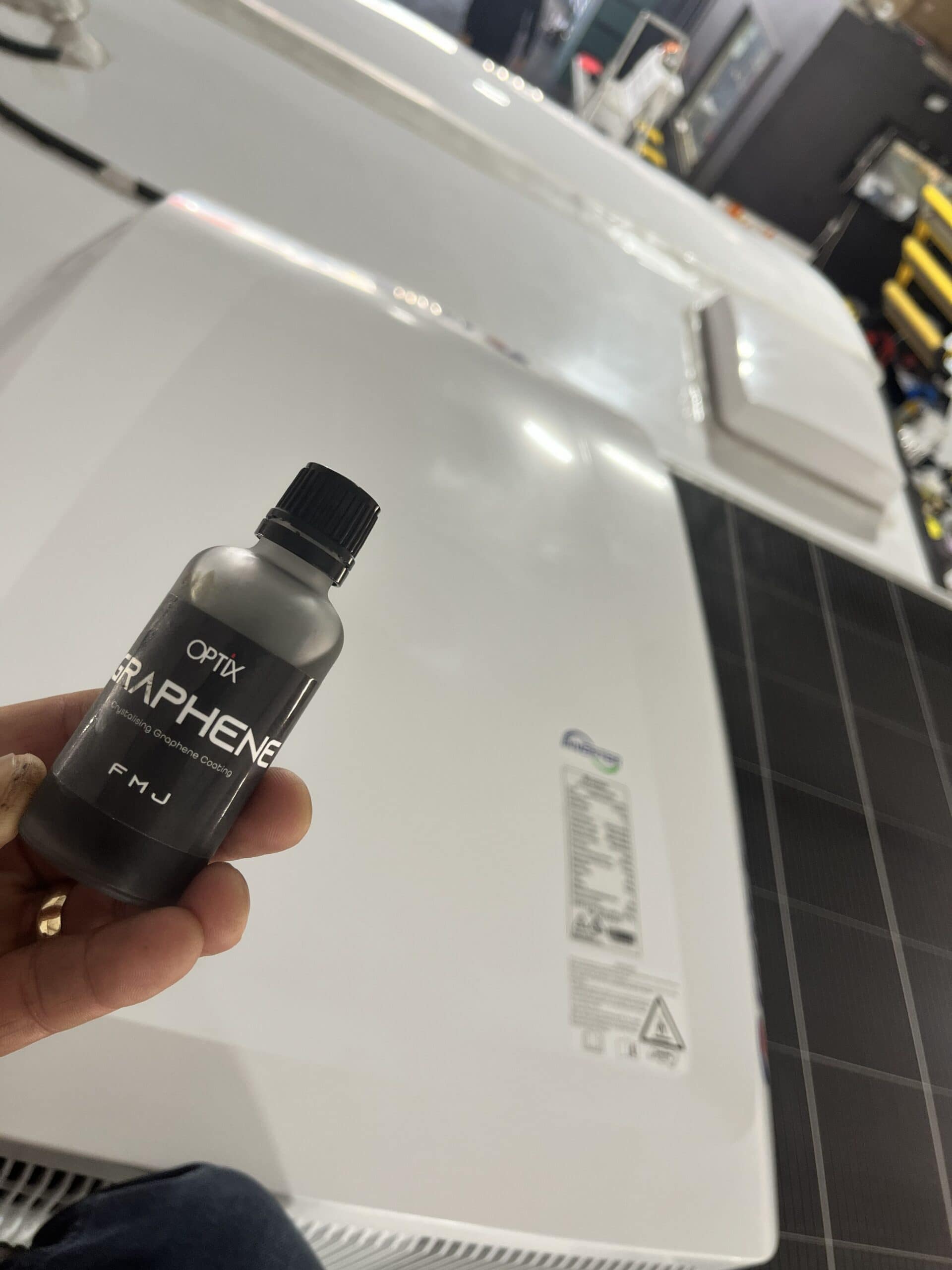
That is where OPTiX FMJ Graphene coating comes in.
FMJ adds a tough bonded layer over the prepared surface. It helps protect the finish underneath, but it also adds more shine, gloss, slickness, reflections and depth because you are adding a glass-like coating finish over the paint.
The camper box was approached differently. Rather than polishing it like normal automotive paint, it was properly cleaned with isopropyl alcohol before coating.
The cab, camper box, roof and solar panel were coated using OPTiX FMJ Graphene, with two layers applied to the camper box.
Why coat a camper roof and solar panel?
Because on a Perth to Melbourne trip, those areas cop everything.
Bugs, rain, heat, dust, bird droppings, tree sap and road grime all build up quickly.
Coating does not make it maintenance-free. Nothing does.
The real point is to make the surfaces easier to clean, help reduce how hard contamination sticks, and give the vehicle a better chance of staying in good condition over time.
For vehicles that actually get used, that matters more than showroom talk.





2 responses to “Ford Ranger Sunliner Camper FMJ Coating Before a Melbourne Trip”
Interesting read on protecting diverse surfaces on a rugged trip. It reminds me how crucial prep and durable finishes are for long tours—nothing worse than constant upkeep.
Thanks for finding value in our content, the minimal preparation preparation is required for paint, The minimal preparation is different on other materials like metals, composite, gelcoat and anodised