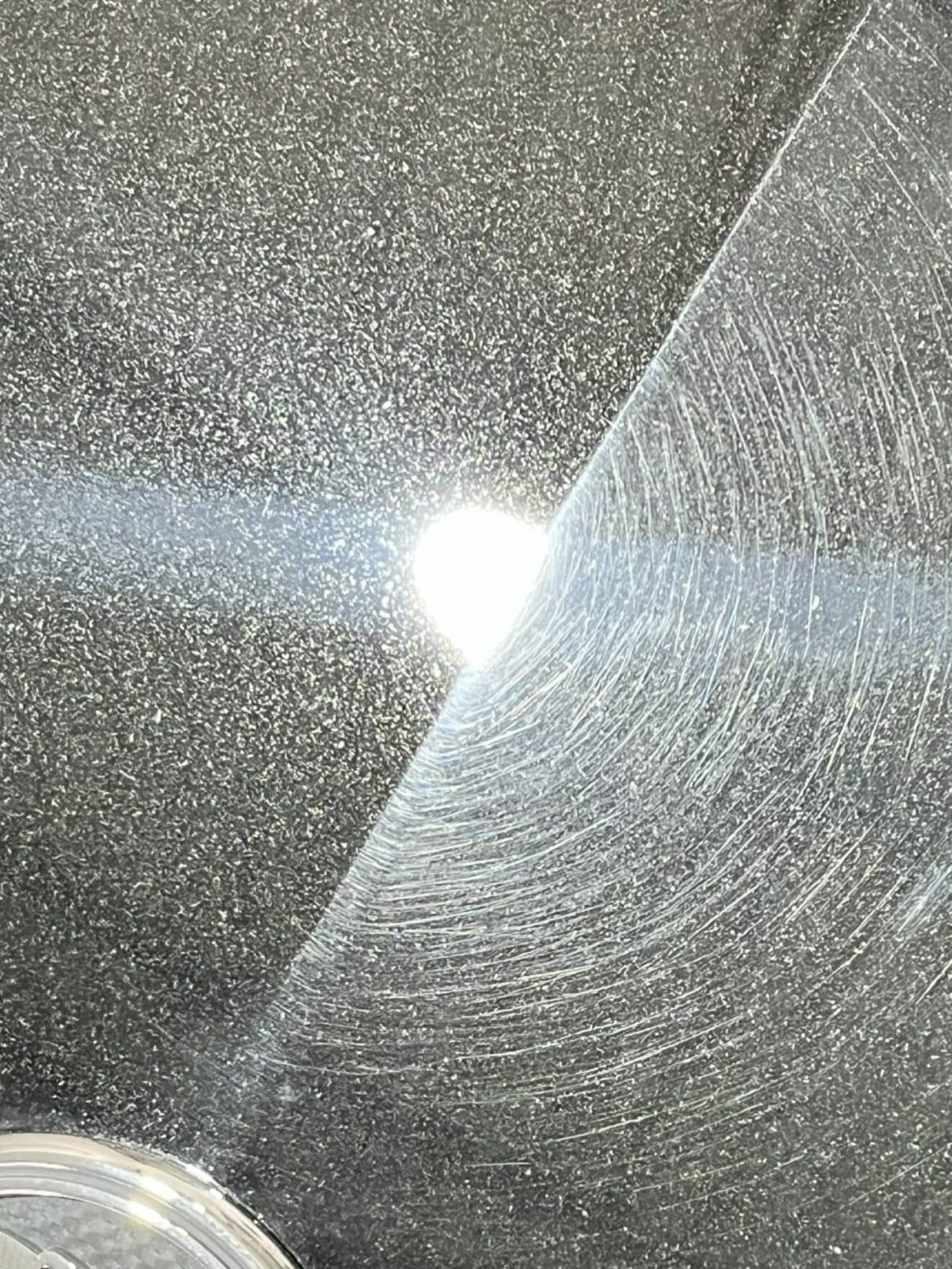
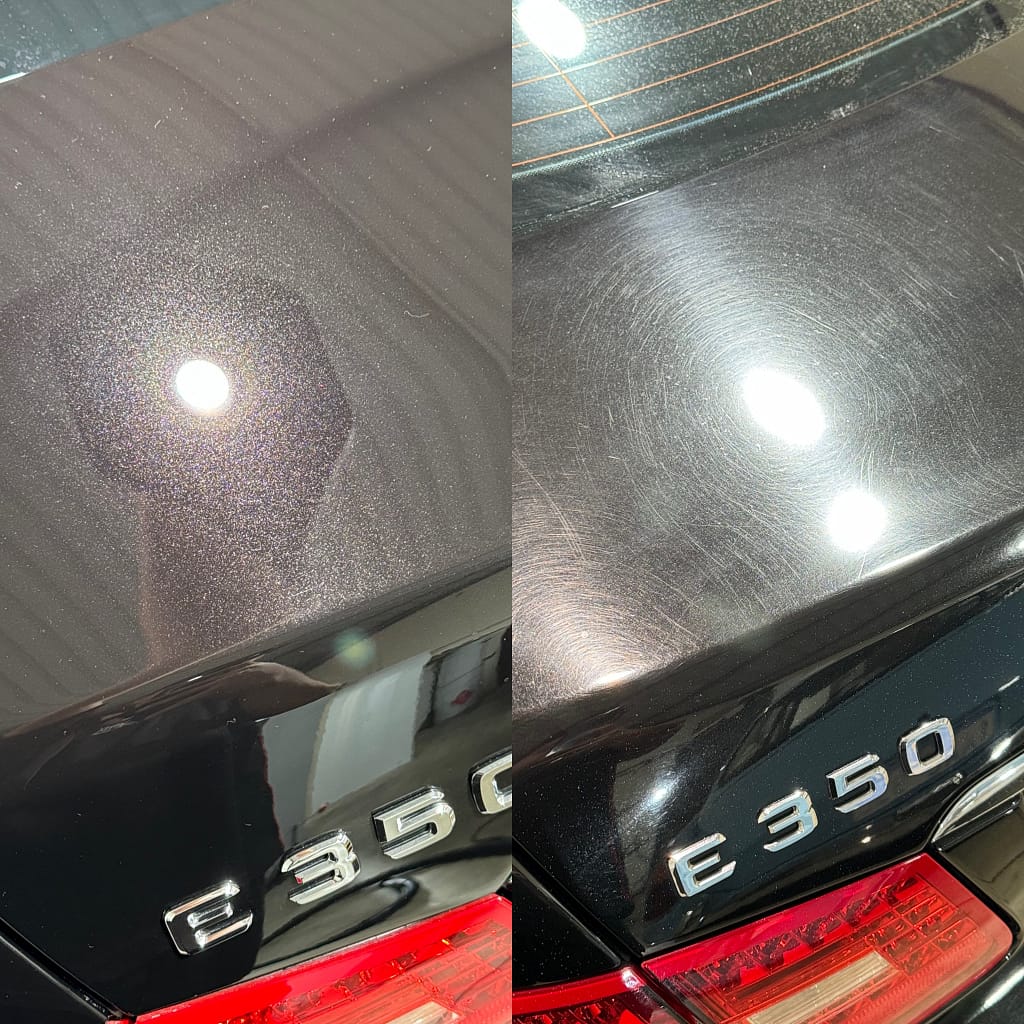
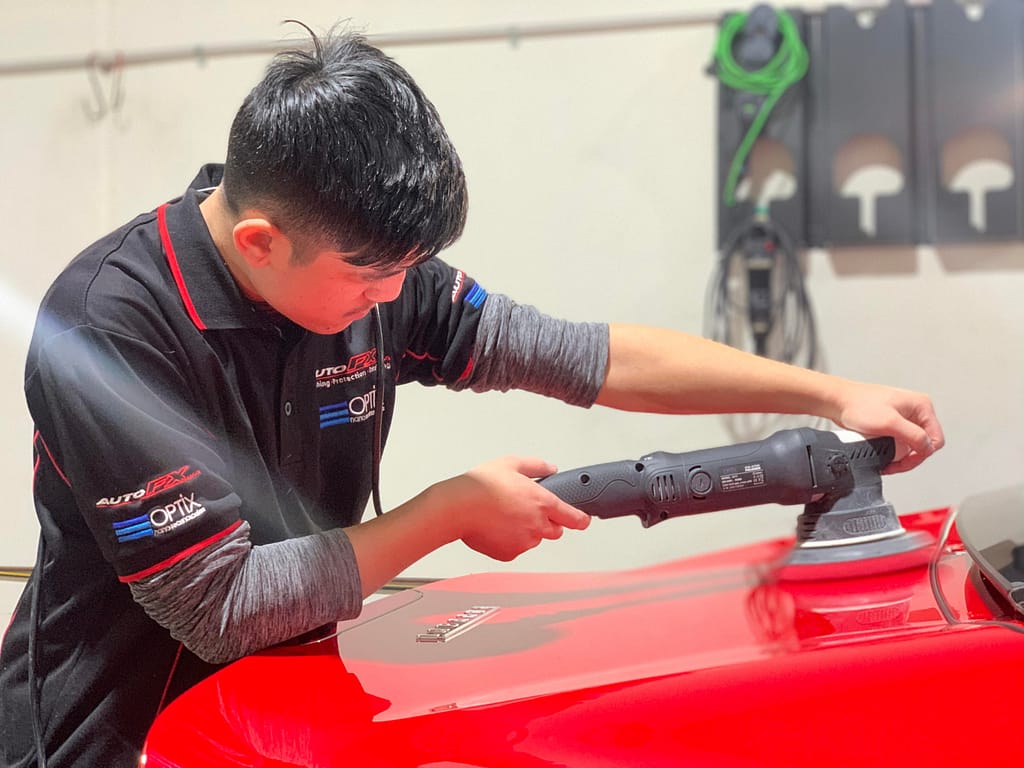
Restore clearer reflections, deeper gloss and a cleaner finish through professional machine polishing at AutoFX WA in O’Connor.
Paint correction permanently reduces swirl marks, polishing holograms, haze, oxidation and suitable scratches by carefully refining the vehicle’s clear coat.
Every vehicle receives an individual assessment. We consider the paint condition, previous repairs, available paint thickness, your expectations and how the car will be used before recommending a level of correction.
What Is Paint Correction?
Paint correction is the controlled process of machine polishing a vehicle’s clear coat to reduce visible defects and restore clarity.
It is different from applying a wax or glaze that temporarily fills marks. Proper correction refines a very small amount of the damaged clear coat surrounding each defect. The improvement therefore remains after the vehicle is washed.
The objective is not always to remove every mark. Deep scratches, thin paint, repaired panels and vulnerable edges can limit how far correction should safely go.
A major improvement with healthy paint remaining is usually better than chasing perfection and unnecessarily reducing the clear coat.


What Paint Correction Can Improve
Depending on the paint system and depth of the damage, correction can improve:
-
Swirl marks caused by washing and drying
-
Polishing holograms and buffer trails
-
General haze and dull reflections
-
Light scratches within the clear coat
-
Oxidation and weathered paint
-
Selected water spotting and chemical etching
-
Uneven gloss between original and repaired panels
-
Factory or dealership polishing marks on new vehicles
What Paint Correction Cannot Repair
Machine polishing cannot replace paint that is already missing.
It will not properly repair:
- Stone chips
- Scratches through the colour coat
- Peeling or failed clear coat
- Cracked paint
- Severe etching that has penetrated too deeply
- Dents or panel damage
- Poor-quality body repairs
- Heavy texture from previous repainting
We explain these limitations before beginning work rather than promising results the paint cannot safely provide.
How Much Paint Correction Does Your Car Need?
Two vehicles of the same make, model, age and colour can require completely different levels of work.
One may have been carefully hand washed and only need a light finishing polish. Another may have years of automatic-car-wash damage, heavy swirls or poor previous polishing.
We inspect the actual paint before recommending one of the following approaches.
Paint Enhancement
A paint enhancement suits vehicles that are generally in reasonable condition but appear dull, lightly swirled or hazy.
It normally uses one controlled polishing stage to improve gloss, reduce light defects and prepare the paint for wax, sealant or ceramic coating.
Enhancement is about achieving the best practical improvement from one polishing stage. It is not intended to remove every defect. More about Paint Enhancement
Single-Stage Paint Correction
Single-stage correction balances stronger defect removal with finish quality in one primary polishing process.
It can significantly improve swirl marks, light scratches and polishing haze. The result depends on the hardness of the paint and the depth of the damage.
Some paint finishes respond exceptionally well to one stage. Others require additional refining after stronger cutting.
Multi-Stage Paint Correction
Multi-stage correction is intended for more heavily damaged paint.
The initial stage uses a suitable compound and pad combination to reduce deeper swirls, sanding marks, oxidation or severe holograms. One or more refining stages then restore clarity and produce a cleaner finish.
Each panel may require several polishing cycles, inspections and different product combinations.
Preservation-Style Correction
Original-paint classics, older vehicles and cars with limited paint thickness need a more conservative approach.
The priority is to reduce the most distracting defects while preserving as much original paint as possible.
On these vehicles, an 80% improvement with a safe amount of paint remaining can be considerably better than chasing complete defect removal.
Knowing when to stop is as important as knowing how to polish.
How We Assess the Paint
A proper assessment helps us determine what improvement is achievable and where extra caution is required.
Our process may include:
Inspection under strong workshop and handheld lighting
Paint-depth measurements where appropriate
Identification of repaired or repainted panels
Examination of edges, body lines and vulnerable areas
A test section to select the right pad, compound and process
Discussion of the defects that concern you most
Agreement on the expected result and budget
Photos can provide an initial indication, but they rarely reveal the complete paint condition. We prefer to inspect serious correction work at our O’Connor workshop.
How Much Does Paint Correction Cost?
AutoFX WA generally prices paint correction according to the time required to achieve the agreed result safely.
Our correction work is normally charged at approximately $95 per hour.
As a general guide:
Light paint enhancement may start from approximately $550
Many correction jobs fall between $1,000 and $1,500
Heavily marked or demanding vehicles may require $1,500 to $2,500 or more
A carefully maintained sports car may require less work than a large family vehicle damaged by years of poor washing.
The badge does not determine the price. The paint condition, vehicle size, panel complexity, paint hardness, previous repairs and expected result determine the work involved.
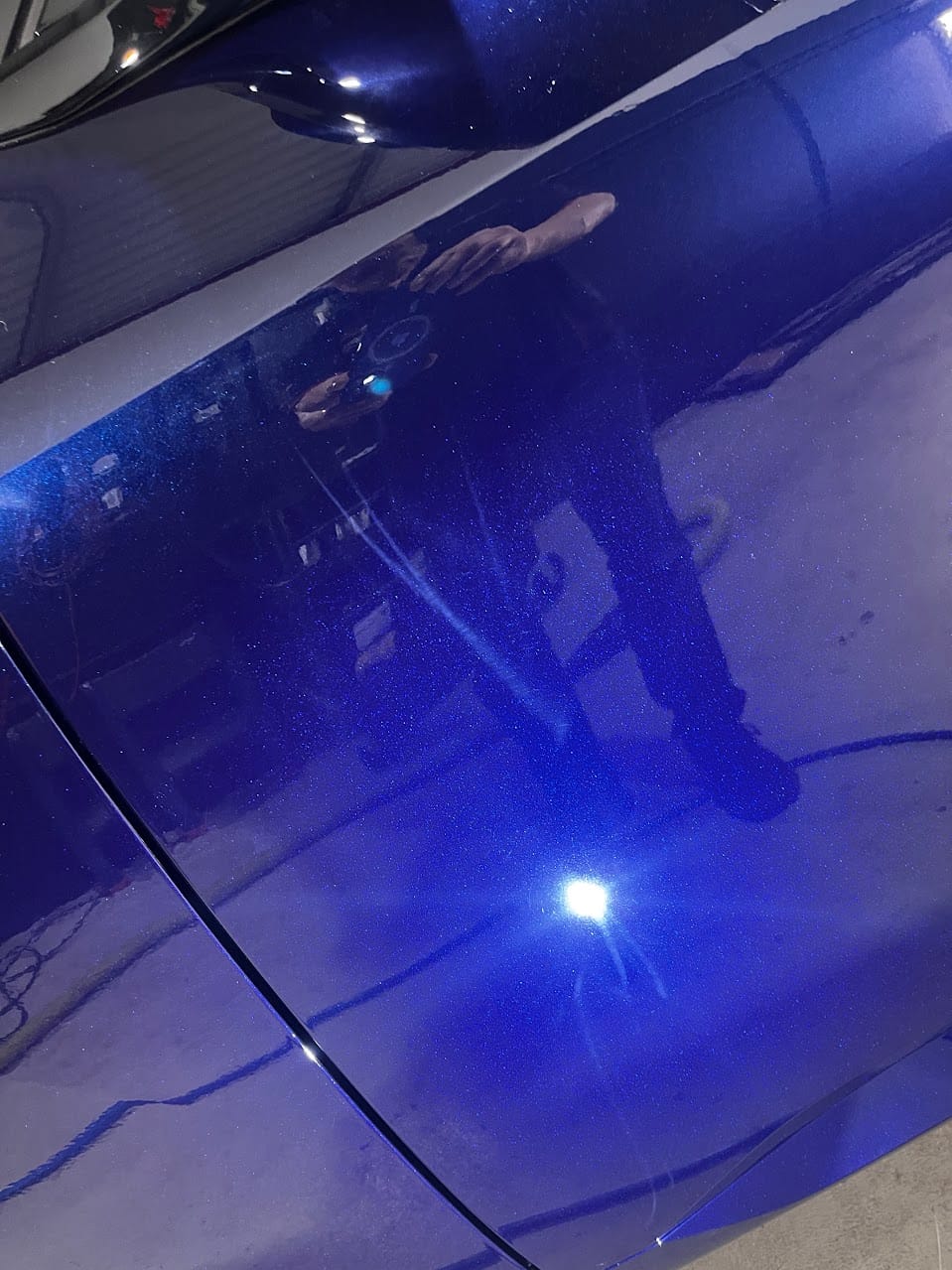
Why Correction Comes Before Ceramic Coating
Ceramic coating should protect a properly prepared finish—not hide poor preparation.
Applying coating over swirls, haze or polishing marks does not remove them. The added gloss may make those defects more noticeable.
Paint correction creates the clarity. Ceramic coating protects the refined surface and adds gloss, slickness and easier maintenance.
We may also recommend a finishing polish for a new vehicle. New paint can still contain transport marks, dealership washing scratches, buffer trails or factory haze.
Once corrected, the finish can be protected with wax, sealant, OPTiX ceramic coating or paint protection film, depending on the vehicle and its use.
Real Paint Correction Experience
Every vehicle requires a different balance between improvement, time, cost and paint preservation.
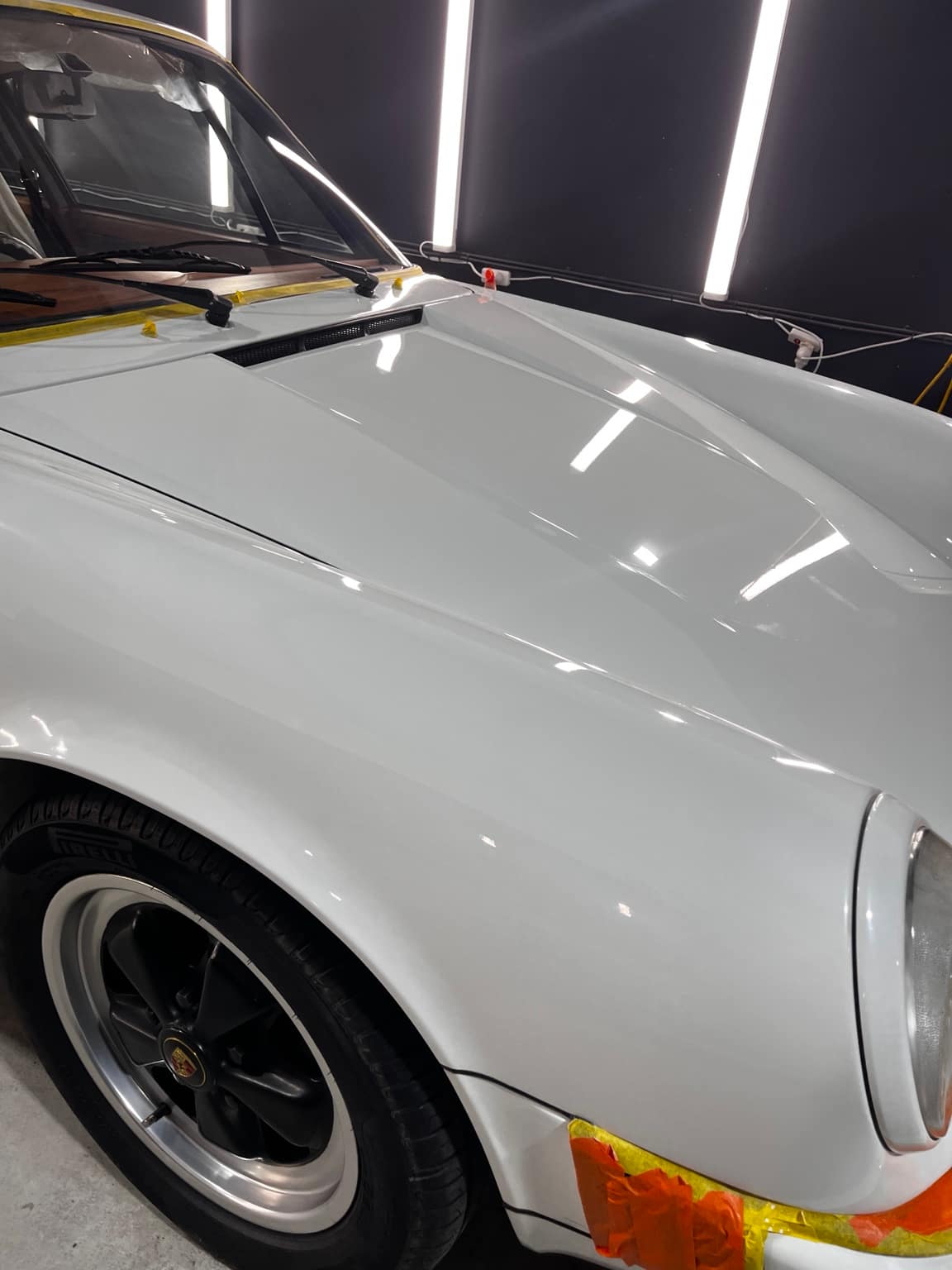
Original-Paint Porsche 911
A 50yr old Porsche 911 arrived with cloudy marks and imperfections in extremely valuable original paint.
Paint-depth readings varied significantly, so complete defect removal would have created unnecessary risk. Controlled sanding and polishing produced a major improvement while retaining sufficient original paint for the future.
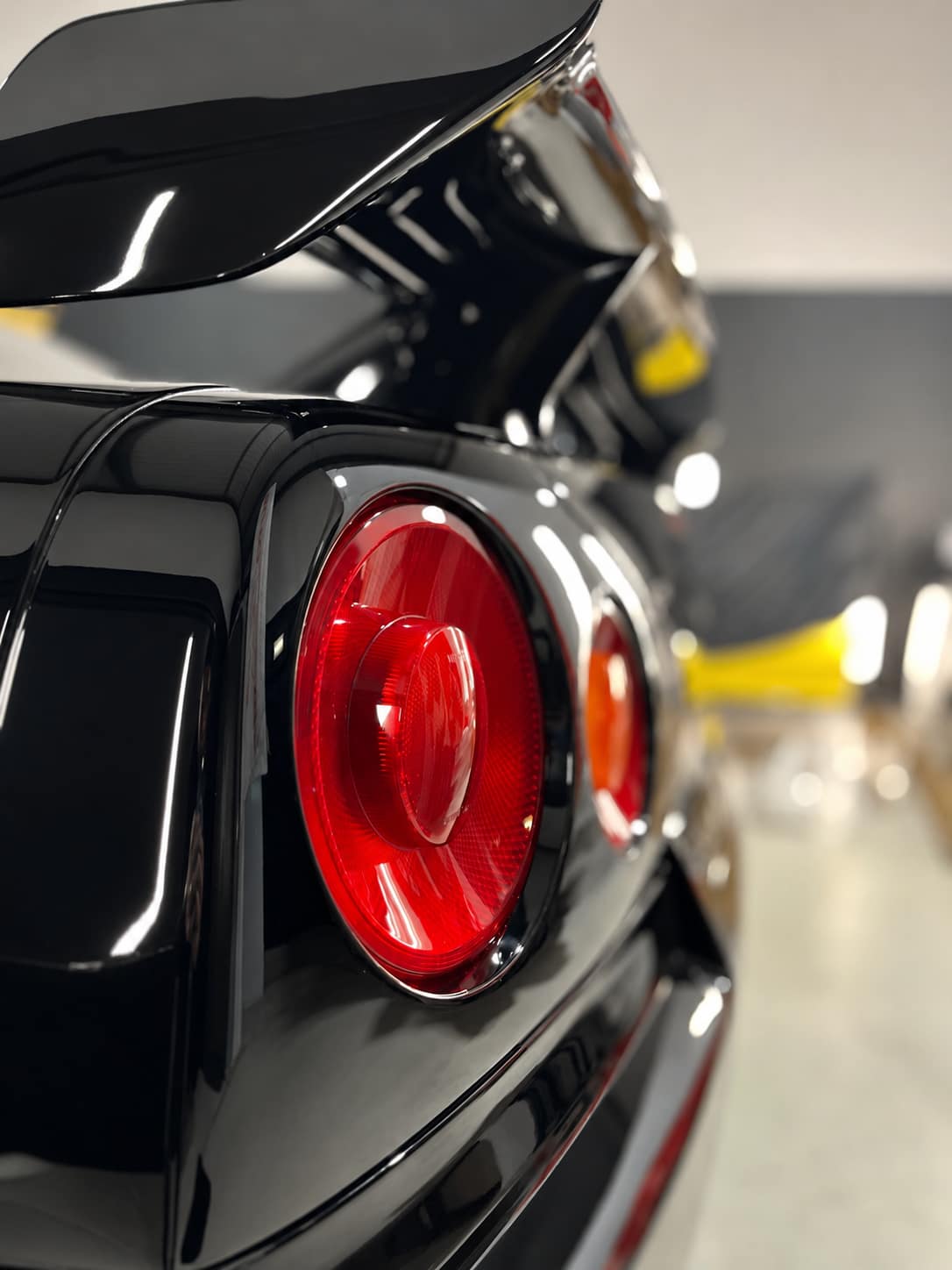
Nissan R34 GTS-T
A freshly painted black Nissan R34 required approximately 40 hours of refinement.
Fresh paint can still contain sanding marks, haze and inconsistent finishing. Different sections required different polishing combinations before the finish was protected with OPTiX FMJ Graphene.
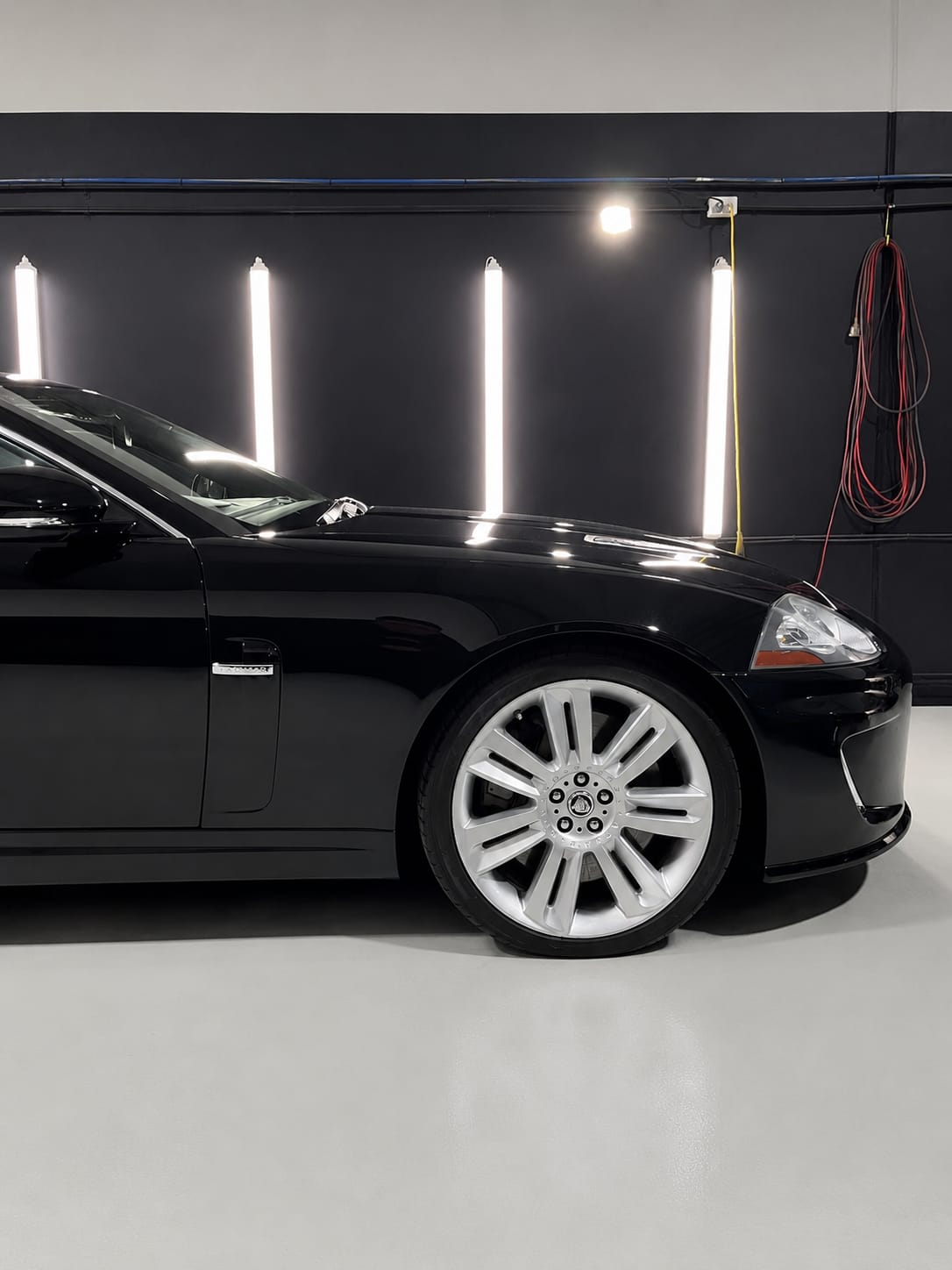
Jaguar XKR
A returning customer wanted his Jaguar XKR improved before selling it.
Rather than recommending an open-ended restoration, we completed a practical correction and wax package that improved its presentation without unnecessary expense.
These examples demonstrate why one fixed package is not suitable for every vehicle.
Why Choose AutoFX WA?
Experience Built Over More Than Two Decades
AutoFX WA has worked on vehicle presentation and paint refinement since 2001. Our early experience included work connected with Mercedes-Benz during the period the dealership was owned by the Goldy family. That exposure to prestige vehicles helped shape the careful, inspection-led approach we still use today.
The products and machinery have changed, but the fundamentals have not: inspect the paint properly, understand its limitations, select the right process and avoid removing more material than necessary.
Our approach is based on:
- Proper paint inspection
- Realistic advice
- Paint-depth testing where required
- Test sections rather than guesswork
- Processes selected for the individual paint system
- Experience with new, repaired, older and original-paint vehicles
- Knowing when further defect removal would create unnecessary risk
We work from our O’Connor workshop, conveniently located for Fremantle, Melville, Myaree, Kardinya, Applecross, Booragoon and Perth’s southern suburbs.
Paint Correction FAQs
Is paint correction permanent?
The defects removed through paint correction do not simply return after washing because the clear coat has been physically refined. New swirl marks and scratches can still develop if the vehicle is washed or maintained poorly.
Will paint correction remove every scratch?
No. Scratches that penetrate through the clear coat cannot be safely polished away. We may reduce their appearance, but attempting complete removal could compromise the surrounding paint.
How long does paint correction take?
A light enhancement may take approximately one working day. More involved correction can require several days, depending on the vehicle, damage and expected finish.
How much does paint correction cost in Perth?
Enhancement may start from around $550. Many correction jobs are approximately $1,000–$1,500, while heavily damaged or demanding vehicles can require $1,500–$2,500 or more. We inspect the vehicle before providing an accurate recommendation.
Does a new car need paint correction?
Sometimes. New vehicles can arrive with transport marks, washing scratches, dealership polishing holograms, haze or defects in gloss-black trim. A finishing polish can also prepare a cleaner surface for ceramic coating or paint protection film.
What is the difference between enhancement and correction?
Enhancement uses a lighter process to improve gloss and reduce minor defects. Correction uses a more intensive process to remove or substantially reduce deeper and more widespread damage.
Should I apply ceramic coating after correction?
Ceramic coating is a good option when you want to protect the corrected finish and make maintenance easier. Wax or sealant may be more appropriate when you want a lower-cost or shorter-term solution.
Can you correct original paint on classic cars?
Yes, provided the paint can be worked safely. Original-paint vehicles require careful inspection, paint-depth measurements and conservative expectations. Preserving the paint is more important than removing every mark.
Can you quote paint correction from photographs?
Photographs can help with an initial discussion, but lighting and camera processing often hide the true condition. An in-person workshop inspection produces a much more reliable recommendation.

Request a Paint Correction Quote

Why Workmanship Matters More Than the Brand of Products Used?
What to consider in detailing products or detailers
If you are choosing a car detailer based only on the brand of wax or coating they use, you may be focusing on the wrong thing. Real-world results depend far more on workmanship, preparation, and ongoing care than on the label on a bottle.