A Real-World Detailing Case Study: 2021 White Ford Raptor (Daily Driven, Properly Maintained)
This blog isn’t about chasing perfection, trophies, or concours-level finishes.
It’s about real cars, real use, real maintenance, and real value.
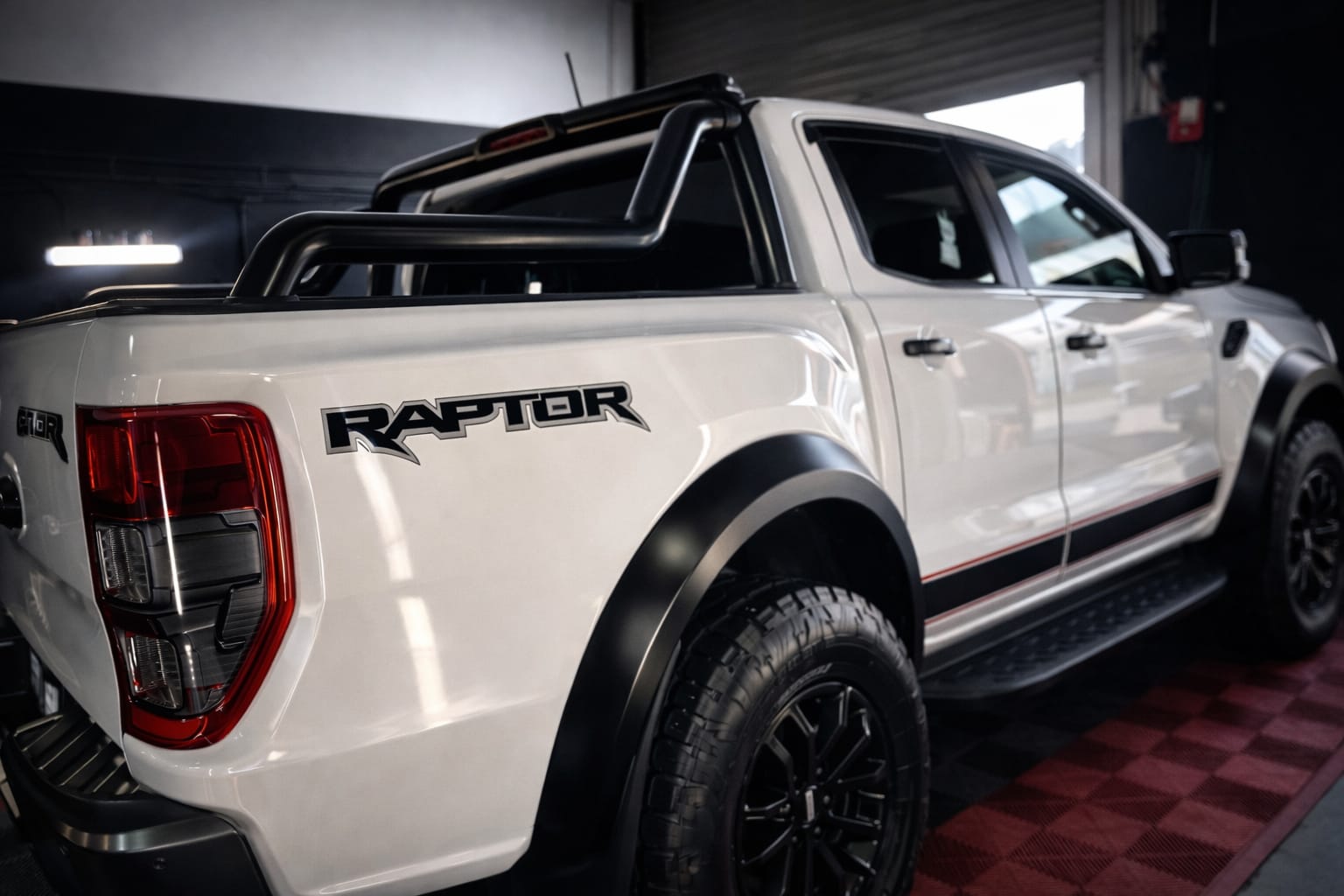
This 2021 white Ford Raptor is a twin to another Raptor we look after, and it belongs to an existing customer who’s been with us since day one. We first saw this car brand new back in 2021, when we were lucky enough to install OptiX OP1 ceramic coating straight off the showroom floor.
Since then, the car has lived a proper life.
It’s a daily driver Used mainly by the husband and son Parked in commercial and office car parks during the week Used exactly how a Raptor should be used on weekends — sand, dirt, light off-road driving
And yet, four years on, it still tells a very important story.
Maintenance Matters More Than Mileage
This Raptor only comes back to us once a year.
That means since the original coating, I’ve physically seen it maybe two or three times total.
Every single time it comes in, the same thing stands out:
Yes — there’s dirt.
Yes — there’s sand, crumbs, a bit of dog hair.
But nothing is ingrained.
That tells me everything I need to know.
You can tell when dirt has been sitting for weeks versus months or years. In this case, everything inside the cabin was superficial. Nothing embedded into carpet fibres, no crusted sand in seat stitching, no greasy buildup on touch points.
That doesn’t happen by accident.
That comes from regular owner maintenance, not over-detailing, just sensible care.
Why Rubber Mats Change Everything
This Raptor runs well-fitted rubber mats, with the factory carpet mats still underneath.
This is where a lot of people misunderstand detailing.
On the surface:
The rubber mats looked dirty Sand, dust, debris — visible everywhere
But once the rubber mats came out?
There was almost nothing underneath.
No stains.
No embedded dirt.
No heavy vacuuming required.
Realistically, 95% of the dirt in the cabin lived on those rubber mats. Once removed, the floor underneath needed little more than a light vacuum — especially in the rear seats.
This is why:
Vacuuming can take 5 minutes Or 20 minutes Or 5 hours Or even a full day on extreme cases
Vacuuming isn’t “just vacuuming”.
Why This Job Took 3.5–4 Hours (And Not 8)
This customer doesn’t ask for quotes.
He doesn’t set budgets.
He trusts the process.
And that’s important — because we don’t know the final cost until the job is finished.
For this Raptor, the goal was simple:
Not concours Not “best paint in the state” Not engine bay detailing
The goal was:
👉 It needs to feel properly clean
👉 It needs to be protected
👉 It needs to make sense financially
Smart Decisions = Better Value
Because the car was already well maintained, we deliberately did not:
Shampoo carpets (not needed) Over-work clean paint Add unnecessary labour just to inflate a checklist
Cutting unnecessary steps is not cutting corners — it’s cutting waste.
Exterior Process: Reading the Coating, Not Guessing
We always start with:
Wheels first Two-bucket wash on the body
During the rinse stage, we’re already watching:
Water behaviour Beading consistency Sheeting speed
This gives us the first insight into coating health.
Decontamination Changes Everything
Next came:
Iron remover Clay bar decontamination
Here’s where many people get confused.
Iron removal and clay will often:
Strip waxes Remove ceramic sprays Remove masking products like Final Boost
So sometimes water behaviour looks worse, not better — and that’s a good thing.
Why?
Because now we’re seeing the true condition of the coating underneath.
We assess coatings in percentages:
90% 80% 50% Panel by panel
Only after this do we decide:
Spot top-ups Or full ceramic spray application
Why Ceramic Spray Replaces Wax (For Jobs Like This)
Instead of traditional wax or sealant, we used a ceramic spray to:
Boost remaining OP1 coating Improve gloss and slickness Add real protection
Ceramic sprays:
Behave closer to coatings than wax Are faster to apply Reduce labour time Deliver better value per dollar
That’s performance-based cost cutting, not compromise.
Plastics, Trim & Tyres: Invisible Done Right
Modern Raptors have a lot of matte plastics.
Our goal here:
No gloss No grease No slime No patchiness
We used products like:
OptiX Ceramic Spray OptiX Fast Finish OptiX Nano Slick OptiX All Trim (for wheel arches, tyres, rubber grommets)
The result?
You don’t notice it — you just notice everything looks even, clean, and consistent.
That’s how OEM-style detailing should feel.
Interior: Clean, Not Coated
Interior process:
Remove rubber mats Initial vacuum Compressed air under seats Re-vacuum Wipe all surfaces Apply OEM-style interior conditioner
This type of interior finish is different.
There’s:
No shine No residue No slippery feel
When you rest your arms on the console or door trims, it feels like skin on skin.
Clean, smooth, natural.
That’s intentional.
Because these products are forgiving, they also allow:
Faster application More consistent finish Less chance of patchiness
Again — less labour, same result.
Final Touches That Take Time (But Matter)
Before calling it done:
Inside windows cleaned Tray vacuumed and wiped Rear under-tray area cleaned (often missed) Final walk-around inspection
These small details don’t scream for attention — but they’re what separates a rushed job from a professional one.
The Final Result & The Reality of Pricing
Total time:
🕒 3.5–4 hours
Vehicle type:
🚙 Large 4WD
Final cost: $385
For a smaller car?
It may be quicker — but not automatically “half the price”.
This is why we don’t do fixed detailing prices.
Pricing detailing like a menu item doesn’t work.
It never has.
Detailing is closer to:
Building inspection
House renovation
Mechanical diagnosis
You don’t know the true scope until you’re inside the job.
The Bigger Picture: Education Over Argument
About 90% of customers still expect one price for everything.
They’re not wrong — they just haven’t been shown why that thinking doesn’t work.
So customers can finally see:
👉 where time goes
👉 where value lives
👉 and why good detailing isn’t about shortcuts — it’s about smart decisions
This Ford Raptor is proof that maintenance, product choice, and experience matter more than checklists ever will.