AMG C63 Rear Guard Rolling Perth
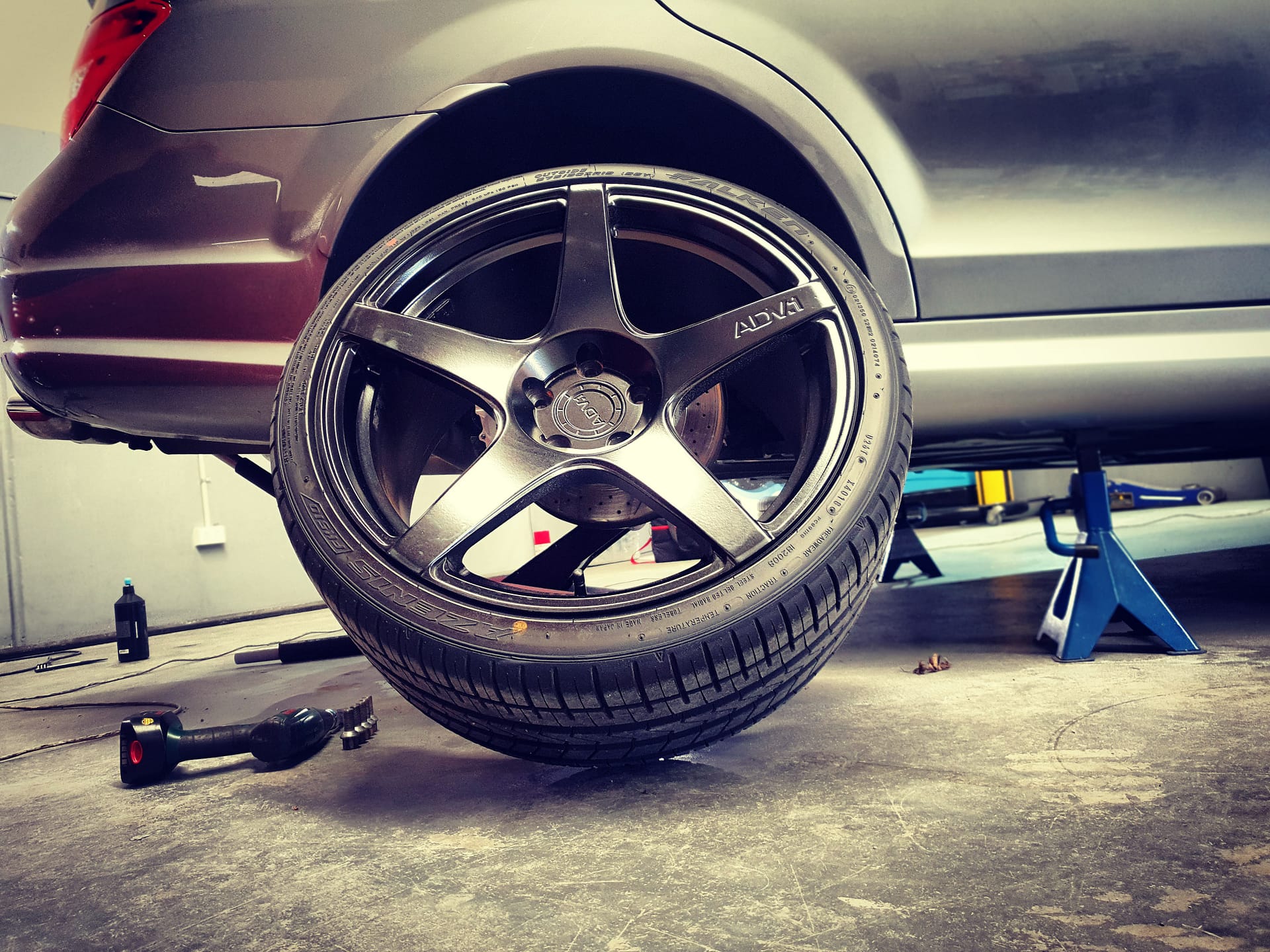
This AMG C63 came to AutoFX WA with a common problem on modified performance cars: the rear tyres were rubbing on the guard lips.
The vehicle had aftermarket wheels and lowered suspension, which changed the way the rear wheel and tyre package sat under the guards. The car looked good, but once the suspension compressed under normal driving, the tyres were making contact with the rear guard lips.
That is where rear guard rolling can help.
Guard rolling is not about modifying a car for the sake of it. In most cases, it is done for a practical reason: to create more tyre clearance and reduce rubbing when the wheel and tyre setup is sitting too close to the guard.
Why The AMG C63 Was Rubbing
The AMG C63 is already a powerful performance car, and many owners fit aftermarket wheels, wider tyres or lowered suspension to improve the stance and handling.
The problem is that every change affects clearance.
Lowered suspension brings the guard closer to the tyre. Wider wheels or lower offset wheels can push the tyre further outward. Wider tyres can also sit closer to the guard lip, even when the wheel size looks reasonable on paper.
Once those changes are combined, the tyre may clear while the car is parked but rub when the vehicle is driven. That rubbing can happen over bumps, under load, during cornering, with passengers in the car or when the suspension compresses.
On this C63, the rubbing point was the rear guard lip, which made rear guard rolling the right place to start.
What Rear Guard Rolling Does
Rear guard rolling focuses on the inner lip of the wheel arch.
From factory, many vehicles have an inner guard lip that folds inward toward the tyre. When the tyre sits close to that lip, it can make contact during normal suspension movement.
Rolling the guard carefully reshapes that inner lip to create more room.
The aim is to improve clearance without making the outside of the guard look obviously modified. In some cases, a small amount of extra movement can make a big difference to tyre clearance.
For current service information, see our Guard Rolling Perth page.
Lowered Suspension And Aftermarket Wheels
Lowered suspension and aftermarket wheels are two of the most common reasons customers need guard rolling.
A lowered car usually has less available clearance between the tyre and the guard. When the suspension compresses, the tyre moves further into the wheel arch, and any tight area becomes more obvious.
Aftermarket wheels can also change the fitment. A different offset can push the wheel closer to the guard, even if the tyre size has not changed much.
That is why a car can be fine with factory wheels but start rubbing after a wheel and suspension change.
Guard rolling can help where the tyre is contacting the guard lip, but the full setup still matters. Ride height, wheel offset, tyre size, camber and suspension travel all play a part in whether the final result will work properly.
For more on this, see our Suspension Setup And Guard Rolling Perth page.
Tyre Rubbing Can Cause Damage
Tyre rubbing should not be ignored.
If the tyre is making contact with the guard lip, it can damage the tyre sidewall over time. It can also mark the guard edge, damage paint, pull at the inner lip or create an annoying scraping noise during normal driving.
Sometimes the rubbing is only light.
Sometimes it is heavy enough to cut into the tyre.
Either way, it is worth checking properly before the problem becomes worse.
Guard rolling is often done to prevent that contact from continuing, especially when the car is already fitted with wheels and suspension the owner wants to keep.
Paint Risk With Guard Rolling
Guard rolling involves moving metal, and that means paint risk must be understood before the job starts.
Paint can crack if it is old, brittle, previously repaired, poorly painted, already damaged or stretched too far. Heat and careful technique can reduce the risk, but they cannot remove the risk completely.
This is important on performance cars like an AMG C63 because many owners care about both the fitment and the condition of the paint.
The goal is not to force the guard as far as possible. The goal is to create practical clearance while managing the risk to the paint and panel as carefully as possible.
A clean result comes from patience, heat, control and knowing when the guard has moved enough.
Rear Guards Can Be Different From Front Guards
Rear guard rolling is often different from front guard rolling.
Front guards need clearance while the wheels turn, while rear guards mainly need clearance through suspension travel, load and body movement. Rear guards can also have different metal thickness, lip design, bumper joins, seams and inner structure depending on the vehicle.
On some cars, the rear guard lip rolls cleanly.
On others, the shape of the guard, previous repairs or paint condition can make the job more sensitive.
That is why every car needs to be assessed on its own condition, not just by model name.
Watch The C63 Rear Guard Rolling Video
The video on this page shows the rear guard rolling process on the AMG C63.
Video can help customers understand what guard rolling actually involves. It is not just a quick hit with a hammer or forcing the guard out. The process is controlled, gradual and focused on creating clearance where the tyre is contacting the guard lip.
The exact amount of clearance gained depends on the vehicle, the guard shape, the wheel and tyre setup, and how much the metal can safely move.
When Guard Rolling Is The Right Fix
Guard rolling is usually the right option when the tyre is rubbing on the inner guard lip.
That was the issue with this AMG C63.
The wheel and tyre package was sitting close enough to the rear guard that the lip became the contact point. By rolling the rear guard lip, more clearance could be created in the area causing the rubbing.
This does not mean guard rolling fixes every rubbing issue.
If the tyre is touching the inner liner, bumper bracket, suspension component or another area away from the guard lip, more than guard rolling may be needed.
The important part is understanding where the contact is happening.
When Guard Rolling May Not Be Enough
Some rubbing issues need more than guard rolling.
If the car is too low, the wheel offset is too aggressive, or the tyre is too wide, rolling the guard may only reduce part of the problem. The vehicle may still need a wheel alignment, camber adjustment, different tyres, different wheels or suspension changes.
This is why AutoFX WA gives realistic advice before and during the job.
Guard rolling can be very useful, but it is not magic. It works best when the tyre is contacting the guard lip and the rest of the setup is still within a workable range.
AMG And Performance Car Guard Rolling
Performance cars often have less room for error because owners want the car to look right, drive properly and avoid tyre damage.
The AMG C63 has strong road presence, and the right wheel fitment can suit the car well. But if the fitment is too tight, the car becomes less enjoyable because every bump or driveway can become a rubbing issue.
Rear guard rolling can help make an aggressive setup more practical, especially when the rubbing is light to moderate and the guard lip is the main contact point.
The aim is to keep the car usable, not just make it sit nicely in a photo.
Why This Page Still Matters
This older AMG C63 guard rolling job is still useful because the same issue comes up regularly.
Customers fit wheels.
Customers lower cars.
Customers change tyres.
Then the car starts rubbing, and they need to know whether guard rolling can help.
This page is a simple example of where guard rolling fits into the bigger picture. The problem was rear tyre rubbing from aftermarket wheels and lowered suspension. The solution was to create more clearance at the rear guard lip.
That is still one of the main reasons people book guard rolling today.
Related AutoFX WA Services
For guard rolling, tyre clearance and wheel arch work, see Guard Rolling Perth.
For suspension setup, tyre rubbing and alignment-related clearance issues, see Suspension Setup And Guard Rolling Perth.
For front guard flaring, guard pumping and aggressive wheel fitment, see STI Front Guard Flaring Perth.
If paint damage, scuffs or polishing marks around the guards need attention, see Paint Correction Perth.
For cleaning and presentation after modification work, see Car Detailing Perth.
Final Thoughts
This AMG C63 rear guard rolling job shows why wheel fitment, suspension height and tyre clearance need to be looked at together.
The car had lowered suspension and aftermarket wheels, which caused the rear tyres to rub on the guard lips. Rear guard rolling helped create more clearance where the tyre was making contact.
The point of the job is not to force the guards as far as possible. It is to improve clearance safely and sensibly while managing the risk to the paint, panel and tyre.
A good result comes from understanding where the tyre is rubbing, how much room is needed and what the vehicle will realistically allow.