STI Front Guard Flaring Perth – Guard Rolling Versus Pumping Guards
Guard rolling and guard flaring are related, but they are not the same thing.
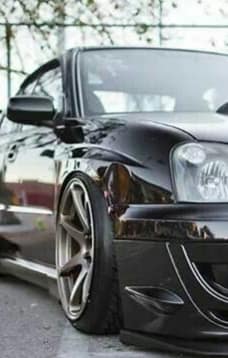
This Subaru STI was a good example of why that matters. The owner needed extra clearance around the front guards, but simply rolling the inner lip is not always enough when the wheel and tyre package sits aggressively.
A normal guard roll usually focuses on the inner lip of the wheel arch. Flaring or pumping the guard goes a step further by moving the outer shape of the guard slightly to create more room.
That extra movement can be useful, but it also comes with more risk and more limitations.
This is where experience matters, because the goal is not just to force the guard out as far as possible. The goal is to create practical clearance while keeping the car looking right and managing the risk to the paint, panel shape and inner liner.
What Guard Rolling Means
Guard rolling usually means folding or reshaping the inner lip of the wheel arch.
On many cars, the inner guard lip can sit close to the tyre. When the vehicle is lowered, fitted with wider wheels, lower offset wheels or wider tyres, that inner lip can touch the tyre under load.
Rolling the guard lip can create extra clearance by moving that inner edge out of the way.
This can be enough when the tyre is only just touching the inside lip of the guard.
For many vehicles, guard rolling is a clean and practical way to reduce rubbing without changing the outside appearance too much.
For current service information, see our Guard Rolling Perth page.
What Guard Flaring Or Pumping Means
Flaring or pumping the guard is different.
Instead of only folding the inner lip, the outside shape of the guard is moved slightly outward to create more room for the wheel and tyre.
This can help when the tyre sits closer to the outside edge of the guard, or when the wheel offset is more aggressive.
A slight pump can make the difference between a tyre that rubs and a setup that has enough clearance for normal driving.
But it needs to be done carefully.
Moving the outside shape of the guard can change the look of the panel. If it is pushed too far, the guard can look distorted, uneven or unnatural.
The best result is usually a subtle increase in clearance, not an obvious or forced-looking flare.
Why This STI Needed More Than A Basic Roll
On vehicles like a Subaru STI, owners often fit wider wheels, more aggressive offsets, wider tyres or lower suspension.
That can improve the stance and appearance of the car, but it also reduces clearance around the guards.
Front guards can be especially tricky because the tyre has to turn as well as move up and down with the suspension. That means clearance is needed not only when the car is sitting still, but also when it is steering, braking, cornering and compressing over bumps.
A wheel and tyre package may look fine when the car is parked, but still rub once the car is driven.
This is where a basic guard roll may not be enough. If the tyre is sitting too far out, the outer guard shape may need to be considered as well.
Front Guards Are Different To Rear Guards
Front guards and rear guards do not always behave the same way.
Rear guards often have more structure behind them and may respond differently to rolling or pumping. Front guards can sometimes be more workable, but they also have other problems to consider.
The front guard has to work around the wheel turning. There may be inner liners, bumper brackets, mud flaps, splash shields, wiring, clips and mounting points behind or near the area being worked on.
This means a front guard clearance job is not always just about the metal lip.
Sometimes the tyre rubs on the liner.
Sometimes it rubs on a bumper tab.
Sometimes it catches only when steering.
Sometimes it only rubs under load or when the suspension compresses.
That is why the rubbing point needs to be understood before deciding how far the guard should be rolled or flared.
Inner Liners And Trimming
One of the common issues with front guard work is the inner liner.
When a front guard is rolled, pumped or flared, the liner may no longer sit exactly the way it did from factory.
In some cases, the liner can be refitted with minor adjustment.
In other cases, it may need trimming, reshaping or partial modification.
There are also cases where the liner is already touching the tyre before the guard lip is the main problem.
This is important for customers to understand before the work starts. Guard rolling can create more room at the guard, but it does not magically redesign the entire wheel arch area.
If the tyre is hitting the liner, bumper mount or another internal part, that issue may still need to be addressed separately.
Tyre Poke And Aggressive Wheel Fitment
Tyre poke is when the tyre or wheel sits further out toward the guard, often because of wheel width, offset or tyre choice.
A small amount of poke may be workable depending on ride height, tyre size and suspension travel.
A lot of poke can be much harder to manage.
Guard rolling and flaring can help create more clearance, but there is a limit to how much factory metal can be moved cleanly.
If the wheel setup is too aggressive, the car may still rub even after the guards have been rolled or pumped.
This is why it is better to be realistic before the job starts.
Sometimes the correct answer is not just “roll the guards more.” Sometimes the setup itself needs to be changed with tyre size, camber, ride height, wheel offset or suspension adjustment.
Suspension Setup Still Matters
Guard clearance is strongly affected by suspension setup.
A car sitting low will have less room between the tyre and guard. When the suspension compresses over bumps, driveways or hard cornering, that clearance reduces even more.
Camber and alignment can also affect where the top of the tyre sits in relation to the guard.
On some vehicles, a small alignment change can help. On others, the factory adjustment range may not be enough, and aftermarket arms or suspension parts may be needed if the owner wants to keep an aggressive wheel setup.
AutoFX WA can help with the guard rolling and clearance side of the job, but suspension setup and wheel alignment should be handled by a suitable suspension or alignment specialist.
For more on this topic, see our Suspension Setup And Guard Rolling Perth page.
Paint Risk With Guard Flaring
Any time metal is moved, there is paint risk.
This applies to guard rolling, and it applies even more when the guard is being pumped or flared.
Paint can crack if it is old, brittle, thick, previously repaired, poorly painted or already stressed around the guard edge.
Heat and care can reduce the risk, but they cannot remove it completely.
This is why expectations need to be honest.
A good result is not about promising there is no risk. It is about managing the risk, working carefully and not forcing the panel further than it should go.
If the vehicle has had previous paint repairs, body filler or hidden damage, the risk can be higher.
Why Flaring Needs To Be Subtle
A front guard should still look like it belongs on the car.
If the guard is flared too aggressively, it can look uneven or out of shape compared with the rest of the vehicle.
The best results are usually subtle.
Enough movement to create practical clearance.
Not so much movement that the guard looks damaged or obviously stretched.
This is especially important on a car like a Subaru STI, where the body lines and guard shape are part of the look of the car.
The aim is to help the wheel and tyre fit better while keeping the vehicle looking clean.
Rolling, Flaring Skills
Guard flaring has some overlap with panel shaping and paintless dent repair skills.
You are not just folding a lip. You are moving metal and trying to keep the panel shape controlled.
This is why the work needs to be done with patience.
The metal should be moved gradually.
The panel should be checked as the work progresses.
The shape should stay as even as possible.
Trying to move too much too quickly can create distortion, paint stress or a poor-looking result.
What Customers Should Know Before Booking
Before booking guard rolling or guard flaring, it helps to know a few things about the car.
Wheel size matters.
Tyre size matters.
Ride height matters.
Camber matters.
Where the tyre is rubbing matters.
Whether the car rubs while turning, driving straight, carrying passengers or going over bumps also matters.
The more information available, the easier it is to work out whether guard rolling is likely to help or whether the setup needs more than guard work.
If the car is rubbing badly, it is also worth checking for obvious liner contact, loose clips, damaged tabs or previous guard repairs.
Guard Rolling Is Not A Magic Fix
Guard rolling and flaring can be very useful, but they are not magic.
They cannot make every wheel and tyre setup fit.
They cannot remove every rubbing issue if the suspension setup is wrong.
They cannot guarantee the paint will never crack.
They cannot fix a wheel offset that is too aggressive for the car.
What they can do is create extra clearance where the guard itself is the contact point.
When used properly, that can make a big difference.
Why This STI Page Still Matters
This older STI job is still useful because the same issue comes up all the time.
Owners want a better stance, wider wheels, lower ride height or a more aggressive fitment. Then the tyre starts rubbing, and the question becomes whether the guards can be rolled, pumped or flared enough to make it work.
Sometimes the answer is yes.
Sometimes the answer is partly.
Sometimes the setup needs to be changed.
That is why this page is still relevant. It helps explain the difference between rolling the inner lip and actually changing the outside shape of the guard.
Related AutoFX WA Services
For guard rolling, tyre clearance and wheel arch work, see Guard Rolling Perth.
For suspension setup, tyre rubbing and alignment-related clearance issues, see Suspension Setup And Guard Rolling Perth.
If paint damage, scuffs or polishing marks around the guards need attention, see Paint Correction Perth.
For cleaning and presentation after modification work, see Car Detailing Perth.
Final Thoughts
This Subaru STI front guard job shows why guard rolling and guard flaring need to be explained properly.
Rolling the guard lip can help when the tyre is contacting the inner edge.
Flaring or pumping the guard can create extra room when the fitment is more aggressive.
But both need to be done with realistic expectations.
The wheel and tyre setup, ride height, camber, alignment, liner position and paint condition all affect the final result.
The point of the job is to improve clearance safely and sensibly, not to force the guard further than it should go.
A clean result comes from understanding where the tyre is rubbing, how much room is needed, and what the vehicle will realistically allow.