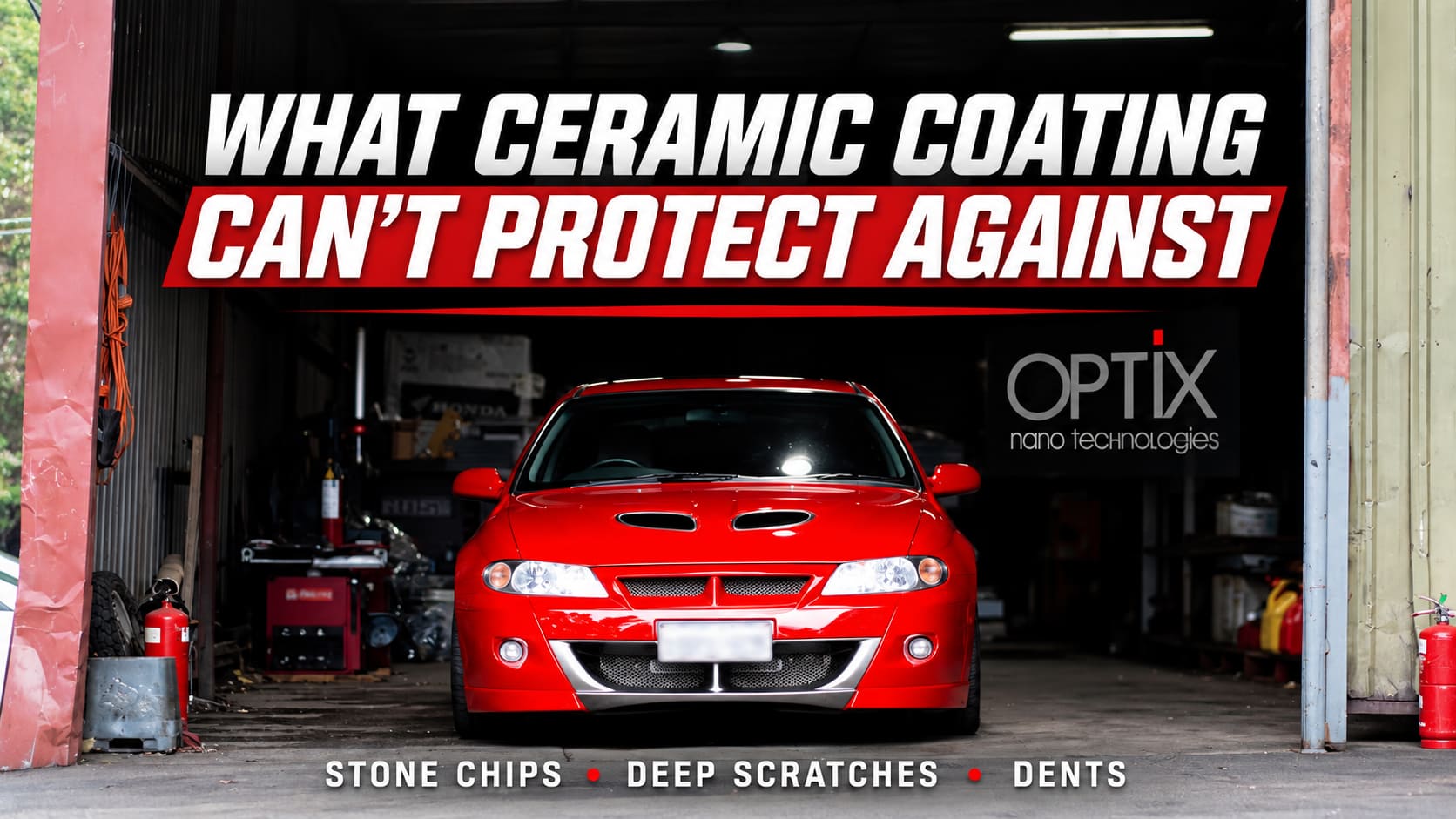
Understanding what ceramic coating cannot protect against is just as important as understanding its benefits. A professionally applied ceramic coating can make a vehicle easier to clean, improve resistance to environmental contamination and help preserve properly prepared paint, but it does not make the vehicle damage-proof.
At AutoFX WA, we would rather explain these limitations before coating a vehicle than allow an owner to expect protection that no liquid coating can realistically provide.
What does ceramic coating actually protect?
OPTiX OP888 and FMJ ceramic coatings create a bonded protective layer over the prepared surface. Depending on the chosen system, this can provide improved resistance to ultraviolet exposure, road film, bird droppings, cleaning chemicals and other everyday contamination.
The coating also creates a surface that is generally easier to wash and dry because contamination does not bond as strongly as it would to unprotected paint.
Preparation creates the gloss, depth and clarity visible in the finished vehicle. The coating helps protect and preserve that prepared finish.
What ceramic coating cannot protect against
Ceramic coating has genuine practical benefits, but there are several types of damage it cannot prevent.
Stone chips and road debris
Ceramic coating cannot absorb the physical impact of stones and road debris. A small stone travelling at speed can pass through the coating, clear coat and colour coat beneath it.
This is one of the most common misunderstandings surrounding ceramic coating. The coating is a very thin bonded layer, not a thick impact-absorbing membrane.
Paint protection film provides a substantially thicker physical barrier and is the more appropriate option for areas exposed to regular stone impacts, including the bonnet, front bumper, front guards, headlights and mirrors.
Learn more about the differences in our ceramic coating versus PPF comparison, or view our paint protection film service.
Deep scratches
A ceramic coating cannot stop deeper scratches caused by keys, branches, shopping trolleys, tools, jewellery or objects dragged across the paint.
The coating may provide some resistance against very light contact, but it should not be described as scratch-proof. If an object can damage automotive clear coat, it can generally damage a ceramic-coated surface as well.
Some scratches can be reduced through machine polishing. Scratches that have passed through the clear coat or colour may require touch-up paint or professional refinishing instead.
Dents and panel damage
A coating cannot prevent dents caused by neighbouring car doors, shopping trolleys, hail or physical impacts.
Ceramic coating protects the surface at a chemical and maintenance level. It does not reinforce the metal or plastic panel underneath.
If a panel requires dent repair or repainting, the coating around the repair area may need to be polished away and reapplied after the work has been completed.
Swirl marks caused by poor washing
Ceramic coating does not make careless washing safe. Dirty sponges, automatic brush washes, contaminated drying cloths and excessive wiping pressure can still create swirl marks and scratches.
A coating makes routine cleaning easier, which can reduce the amount of scrubbing required, but good washing methods remain important.
Use clean wash media, suitable automotive shampoo and quality microfibre drying towels. Avoid wiping dust from a dry vehicle, even when it has been coated.
Our guide to maintaining an OPTiX ceramic-coated car explains the recommended washing and drying process.
Permanent bird-dropping and insect resistance
A coating can provide additional resistance against bird droppings, insects and organic contamination, but it does not make the paint immune to them.
Bird droppings can be highly acidic. Heat from the sun can accelerate their effect and allow contamination to mark the coating or eventually affect the finish beneath it.
The practical advantage of a coating is that the contamination should be easier to remove and the owner may have more time to deal with it. It should still be removed as soon as reasonably possible.
Water spotting and mineral deposits
Water beading looks impressive, but water droplets can contain minerals. If those droplets are allowed to dry repeatedly, they can leave deposits on the coated surface.
A coating can reduce the attachment of some contamination, but it cannot prevent mineral deposits from forming when hard water is left to dry in the sun.
Washing in the shade and drying the vehicle thoroughly are still important. Existing mineral deposits may require chemical treatment or polishing, depending on their severity.
Damage underneath the coating
Ceramic coating does not hide stone chips, deep scratches, poor touch-ups, sanding marks or other existing defects. It is transparent and will preserve the condition prepared underneath it.
This is why the paint is inspected before coating. Suitable machine polishing can improve light marring, oxidation and washing marks, but it cannot replace missing paint or safely remove every deep defect.
Learn more about our paint-enhancement service and more involved paint-correction options.
Peeling clear coat or failing paint
A coating cannot repair or stabilise clear coat that is already peeling, cracking or separating from the colour underneath.
It also cannot correct paint bubbles, corrosion or poor previous repairs. These problems normally require proper body or paint repair before a coating should be considered.
Applying ceramic coating over failing paint may make the surface easier to clean temporarily, but it will not stop the underlying failure from continuing.
Damage from neglect
Ceramic coating is not a substitute for maintenance. A coated vehicle still needs to be washed, dried and periodically inspected.
Allowing road grime, industrial fallout, mineral deposits and bird droppings to remain on the vehicle for extended periods can reduce water behaviour and affect the coating’s appearance.
In some cases, reduced beading is caused by contamination sitting over the coating rather than complete coating failure. Proper washing and decontamination may restore its behaviour.
Does ceramic coating prevent all fading?
A quality coating can help reduce the effect of ultraviolet exposure, but it cannot guarantee that every painted, plastic, rubber or vinyl component will remain unchanged indefinitely.
The age and quality of the original material, previous repairs, storage conditions and the amount of direct sunlight all influence deterioration.
UV resistance is a worthwhile benefit, but it should not be interpreted as permanent protection from every form of ageing.
Is ceramic coating scratch-proof?
No. Terms such as scratch-proof can create unrealistic expectations.
Ceramic coatings produce a hardened surface, but hardness does not mean that the coating or paint cannot be scratched. The pressure, shape and material of the contacting object determine whether damage occurs.
Normal care is still required when washing, drying, working around the vehicle or placing objects near its painted surfaces.
Should ceramic coating and PPF be used together?
For some vehicles, combining the two can provide a practical balance.
PPF can be installed on the high-impact areas to provide a physical barrier against stone chips and road debris. Ceramic coating can then be used over suitable surfaces to make cleaning easier and provide broader environmental protection.
A complete full-body PPF installation is not necessary for every owner. A front PPF package combined with ceramic coating over the remaining paint can be a sensible option for a regularly driven vehicle.
Can damaged ceramic coating be repaired?
The appropriate repair depends on the type of damage. Bonded contamination may be removable through careful decontamination. Light surface marks may require polishing, while deeper scratches may have affected the paint itself.
Machine polishing will generally remove or compromise the coating in the polished area. Once the correction work has been completed, that section should be properly prepared and recoated.
Is ceramic coating still worthwhile?
Yes, provided its purpose is understood.
Ceramic coating is valuable because it protects prepared paint from everyday environmental exposure, makes routine cleaning more manageable and helps preserve the finish. Its usefulness does not depend on pretending it can prevent every form of physical damage.
For many Perth daily drivers, an appropriate coating combined with sensible washing provides a practical improvement over leaving the paint unprotected.
Read our guide explaining whether ceramic coating is worthwhile for a Perth daily driver.
Choosing realistic protection for your vehicle
The right protection depends on the risks you are trying to manage.
If easier cleaning and resistance to everyday contamination are the priorities, ceramic coating may be the appropriate choice. If stone-chip and physical-impact protection are more important, PPF should be considered. Some vehicles benefit from using both.
AutoFX WA can inspect the paint and explain what can realistically be achieved before recommending OPTiX OP888, FMJ ceramic coating, PPF or a combined protection package.
Learn more about our ceramic-coating services in Perth, or request a quotation for your vehicle.
AutoFX WA is located in O’Connor and services customers from Fremantle, Melville, Cockburn, Cottesloe and surrounding Perth areas.
Frequently asked questions
Will ceramic coating stop stone chips?
No. Ceramic coating is too thin to absorb significant stone impacts. Paint protection film is the more appropriate option for stone-chip protection.
Can a ceramic-coated car still get swirl marks?
Yes. Poor washing and drying methods can still create swirl marks. The coating makes cleaning easier but does not make careless washing harmless.
Will ceramic coating hide scratches?
No. Ceramic coating is transparent and does not replace paint correction. Suitable light defects should be improved before the coating is applied.
Does ceramic coating prevent bird-dropping damage?
It provides additional resistance and makes contamination easier to remove, but bird droppings should still be removed promptly.
Can ceramic coating prevent car-door dents?
No. Ceramic coating does not reinforce the vehicle’s panels or protect them from physical impact.