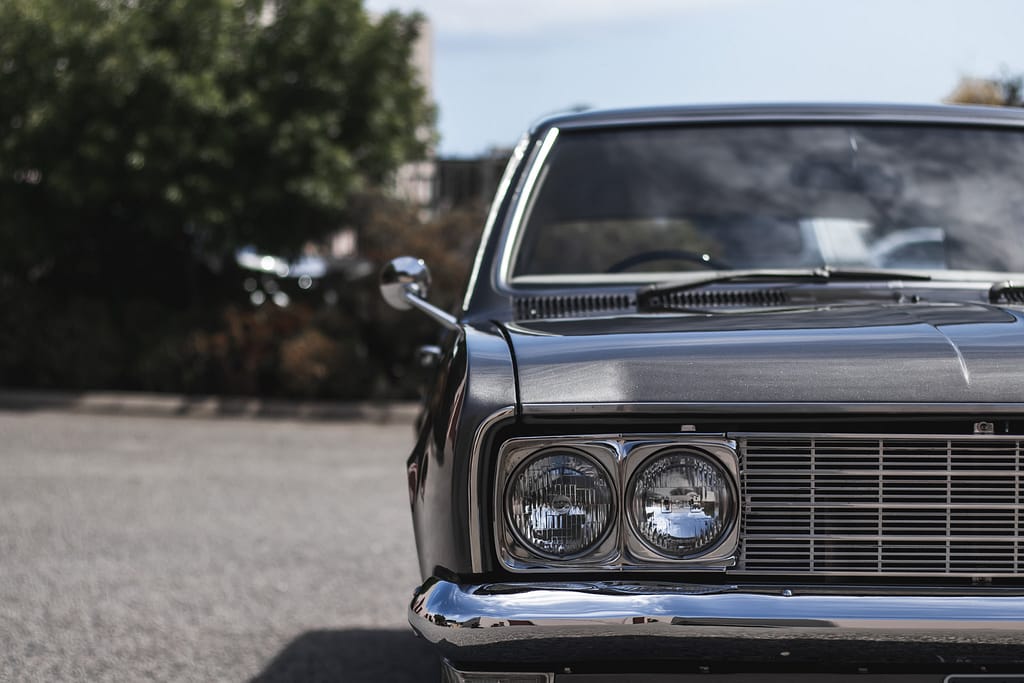
Maintaining a ceramic-coated car is generally easier than looking after unprotected paint, but a coating does not remove the need for regular washing and sensible care.
OPTiX OP888 and FMJ coatings create a protective surface that helps water, dirt and normal road contamination release more easily. Their appearance and useful service life still depend on how the vehicle is washed, dried, parked and maintained.
A coated vehicle can still collect dust, mineral deposits, road film and washing marks. The difference is that suitable contamination should be easier to remove without continually polishing or waxing the paint.
Allow the coating to cure properly
The first few days after installation are important. Although the vehicle may be driven after the initial coating has set, OPTiX coatings continue curing for approximately three to seven days.
During this period:
- Avoid washing the vehicle unless your installer provides different instructions.
- Avoid automatic car washes and harsh cleaning chemicals.
- Keep the vehicle dry where reasonably possible.
- Do not place covers, magnets or adhesive items over the coated paint.
- Remove bird droppings or insect contamination carefully rather than allowing them to remain on the surface.
If significant contamination lands on the vehicle during the curing period, contact the installer for advice rather than aggressively scrubbing the affected area.
How often should a coated car be washed?
A daily-driven vehicle will generally benefit from washing every one to two weeks. The appropriate interval depends on where the vehicle is driven and stored.
A car parked near the coast, airport, industrial areas, construction work or trees may require more frequent washing. A garaged vehicle driven occasionally may remain clean for longer.
Regular light washing is usually safer than allowing heavy contamination to build up and then trying to remove everything with aggressive chemicals or pressure.
Wash the car in the shade
Whenever possible, wash the vehicle in the shade while the panels are cool.
Washing hot paint in direct Perth sunlight can cause shampoo and water to dry before they are rinsed away. This can leave streaking and mineral deposits even on a coated surface.
If shade is unavailable, work on smaller sections and rinse frequently. Do not allow shampoo, pre-wash chemicals or rinse water to dry on the vehicle.
Begin with a thorough rinse or pre-wash
Before touching the paint, rinse away as much loose dirt as possible. A suitable snow foam or pre-wash can help soften road film and contamination before the contact-wash stage.
This step is important because many washing marks occur when loose grit is dragged across the paint by a mitt, sponge or cloth.
A pressure washer can be used sensibly, but avoid holding the nozzle unnecessarily close to badges, damaged paint, loose trim, seals or the edges of paint protection film.
Use a suitable ceramic-coating shampoo
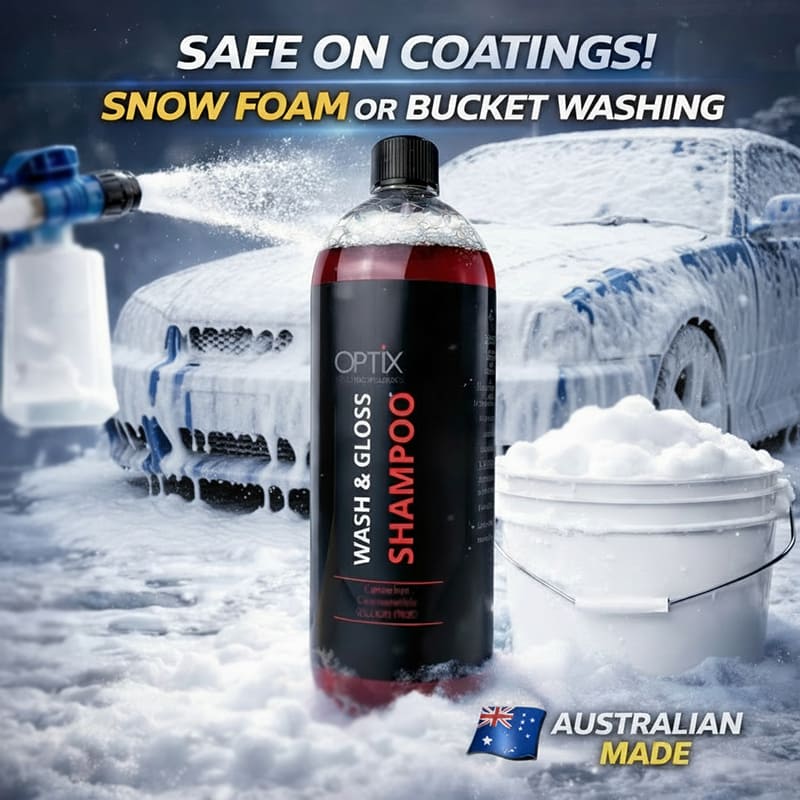
Use a good-quality shampoo designed for coated paint. OPTiX Ceramic Shampoo or another suitable coating-safe shampoo can clean the surface without leaving heavy waxes or glossing agents behind.
Dishwashing liquid and strong household detergents should not be used as routine vehicle shampoos. They may leave residues, affect trim and unnecessarily expose the vehicle to harsh cleaning chemistry.
Using more shampoo than recommended does not automatically clean the car better. Correct dilution helps the product rinse properly and reduces unnecessary residue.
Use the two-bucket washing method
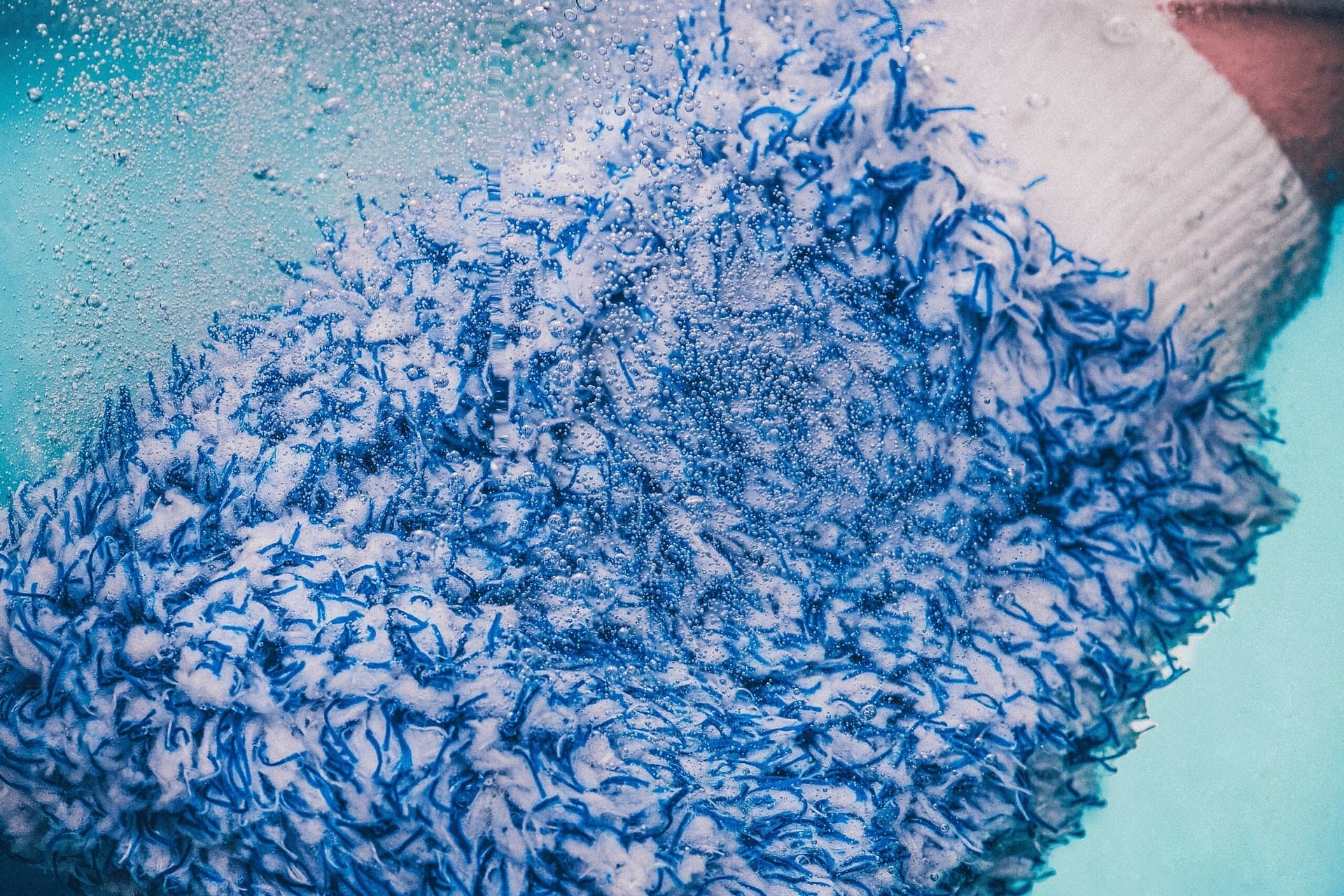
A two-bucket wash uses one bucket for clean shampoo solution and another for rinsing contamination from the wash mitt.
Work from the cleaner upper panels towards the dirtier lower sections. Rinse the mitt regularly rather than carrying grit around the entire vehicle.
Use a clean, soft wash mitt reserved for the painted body. Wheels, tyres, exhaust outlets and heavily contaminated lower areas should have separate cleaning equipment.
Never use the same cloth or mitt on the wheels and then return it to the paint.
Avoid automatic brush car washes
Automatic brush washes can rapidly introduce fine scratches and washing marks. A ceramic coating may make the paint easier to clean, but it cannot prevent damage caused by dirty rotating brushes repeatedly contacting the vehicle.
Touchless automatic washes avoid brush contact, but their stronger chemicals may affect coating behaviour when used regularly. A careful hand wash remains the preferred maintenance method.
Rinse thoroughly and dry the vehicle
After washing, rinse away all shampoo residue. Do not rely on driving the vehicle to dry it.
Water left to evaporate can leave mineral deposits, particularly when Perth tap water dries on a warm surface.
Use a clean, soft drying towel with sufficient absorbency. A vehicle blower can also help remove water from mirrors, badges, grilles, wheels and panel gaps before it runs back over the paint.
Avoid dragging a small, saturated or dirty towel repeatedly across the vehicle. Use additional clean towels when required.
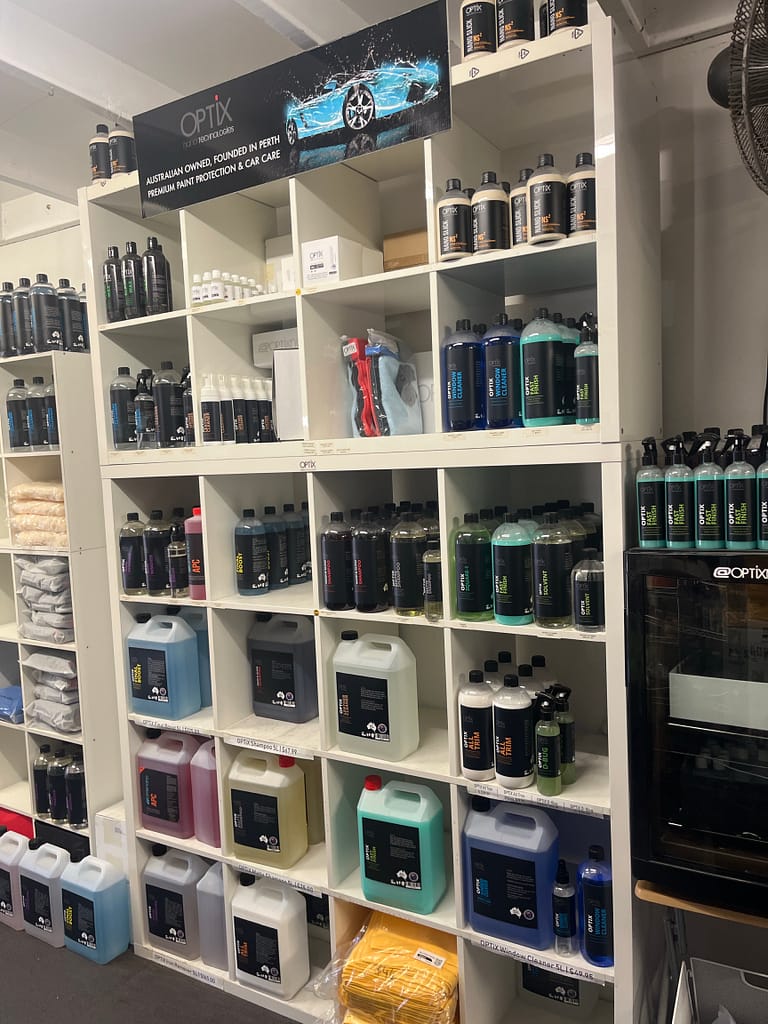
Maintaining the coating with OPTiX products
A compatible maintenance product can help restore slickness and water behaviour between professional services.
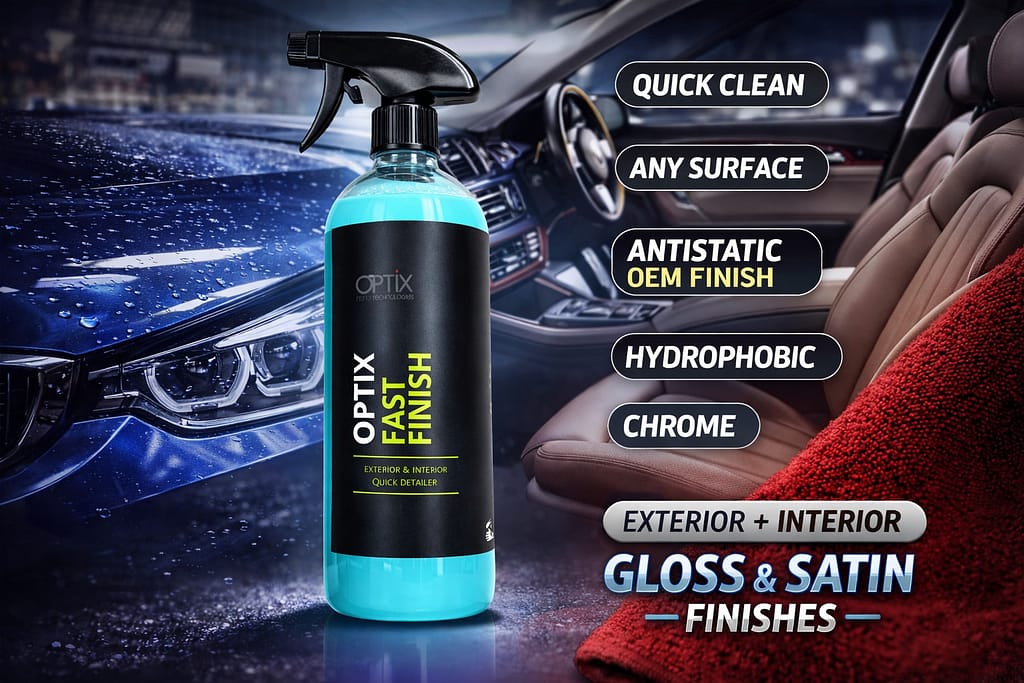
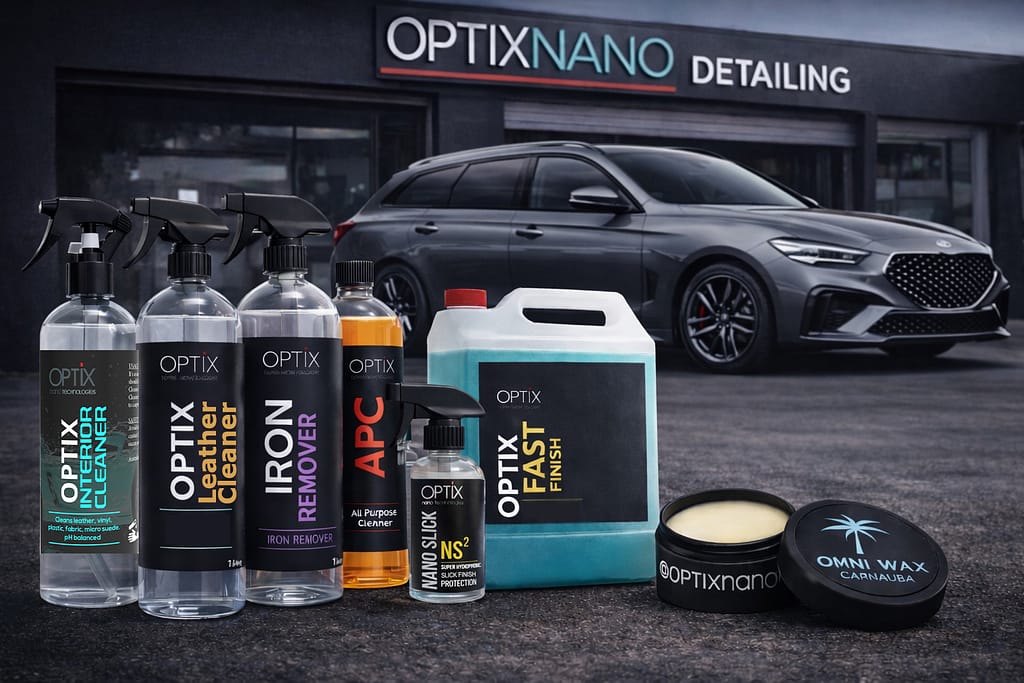
OPTiX Ceramic Spray can be used as a maintenance product after washing, while OPTiX Final Boost can provide additional slickness and help refresh the coated surface when used according to its directions.
These products should be applied sparingly to clean paint. Applying too much can cause smearing, streaking or uneven residue.
A coating does not need to be buried under layers of unrelated waxes and sealants. Some products can temporarily change its water behaviour or attract additional residue without providing a useful benefit.
Remove bird droppings and insects promptly
Ceramic coating provides useful resistance against environmental contamination, but bird droppings and insect remains should still be removed promptly.
Contamination can become more aggressive as it dries on a hot surface. Soften the affected area with water or a suitable cleaning product and lift it away carefully. Avoid scraping or aggressively rubbing dry contamination.
If etching remains after cleaning, the paint may require professional inspection. Polishing the area can reduce or remove the coating along with the defect.
Why has the coating stopped beading?
Reduced water beading does not automatically mean the coating has failed.
Road film, mineral deposits, detergent residue, iron contamination and unsuitable maintenance products can sit over the coating and change its surface behaviour.
A thorough coating-safe wash may restore the performance. More heavily contaminated vehicles may require professional decontamination.
Avoid immediately reaching for an abrasive polish. Machine polishing will reduce or remove the coating and should only be used when the paint genuinely requires correction.
Can a ceramic-coated car still develop water spots?
Yes. Ceramic coating can make the surface easier to clean, but it cannot prevent mineral deposits when water is allowed to dry on the vehicle.
This is why washing cool panels, rinsing thoroughly and drying the vehicle properly remain important.
Sprinklers and bore water can create particularly stubborn deposits. Where possible, avoid parking the vehicle within range of regular sprinkler overspray.
Can a coated car be polished?
It can be polished, but polishing is abrasive and may remove or substantially reduce the coating.
Do not machine polish a coated vehicle simply because its water behaviour has declined. The surface should first be washed and assessed for contamination.
If scratches or washing marks have developed, the paint may need to be polished and the affected coating reapplied.
Does a six-year coating need less maintenance?
No. A longer coating system does not mean the vehicle can be neglected for longer.
The approximately three-year OPTiX OP888 and single-layer FMJ options require regular washing, as does the approximately six-year two-layer FMJ system.
The difference is the coating construction and expected durability under suitable conditions—not permission to leave contamination on the vehicle for years.
A simple OPTiX maintenance routine
- Wash the vehicle every one to two weeks or as required.
- Work in the shade on cool panels.
- Rinse or pre-wash before touching the paint.
- Use OPTiX Ceramic Shampoo or another suitable coating-safe shampoo.
- Wash from the cleaner upper panels towards the lower sections.
- Use separate equipment for wheels and paint.
- Rinse thoroughly and dry with clean, soft towels or a blower.
- Use OPTiX Ceramic Spray or Final Boost sparingly when required.
- Remove bird droppings, insects and other contamination promptly.
- Arrange professional inspection if washing no longer restores the coating’s behaviour.
Protecting the finish over time
Ceramic coating makes ongoing care easier, but good washing practices remain important. A poorly washed coated vehicle can still develop scratches, water spots and embedded contamination.
The best results come from combining correct paint preparation, professional coating installation and regular maintenance using clean equipment and suitable products.
Learn more about our OPTiX ceramic-coating services in Perth, or contact AutoFX WA for coating or maintenance advice.

AutoFX WA is located in O’Connor and services customers from Fremantle, Melville, Cockburn, Cottesloe and surrounding Perth areas.