VZ Rear Guard Rolling in 2 stages
This VZ ute is a good example of why I do not like treating every guard roll the same.
Some cars only need a light roll.
Others need more clearance than that, especially once wider wheels, larger tyres or a lower ride height are involved.
On VT to VZ Commodores, including utes, wagons, sedans, coupes and Statesmans, the rear guard shape can need a bit more thought.
A stage 1 roll might be enough for some cars.
But on other setups, a 2 stage rear guard roll is the better option because the tyre still needs room when the suspension moves.
VZ Ute Rear Guard Rolling Perth
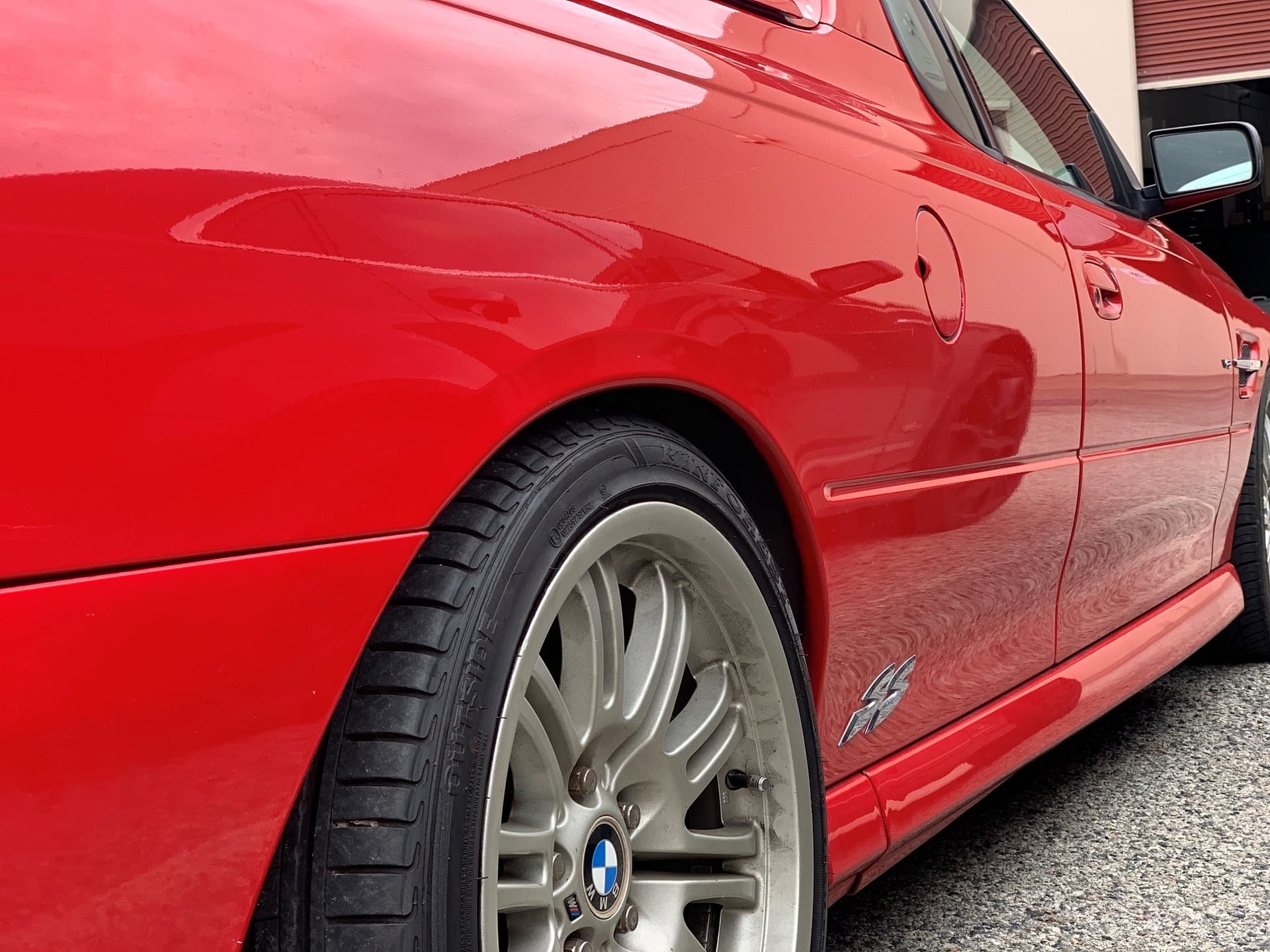
This VZ ute came in for rear guard rolling because the tyres needed more clearance.
That is very common on Commodores once the wheels and tyres are changed from standard.
The car might look fine sitting still, but the real test is what happens when the ute is driven.
The rear suspension moves.
The body loads up.
The tyre travels up into the guard.
If the inner lip is still in the way, the tyre can catch it, rub on it or even pull the guard lip out.
That is the problem we are trying to avoid.
What Is A Stage 1 Guard Roll?
A stage 1 rear guard roll is the lighter version of the job.
The inner lip is rolled up enough to give the tyre more clearance, but the guard is not pushed as far as it can possibly go.
On some cars, that is all that is needed.
If the wheel fitment is mild, the tyre is not too wide and the car is not sitting too low, a stage 1 roll may be enough to stop the tyre touching.
That is why I always look at the car and the setup before deciding how far the guard needs to be moved.
There is no point pushing the guard further than needed if the lighter roll will do the job.
What Is A 2 Stage Guard Roll?
A 2 stage rear guard roll goes further than a basic lip roll.
The first stage moves the inner lip up.
The second stage gives the tyre more clearance through the side of the guard area where the tyre may still catch under load.
This becomes more important when the car has larger wheels, wider tyres, lower suspension or a more aggressive offset.
The problem with only doing a light roll on the wrong setup is that the tyre may still touch the side of the guard.
Once that happens, it can grab the lip and pull it outward.
That can damage the guard, crack paint and make the job worse than it needed to be.
Why The 2 Stage Roll Can Be Important
The importance of the 2 stage roll is clearance.
Not just clearance when the car is parked.
Clearance when the car is being driven.
A Commodore rear tyre does not sit still inside the arch. It moves with the suspension, and if the car is loaded, lowered or fitted with wider wheels, that movement becomes more important.
If the tyre is too close to the rear guard after only a light roll, it may still touch when the suspension compresses.
That is why the second stage can be needed.
It gives the tyre more room where it actually travels, not just where it looks close in a photo.
VT To VZ Commodore Rear Guards
VT, VX, VY and VZ Commodores all share a similar rear guard style in many ways.
That includes sedans, wagons, utes, coupes and Statesman models.
The exact job can still change from car to car, but the same basic issue comes up often.
Once wider wheels and tyres are fitted, the rear guard lip can become the point of contact.
With smaller or more conservative wheel fitment, a lighter roll may be enough.
With wider wheels, 19s, 20s or tyres wider than around 255, more clearance may be needed.
That is where the 2 stage roll becomes more important.
Wider Wheels Change The Job
A Commodore can drive fine on standard wheels, then start rubbing once a wider wheel and tyre package is fitted.
That does not mean the car is wrong.
It simply means the setup has changed.
Wheel width, offset, tyre size, tyre shape and ride height all change how much room the tyre has.
On a V8 Commodore or ute, owners often want a wider rear wheel because it suits the look of the car.
That is fine, but the body still needs to give the tyre enough room to move.
If the guard is not rolled enough, the tyre will find the closest edge.
Larger 19s And 20s
Larger wheels can make the clearance issue more obvious.
With 19s or 20s, the tyre and wheel package can sit very close to the guard depending on the offset and tyre size.
Some combinations fit nicely.
Others are very close.
If the car is lowered as well, there may not be much room left before the tyre touches the guard.
This is why I do not like giving a simple yes or no answer without looking at the whole setup.
The wheel size is only one part of it.
The offset, tyre width and ride height are just as important.
Offset And Tyre Width
Offset can make a big difference on these cars.
A wheel with the wrong offset can push the tyre closer to the guard, even if the tyre size does not sound extreme.
Tyre width also changes the clearance.
A 255 tyre may fit on one setup and rub on another because the wheel width, offset and ride height are different.
Some tyre brands also have a squarer shoulder than others, which can make the tyre sit closer to the guard lip.
That is why two cars can have similar wheel sizes and still behave differently.
The Problem With Only Doing A Light Roll
A light roll can be fine if the setup is mild.
But if the tyre still needs more room, only doing a stage 1 roll can leave the problem half-fixed.
The car may be fine on flat road, then rub on a driveway, over a bump or with passengers in the car.
Once the tyre catches the side of the guard lip, it can pull it out.
That is when you can end up with cracked paint, a bent lip or damage that could have been avoided with the right clearance from the start.
This is why I would rather explain the difference before the job instead of just doing the lightest roll and hoping it is enough.
Paint Risk Is Still Part Of The Job
Any guard rolling job has some paint risk.
I do not like pretending otherwise.
Paint can crack when metal is moved.
Previous repairs can show up.
Filler can move.
Older paint or harder paint can be less forgiving.
Heat and care can reduce the risk, but they do not remove it completely.
With a 2 stage roll, more movement may be needed, so the risk needs to be understood before the job starts.
Factory Paint Gives A Better Starting Point
Factory paint usually gives the best starting point for guard rolling.
That does not mean it is risk-free, but it normally behaves better than a guard that has been repaired or repainted.
If a rear guard has had bodywork, filler or paint repairs, the job can become more unpredictable.
Sometimes the car looks fine from the outside, but the history of the panel only shows up once the guard starts moving.
That is why I like to check the condition of the paint and guard before pushing too far.
Rolling Only As Far As Needed
The goal is not to move the guard as much as possible just because we can.
The goal is to give the tyre enough clearance for the way the car is set up.
If a stage 1 roll gives enough room, then that may be the right job.
If the tyre needs more space, then the 2 stage roll may be the better answer.
The important part is doing enough to fix the rubbing without unnecessarily stressing the panel.
Utes, Wagons, Coupes And Sedans
This type of rear guard rolling can apply across different VT to VZ body shapes.
Utes can need it.
Wagons can need it.
Sedans can need it.
Monaro coupes and Statesman models can also run into similar clearance issues depending on the setup.
The exact shape and access can change, but the reason for the job is usually the same.
The tyre needs room, and the inner guard lip is in the way.
Why V8 Commodores Often Need More Clearance
V8 Commodores are often fitted with wider rear wheels because owners want the car to sit tougher and use a wider tyre.
That is understandable.
The problem is that the rear guard still has limits.
Once the wheel and tyre package becomes wider, especially with lower suspension, the rear guards can quickly become tight.
That is when the 2 stage roll becomes worth discussing.
It is not about doing a bigger job for the sake of it.
It is about giving the tyre the room it actually needs.
Find The Rubbing Point First
Before deciding on stage 1 or 2 stage rolling, the rubbing point needs to be found.
Is the tyre touching the inner lip?
Is it catching the side of the guard?
Is it rubbing only with passengers?
Is it rubbing over driveways?
Is the suspension too low?
Is the wheel offset too aggressive?
Those questions are important because they decide how far the guard needs to be rolled.
Guessing from the outside is not enough.
Guard Rolling Is Not Magic
Guard rolling can help with clearance, but it does not fix every wheel fitment problem.
If the wheel is too wide, the offset is too aggressive or the car is sitting too low, even a 2 stage roll may not solve everything.
Sometimes the tyre size needs to change.
Sometimes the ride height needs to be adjusted.
Sometimes the wheel fitment is just asking too much from the car.
That is why I prefer to look at the setup honestly before promising a result.
Why This VZ Ute Page Is Worth Keeping
This old page is worth keeping because it explains something useful.
Not all guard rolls are the same.
A stage 1 roll and a 2 stage roll are not the same job.
On some VT to VZ Commodores, especially with larger wheels and wider tyres, the lighter roll may not give enough clearance.
Explaining that helps customers understand why the right level of guard rolling is important before the tyre damages the guard.
AutoFX WA Guard Rolling Perth
AutoFX WA offers guard rolling for Commodores, HSVs, utes, wagons, coupes, sedans and other vehicles that need extra tyre clearance.
I look at the wheel fitment, tyre size, ride height, guard shape, paint condition and how much clearance is actually needed.
Some jobs only need a light roll.
Some need a 2 stage approach.
Some setups need more than guard rolling.
I would rather explain that before the job than pretend every setup can be fixed the same way.
For current service information, see Guard Rolling Perth.
Related AutoFX WA Services
For tyre clearance and wheel fitment work, AutoFX WA offers Guard Rolling Perth for rolled guards and tyre clearance, Suspension And Guard Rolling Perth for fitment and suspension-related clearance advice, and Paint Correction Perth for vehicles that also need paint refinement or presentation work.
Final Thoughts
This VZ ute is a good example of why the correct level of guard rolling is important.
A stage 1 roll can be enough on some cars, but larger wheels, wider tyres and more aggressive fitment can need a 2 stage rear guard roll.
If the guard is not rolled far enough, the tyre can still catch the side of the lip and pull it out.
That can create more damage than the car came in with.
The best approach is to look at the car properly, find where the tyre is touching and only move the guard as far as needed to give the tyre proper clearance.
That is how I prefer to approach these jobs.