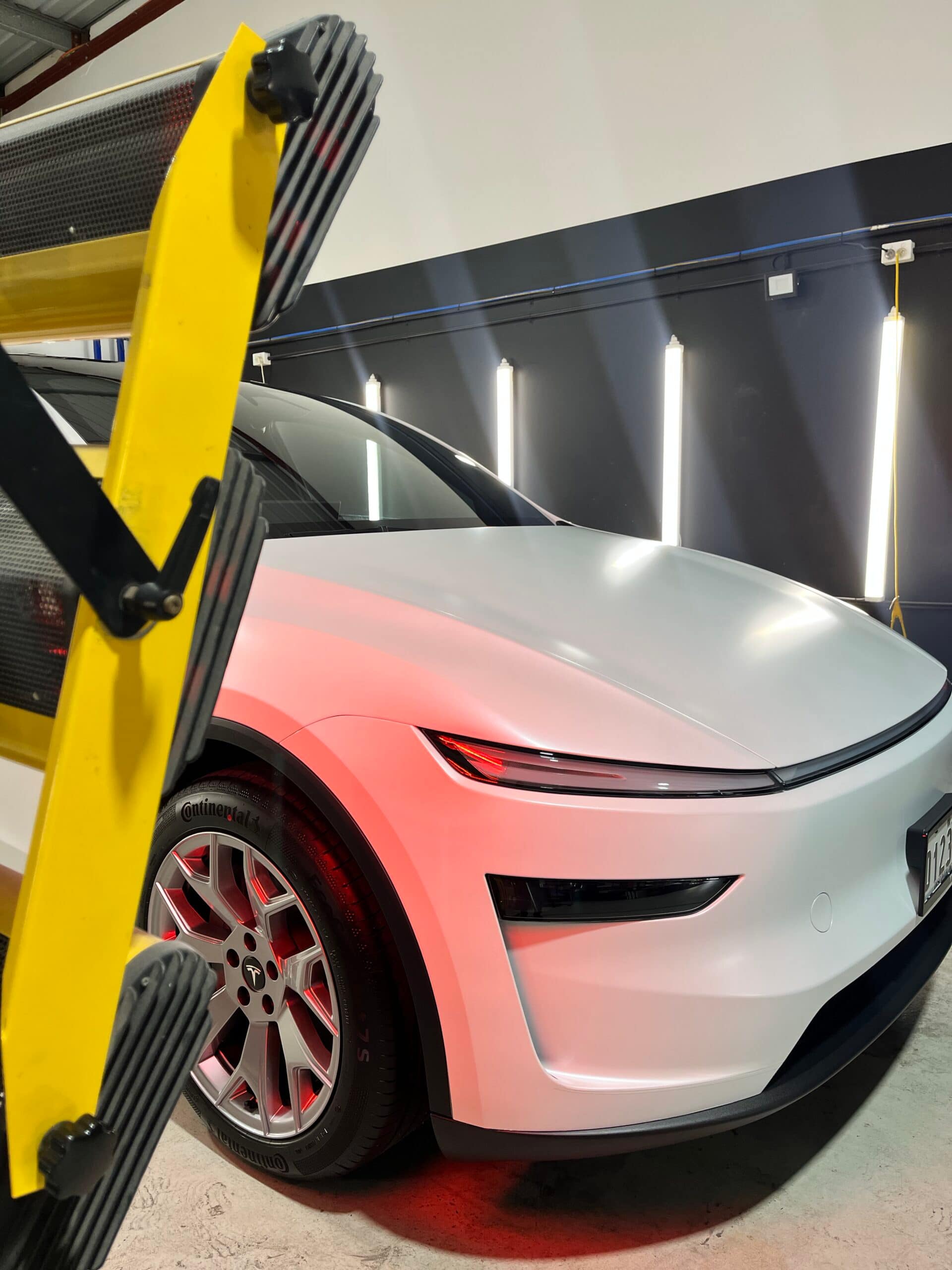
Paint protection film continues to develop, and one of the newer terms appearing in the industry is PCU. It is commonly promoted as the next step beyond TPU, with claims relating to strength, clarity, weather resistance and longer service life.
Some of those developments may prove worthwhile, but a newer material and a stronger list of advertised specifications do not automatically make it the right choice for every vehicle or installer.
At AutoFX WA and OPTiX, we continue to use established aliphatic TPU paint protection film while watching how PCU performs over a longer period in real vehicles and Australian conditions.
What is TPU paint protection film?
TPU stands for thermoplastic polyurethane. It has a long history as the flexible base material used in quality paint protection films.
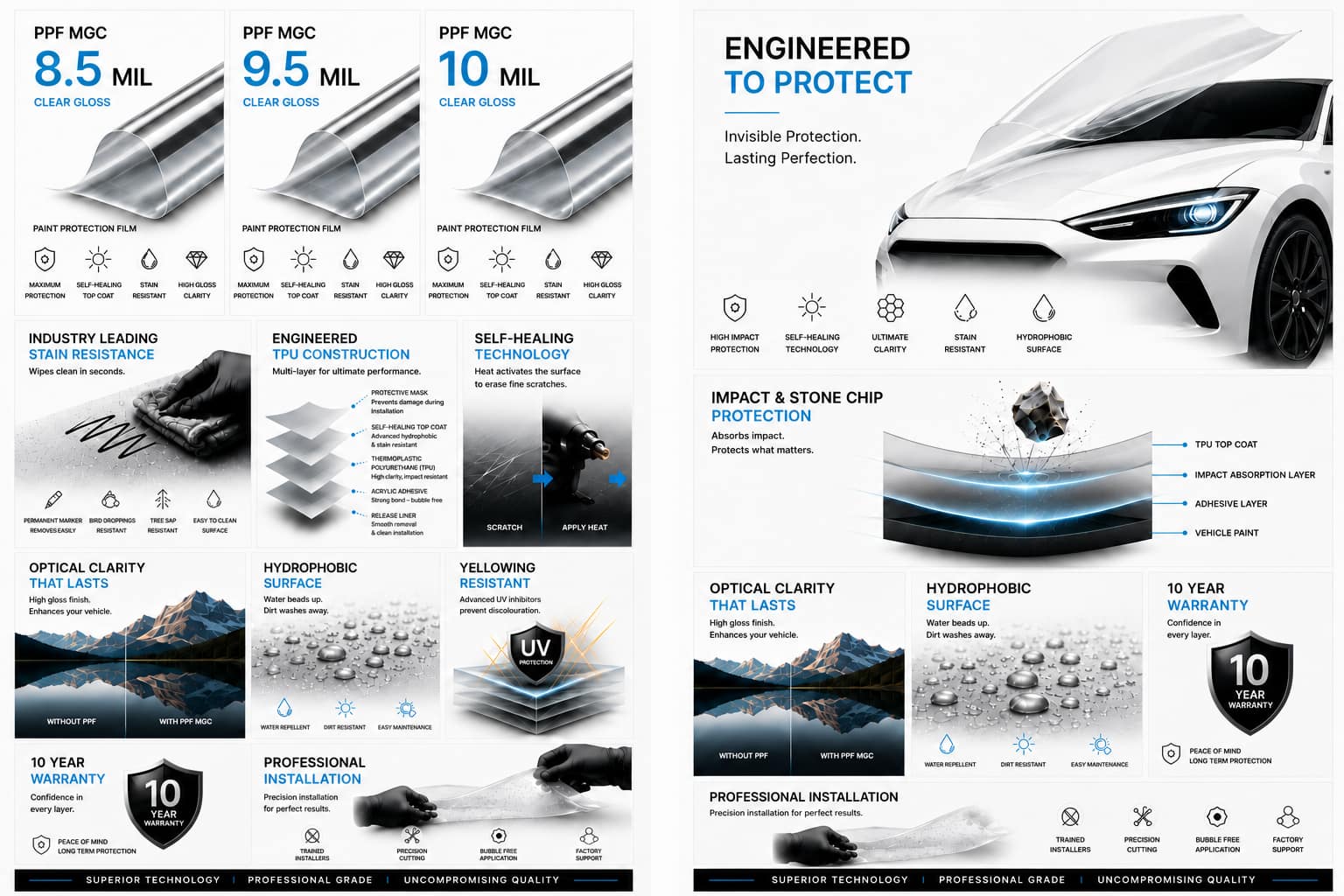
A complete PPF product is more than one layer of TPU. Its performance also depends on the quality of the base film, adhesive, surface coating and manufacturing process. These layers must work together to provide clarity, flexibility, stain resistance, adhesion and protection from normal road use.
Aliphatic TPU is particularly suitable for exterior protection because it can be formulated for colour stability and resistance to ultraviolet exposure and weathering. It can also conform around curved vehicle panels while absorbing the impact of minor road debris.
Modern TPU film can provide a self-healing surface, hydrophobic behaviour and a choice of gloss, satin or matte finishes. Its capabilities are well understood by manufacturers and experienced installers.
What does PCU mean?
In current PPF marketing, PCU generally refers to a polyurethane material using polycarbonate-based chemistry. Suppliers are promoting it as offering improvements in areas such as toughness, hydrolysis resistance, heat performance and stability.
These characteristics sound promising. However, PCU is still comparatively new as a widely promoted PPF category, and terminology is not always used consistently between manufacturers.
A label on its own does not reveal the complete construction or quality of a film. Two products described as PCU can still have different adhesives, top coatings, thicknesses and installation characteristics. The same applies to TPU films.
Why newer does not automatically mean better
The PPF industry regularly introduces new coatings, constructions and marketing terms. Some become genuine improvements, while others offer only a small difference or disappear after a short period.
Laboratory testing can provide useful information about strength, temperature resistance and exposure to chemicals or moisture. What it cannot immediately reproduce is many years of washing, sunlight, heat, contamination, stone impacts and movement across thousands of vehicles.
That longer history is important when a customer is paying to have large sections—or an entire vehicle—protected.
We are not saying that PCU is unsuitable or that it will not become a major part of the PPF industry. We are saying that we want to see more long-term, independent and real-world evidence before changing simply because a material is newer.
Why OPTiX currently remains with aliphatic TPU
OPTiX PPF uses an established aliphatic TPU foundation. Our manufacturing supply information identifies aliphatic TPU materials sourced from major chemical producers, including Lubrizol and BASF.
This does not mean those companies certify or endorse the completed OPTiX film. It means the base material comes from recognised suppliers with established experience producing TPU for demanding film and surface-protection applications.
We understand how the current OPTiX films install, stretch and conform. We also have experience with their clarity, surface finish and day-to-day behaviour on customers’ vehicles.
That practical workshop knowledge has value. Changing materials would require more than comparing specification sheets. We would need to test installation behaviour, adhesive performance, edge stability, appearance and how the complete film responds over time.
The complete film is more important than one material name
Customers should be cautious about choosing PPF only because one abbreviation sounds newer than another.
The important questions include:
- Who manufactures the base film and adhesive?
- Is the polyurethane aliphatic and suited to exterior exposure?
- How clear and consistent is the finished film?
- How does it install around curves, edges and complex panels?
- What does the warranty genuinely cover?
- Is the installer experienced with that specific film?
- Is there meaningful real-world history behind its claims?
Film thickness and material chemistry are important, but they are only parts of the complete result. Preparation, pattern design, fitting, edge finishing and ongoing care also affect how well a PPF installation performs.
Keeping an open mind without rushing
We will continue monitoring PCU and testing worthwhile developments as they become available. If the material establishes clear benefits in installation and long-term vehicle use, there may be a reason to introduce it in the future.
For now, we are comfortable using an aliphatic TPU system that we understand and can support with genuine workshop experience.
This is not about rejecting new technology. It is about the importance of separating promising technical development from claims that have not yet built the same real-world history.
If you are considering PPF for part or all of your vehicle, learn more about our paint protection film installation in Perth.
You can also contact AutoFX WA for a PPF quote and discuss the most practical coverage and film thickness for your vehicle.