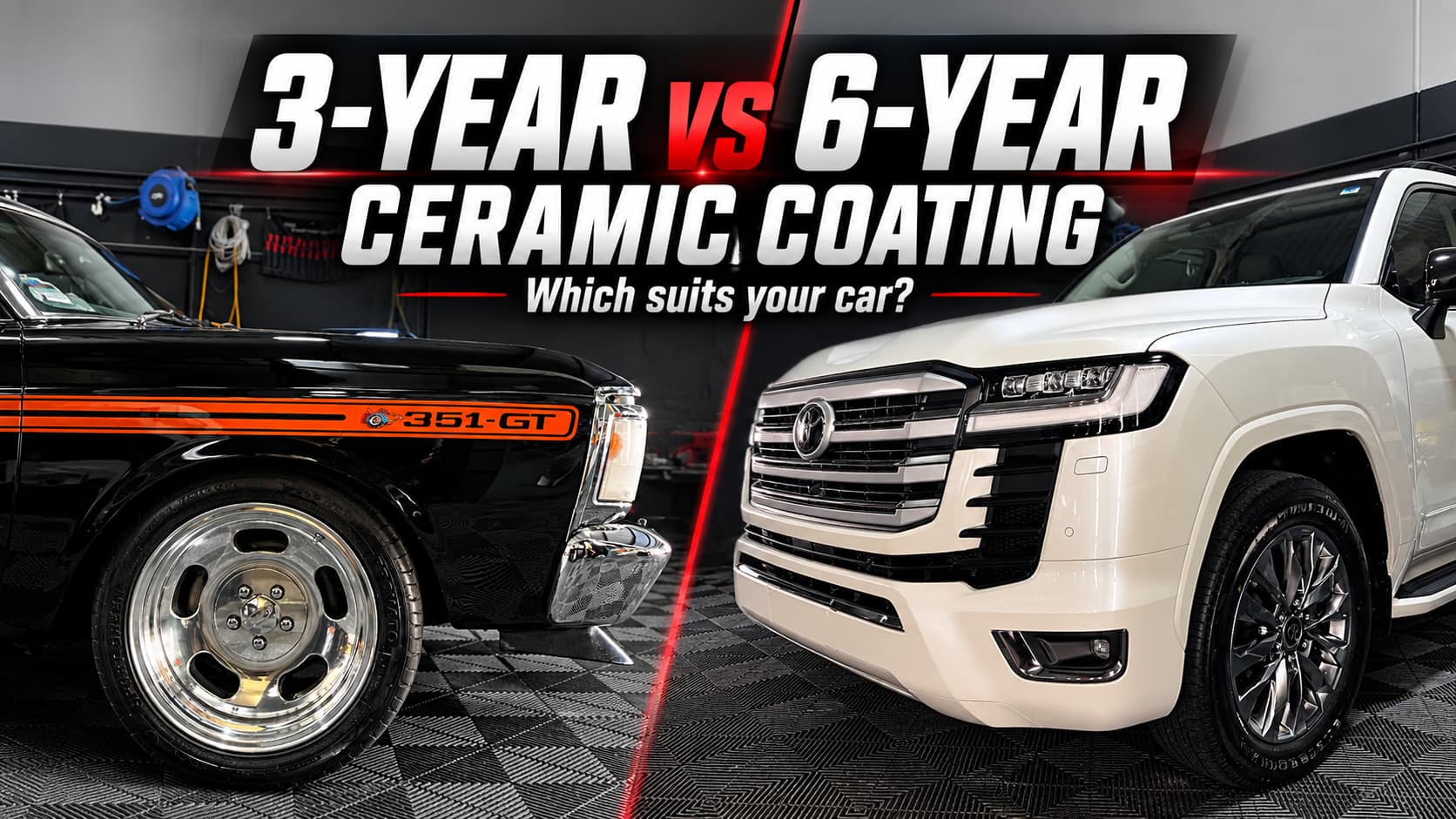
Choosing between a three-year and six-year ceramic coating should not simply mean selecting the option with the longest advertised durability. The right choice depends on how long you intend to keep the vehicle, how it is used and stored, its current paint condition and how you plan to maintain it.
At AutoFX WA, our three-year options include OPTiX OP888 and a single layer of OPTiX FMJ. Our six-year coating service uses two carefully applied layers of FMJ.
These options can all provide durable protection, but they are not identical products or installation systems.
What is the difference between three-year and six-year ceramic coating?
The main difference is the coating system, the number of layers applied and its intended service life under appropriate maintenance.
| Coating option | Coating system | Expected durability | Best suited to |
|---|---|---|---|
| OPTiX OP888 | SiO₂ ceramic coating | Approximately three years | Owners wanting practical protection, straightforward maintenance and compatibility with gloss, satin or matte finishes |
| Single-layer OPTiX FMJ | SiO₂ with reduced graphene oxide | Approximately three years | Owners wanting FMJ’s strong bonding characteristics, toughness and slick finish without selecting the complete six-year system |
| Two-layer OPTiX FMJ | Two separately applied FMJ layers | Approximately six years | Long-term owners who want a more substantial coating system and are prepared to maintain it correctly |
These timeframes are practical expectations rather than a promise that every vehicle will behave identically. Storage, kilometres travelled, washing methods, environmental exposure and maintenance can all affect the coating’s real-world performance.
Our three-year ceramic-coating options
OPTiX OP888 is a practical SiO₂ ceramic coating suitable for owners who want easier cleaning, useful chemical resistance and ongoing protection without committing to the longer FMJ system.
OP888 can also be used on gloss, satin and matte finishes. That makes it particularly useful where enhancing gloss would be inappropriate.
A single layer of OPTiX FMJ also provides an expected service life of approximately three years. FMJ combines an SiO₂ coating foundation with reduced graphene oxide. It develops a strong bond, a tough exterior and a noticeably slick surface when applied correctly.
FMJ is more demanding to install than OP888. Its strong bonding behaviour can make it feel sticky during application, requiring careful levelling and controlled working conditions.
Although OP888 and single-layer FMJ have similar expected durability, that does not make them the same coating. We consider the vehicle, finish, intended use and owner’s priorities before recommending one.
How the six-year FMJ system is applied
Our six-year coating system uses two layers of OPTiX FMJ. Each layer must be applied and levelled carefully rather than treating the second application as a quick top-up.
We allow a minimum of two hours between layers. When workshop timing allows, the first layer is commonly left overnight before the second layer is applied.
The vehicle must then be protected from water and contamination during its initial curing period. Full curing generally continues over approximately three to seven days, depending on the conditions.
Two layers do not mean the paint becomes twice as resistant to every type of damage. The additional layer creates a more substantial coating system intended to provide longer-lasting protection when it is maintained appropriately.
Paint preparation is important for both options
A coating does not create good paint underneath itself. Preparation is responsible for the clarity, depth and gloss visible in the completed vehicle. The coating protects and preserves that prepared finish.
Before coating, the vehicle is washed, chemically decontaminated, inspected and machine polished to the appropriate level. Even new vehicles can arrive with light marring, water spotting, transportation marks or damage caused during dealer preparation.
The level of polishing should suit the condition of the paint and the owner’s expectations. Selecting a six-year coating does not automatically mean that every defect should be aggressively chased before application.
Where the paint contains deep scratches, thin areas or previous repairs, preserving the available clear coat may be more important than attempting to create an unrealistic defect-free result.
Learn more about our paint-enhancement service and paint-correction options.
When does a three-year coating make sense?
A three-year coating can be the sensible choice when:
- You may sell or replace the vehicle within the next few years.
- You want practical protection without paying for a longer system you may never fully use.
- The vehicle is a heavily used daily driver that may need further polishing as normal wear develops.
- You want to protect a satin or matte finish with OP888.
- You prefer to reassess the paint after several years before deciding on the next treatment.
For many daily-driven vehicles, a three-year coating provides a useful balance between cost, protection and future flexibility.
When is the six-year FMJ coating worthwhile?
The two-layer six-year FMJ system may be more suitable when:
- You expect to keep the vehicle for the longer term.
- The vehicle is new or its paint has been properly prepared.
- You want a more substantial coating system from the beginning.
- You value FMJ’s tough and noticeably slick finish.
- You are committed to maintaining the vehicle with appropriate washing methods.
A six-year system can be fitted to a daily driver, weekend vehicle or shed-kept car. However, the claimed duration does not eliminate the need for maintenance or change what the paint encounters during normal use.
Will a six-year coating keep the paint looking new for six years?
Not automatically. The coating can continue protecting the paint while the vehicle gradually accumulates washing marks, isolated scratches, stone chips and other defects.
This is particularly relevant for a daily driver. A vehicle may eventually benefit from machine polishing because of its appearance, even if some coating performance remains.
Polishing the paint will normally remove or compromise the coating in the area being worked. The surface would then need to be appropriately prepared and recoated.
For this reason, choosing the longest coating is not always the most economical option. The owner’s likely maintenance habits and expectations should be considered alongside the advertised duration.
Does ceramic coating remove the need to wash the car?
No. Both three-year and six-year coatings require regular washing.
A ceramic coating helps prevent normal contamination from bonding as strongly and can make the vehicle easier to clean. It does not cause dirt, bird droppings, mineral deposits or road contamination to disappear by themselves.
Using a suitable wash method and drying the vehicle safely will help preserve both the coating and the appearance of the paint beneath it.
Read our guide to maintaining an OPTiX ceramic-coated car.
What affects the actual life of a ceramic coating?
Several factors can influence coating durability:
- Whether the vehicle is garaged or constantly exposed outdoors
- The number of kilometres travelled
- Exposure to heat, ultraviolet light and industrial contamination
- How frequently the vehicle is washed
- The chemicals and washing tools used
- Whether bird droppings and other contamination are removed promptly
- The quality of the original preparation and application
A garaged weekend vehicle and a daily driver parked near an airport, industrial area or coastline will not experience the same conditions, even if both received the same coating.
Has the coating failed if water behaviour becomes weaker?
Not necessarily. Road film, mineral deposits and other bonded contamination can temporarily reduce water beading and slickness.
The surface should be properly washed and, where necessary, decontaminated before deciding that the coating has failed. An inspection is more reliable than judging the coating from one wet panel.
Can a second layer of FMJ simply be added later?
The complete two-layer FMJ system is best installed during the original coating service, with the second layer applied within the correct application window.
Adding another layer months or years later is not the same process. The existing surface would first need to be inspected, cleaned and decontaminated. If polishing is required, the remaining coating may be removed before a new system is installed.
Is a six-year coating always the better choice?
No. It is the longer option, but that does not automatically make it the most appropriate choice for every vehicle or budget.
A well-maintained three-year coating can be better value for someone who changes cars frequently. A properly maintained six-year FMJ system can be worthwhile for someone keeping a vehicle long term.
The useful question is not simply, “Which coating lasts longer?” It is, “Which coating suits how I will own, use and maintain this vehicle?”
Choosing the appropriate OPTiX coating
At AutoFX WA, we inspect the paint and discuss the vehicle’s use before recommending a coating package. That allows us to consider the expected ownership period, paint condition, storage and maintenance rather than automatically directing every customer to the most expensive option.
Learn more about our OPTiX ceramic-coating packages in Perth, or request a quotation for your vehicle.
AutoFX WA is located in O’Connor and services customers from Melville, Fremantle, Cockburn and surrounding Perth areas.