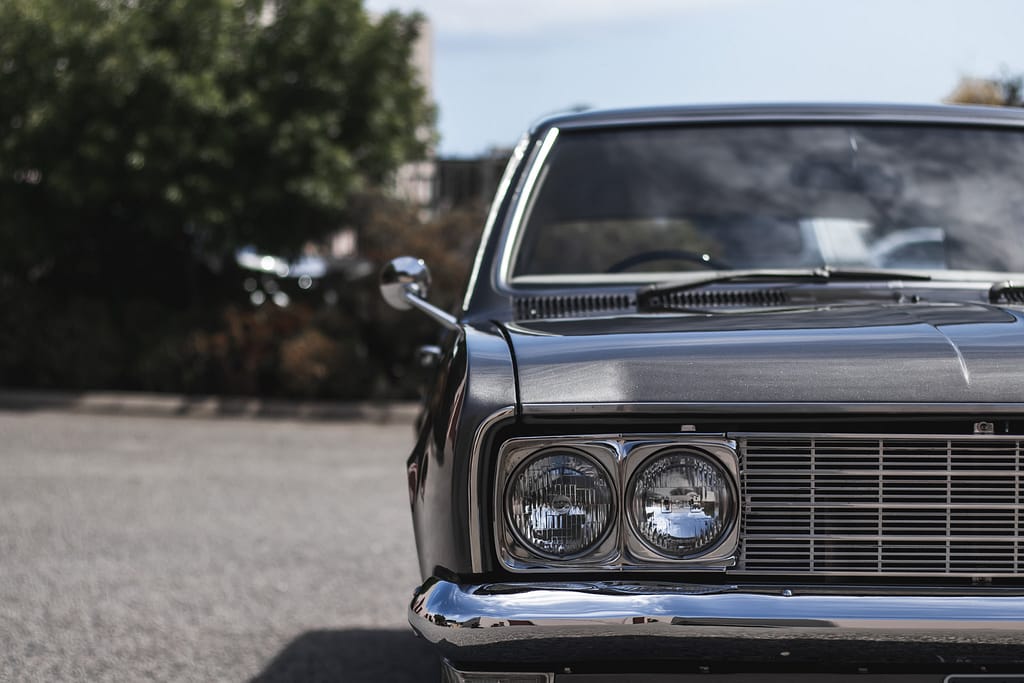
John’s metallic-black Mitsubishi Outlander is already a few years old and spends long periods parked at the airport while he is away on FIFO swings. That environment has not been kind to the paint.
The doors had accumulated too many chips from neighbouring vehicles being opened into the Outlander, and John was also concerned about the air and contamination around the airport parking area. He wanted paint protection film on the doors and roof, with the bonnet also being prepared for PPF after its existing stone chips were touched up.
Because PPF is transparent, the bonnet could not simply be covered and expected to look repaired underneath. The existing chips first needed brush touch-up, controlled sanding and a light buff before the film was installed.
Why did John choose PPF for an airport-parked FIFO vehicle?
A FIFO vehicle can spend more time sitting in a public car park than it does at home. On John’s Outlander, the repeated problem was not theoretical: the doors already showed chips consistent with contact from other vehicles opening beside it.
PPF provides a sacrificial physical layer over the paint. On the doors, that layer can help with lighter contact and surface damage. However, it cannot guarantee protection from every door impact. A sufficiently hard hit can still mark the film, damage the paint beneath it or dent the metal.
The roof was also included because John wanted protection over another large exposed surface while the vehicle sits at the airport. Film does not make the vehicle maintenance-free, and airborne contamination still needs to be washed away properly rather than allowed to build up.
Why could the bonnet chips not simply be covered with film?
Paint protection film is clear. It can protect a prepared surface, but it does not replace missing paint or make existing stone chips disappear.
If a raised touch-up or an open chip is covered without suitable preparation, the imperfection remains visible underneath and may interrupt how the film sits over that point. That is why the bonnet needed attention before installation.
Brush touch-up is also a local repair, not the same as refinishing the complete bonnet. Even after careful levelling, differences in colour, metallic orientation or the outline of the original chip may remain visible when examined closely. The aim was a practical improvement and a sounder surface for PPF—not an unsupported promise of an invisible repair.
What did the paint-thickness reading show?
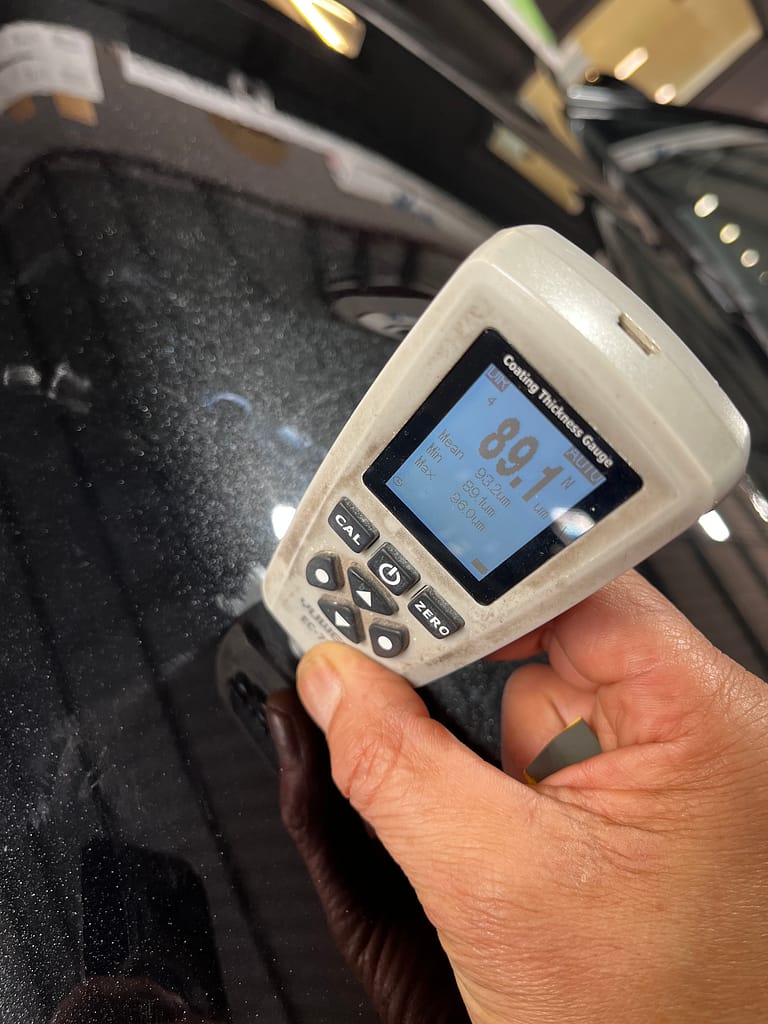
One of the photographs shows a coating-thickness reading of approximately 89 microns at the inspected location on the bonnet. This provided useful information before sanding and polishing.
A single reading does not describe the entire bonnet. Measurements need to be considered across the working area because thickness can vary between panels and even across one panel. Previous repairs, factory variation and the construction of the coating system also affect how a reading should be interpreted.
The important point was to use the available information and keep the work localised rather than treating the bonnet as though there were unlimited paint available for sanding.
How were the bonnet chips touched up and levelled?
The damaged points were first touched up carefully with a brush. The intention was to replace colour in the chips without spreading unnecessary material across the surrounding factory finish.
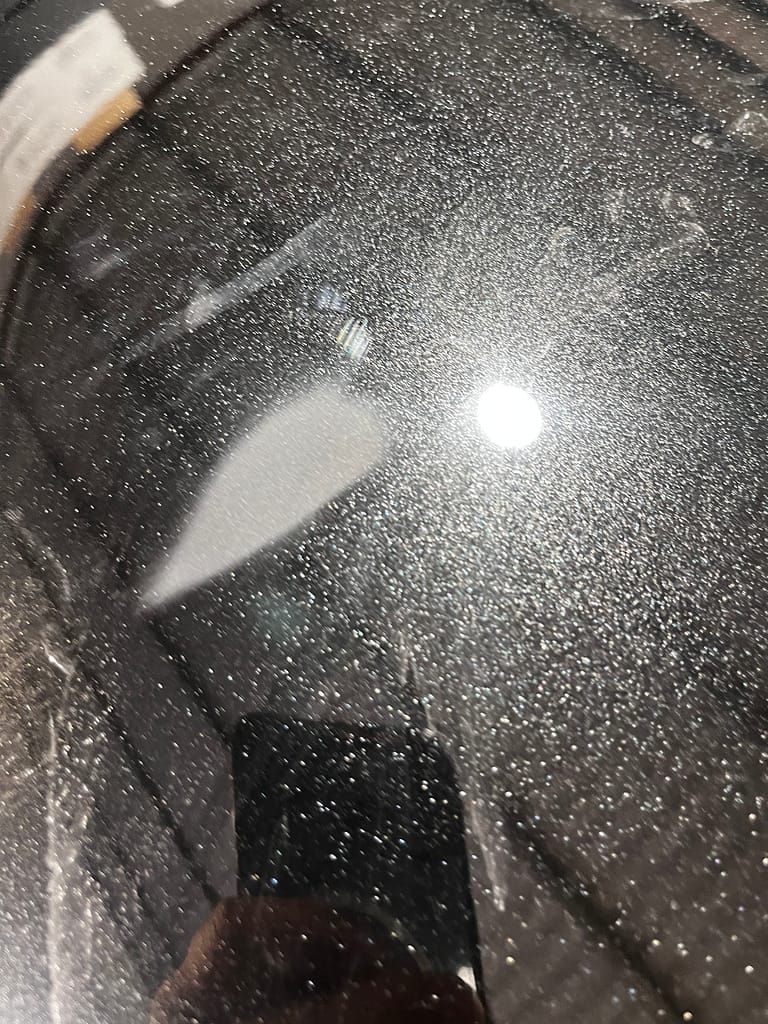
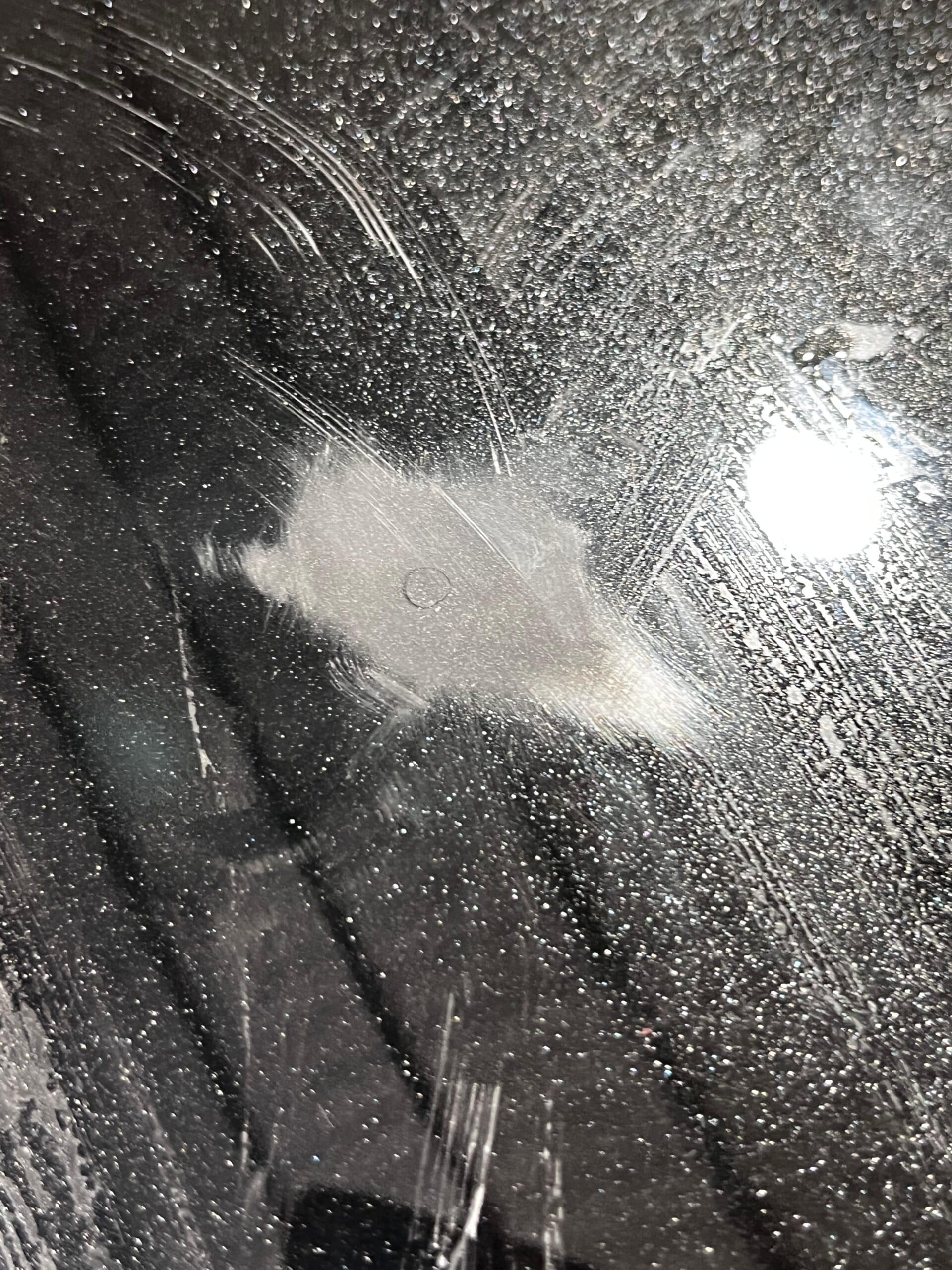
Once the touch-up was ready to be worked, the raised area was levelled locally with 2000-grit abrasive. This stage needs control because the objective is to reduce the high spot in the repair, not sand a large surrounding area or chase the chip too aggressively.
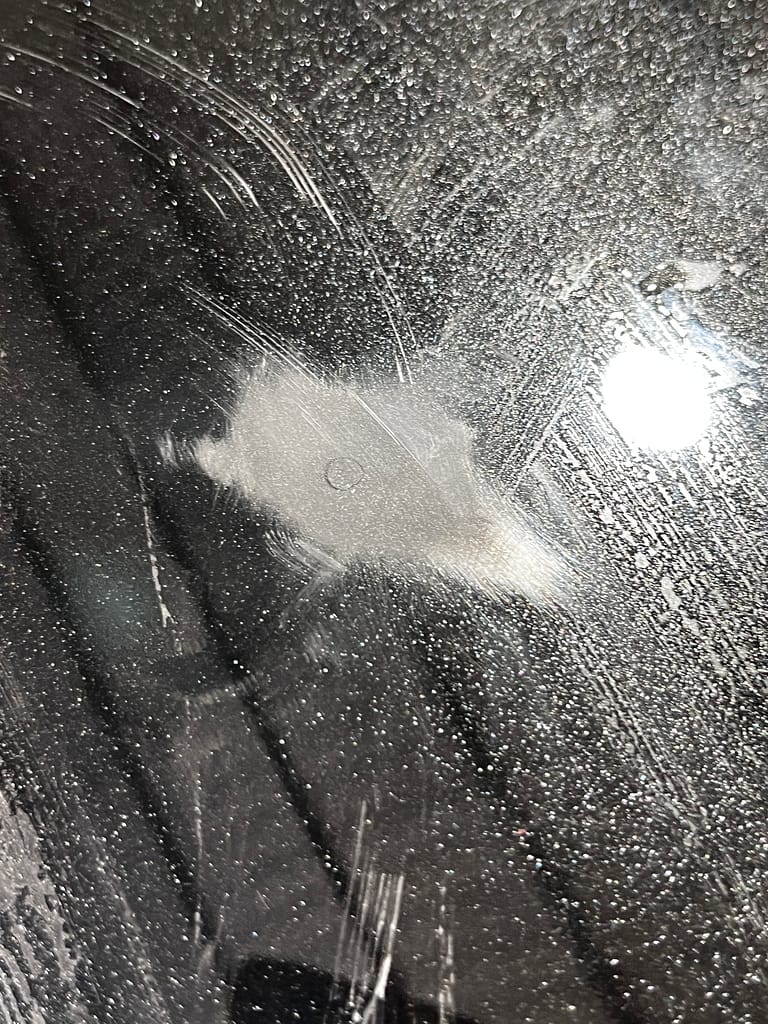
The repair was then refined with 2000-to-3000-grit foam discs. Moving through the finer abrasive stage reduces the severity of the sanding marks and creates a more manageable transition for polishing.
A light machine buff followed to restore clarity around the repaired points and remove the fine sanding haze before final preparation for film installation.
Why use several sanding stages instead of polishing immediately?
A blob of touch-up paint can sit above the surrounding finish. Polishing alone is not always the controlled way to level that height because it may spend too much time heating and working the surrounding paint without flattening the repair consistently.
Starting with localised 2000-grit sanding allowed the raised point to be reduced more predictably. Refining with 2000-to-3000-grit foam discs then made the remaining sanding pattern finer before the light buff.
Each stage had a specific purpose: level the repair, refine the abrasive marks and then restore clarity. The photographs show this as a visible working process rather than pretending the bonnet moved directly from chipped paint to finished PPF.
What PPF areas were included on John’s Outlander?
John selected PPF for the doors and roof because of how the Outlander is parked and used during his FIFO swings. The bonnet was also prepared and protected after its existing chips were repaired and refined.
This was a use-based protection plan. The doors addressed the repeated neighbouring-car contact that had already caused damage, the roof covered a large exposed upper surface, and the bonnet received preparation before film rather than trapping untreated chips underneath.
What can PPF realistically do in an airport car park?
PPF can provide useful physical protection from lighter scuffs, scratches and minor impacts. It also gives the original paint a replaceable outer layer in the areas where it is installed.
It cannot stop a hard door impact from denting a panel, and it cannot prevent every mark. It also does not stop airborne dirt or environmental fallout from settling on the vehicle. Regular, suitable washing remains necessary.
The benefit for John is that the most relevant surfaces now have an additional layer between the metallic-black paint and the conditions the Outlander regularly faces.
What information helps when quoting PPF for an older vehicle?
Useful information includes:
- Clear photographs of the complete vehicle and the areas being considered for film.
- Close-ups of stone chips, scratches, touch-ups and previous repairs.
- How the vehicle is parked and used.
- Which panels receive the most contact or environmental exposure.
- Whether the owner wants existing damage improved before installation.
You can request a PPF quote and include these details with your photographs.
Frequently asked questions
Can PPF be installed over stone chips?
It can physically be installed, but the chips will not disappear because the film is transparent. Existing damage should be inspected first so the owner understands what will remain visible and whether touch-up is appropriate.
Will touch-up paint look the same as a full bonnet respray?
No. Brush touch-up is a local repair. Careful levelling can improve it, but colour, metallic orientation and the repair outline may remain visible compared with a properly refinished complete panel.
Does PPF prevent dents from other car doors?
No. It may help with lighter surface contact, but a hard impact can still deform the metal or damage the paint and film.
Why measure paint before sanding a chip repair?
Paint-thickness readings help inform how cautiously the area should be approached. They are one part of the inspection and must be considered across the working area rather than relying on a single number.
Does roof PPF stop airport contamination?
It provides a protected film surface, but contamination can still settle on it. The roof still needs suitable washing and maintenance.
Learn more about our paint protection film service in Perth. For another practical preparation example, see our stone-chip touch-up guide, or read how PPF differs from other paint-protection options.
AutoFX WA is located in O’Connor, convenient for customers from Fremantle, Melville, Cockburn, Cottesloe and surrounding Perth areas.