A closed-door respray can give a car a fresh start, but it does not always mean the paint is finished to the level the owner wants.
That is an important thing to understand.
Fresh paint can look good from a few metres away, but once you get close and start checking the finish properly, there can still be sanding marks, texture, haze, polishing marks or areas that need refining.
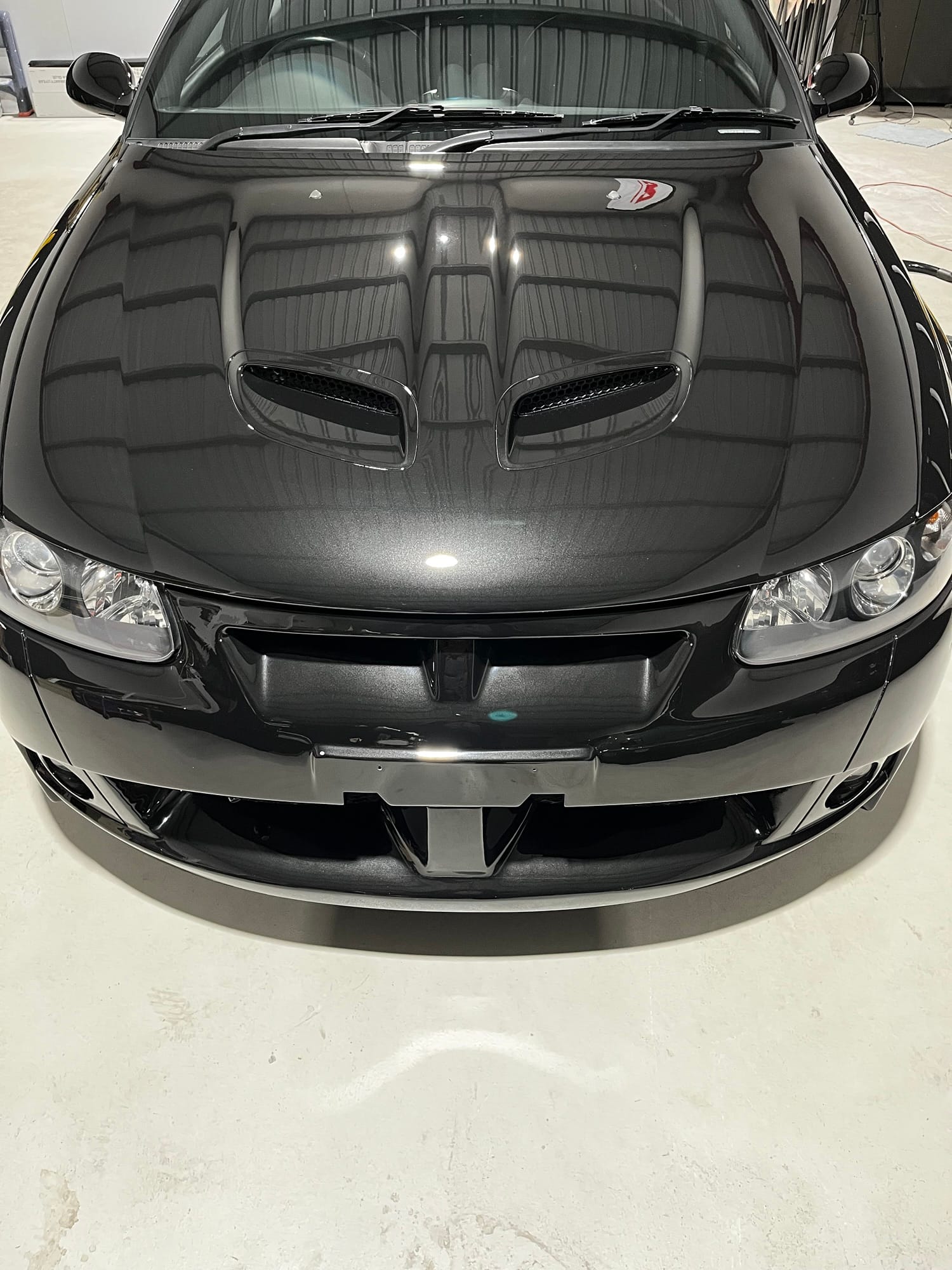
This HSV GTO had already had a closed-door respray, but the owner wanted the finish taken further.
That is where the real work started.
HSV GTO Paint Correction And Ceramic Coating Perth
This HSV GTO came to AutoFX WA after a closed-door respray that had cost around $7,000.
The respray gave the car a fresh base, but it still needed careful finishing work to bring the paint up properly.
This was not a quick polish.
The paint was hand sanded from 1500 through to 3000 grit, then corrected and refined over many hours.
By the time the sanding and polishing work was complete, around 80 hours had gone into the paint correction side of the job.
After that, splash-area paint protection film was designed and fitted, followed by ceramic coating to help protect the finish and make the car easier to maintain.
A Respray Still Needs Finishing
People sometimes think a respray means the paint is automatically finished.
That is not always the case.
A panel shop’s job is usually to repair, paint and get the vehicle to a good standard for the work being done.
That does not always mean the paint has been fully refined like a detailing and correction job.
Fresh paint can still have orange peel, dust nibs, sanding marks, texture differences or machine marks that need to be corrected if the owner wants a higher-level finish.
That does not always mean the respray is bad.
It just means painting and finishing are not always the same thing.
Why Sanding Was Needed
On this HSV GTO, hand sanding was part of the process because the paint needed more refinement than a normal machine polish could give.
The sanding was done from 1500 through to 3000 grit.
That sort of work needs patience because you are not just trying to make the paint shiny.
You are levelling and refining the surface before polishing it back up.
If sanding is rushed or done carelessly, it can create more problems than it solves.
The important part is knowing how far to go and when to stop.
80 Hours Of Paint Correction
Around 80 hours went into the sanding and paint correction on this GTO.
That gives a better idea of what this job really was.
This was not a quick enhancement detail.
This was a long correction process where the paint had to be worked carefully across the vehicle.
Each panel needed attention.
The sanding marks needed to be removed properly.
The finish then needed to be refined so the paint had clarity, gloss and a cleaner reflection.
That sort of result comes from time, not from rushing around the car with one quick pass.
Paint Correction After A Closed-Door Respray
A closed-door respray usually means the exterior panels are painted without fully stripping the car down like a full bare-shell restoration.
That can be a practical way to freshen up a car, but the finish still depends on the preparation, paintwork and final polishing.
On a car like a HSV GTO, the owner usually cares about how the paint looks up close.
Swirl marks, sanding haze, uneven texture and poor reflections can stand out once the car is under good lighting.
Paint correction is what brings the finish up after the paintwork is complete.
For current correction services, see Paint Correction Perth.
Not Chasing Fake Perfection
With a job like this, the aim is not to make silly promises.
Paint correction is about improving and refining the finish as safely as possible.
There are always limits.
Paint thickness, panel shape, previous work, sanding marks, edges and the condition of the respray all affect how far the correction can go.
On fresh paint, you also need to be careful because you are working with a finish that has already been through a big process before it reaches the detailer.
The aim is to improve the paint properly without taking unnecessary risks.
Why Lighting Is Important
Good lighting is important on this type of correction work.
You need to see sanding marks, haze, pigtails, machine marks and areas that still need refining.
A car can look good under poor lighting and then show defects outside in the sun.
That is why inspection throughout the job is important.
When 80 hours are going into a correction, you are not just polishing until it looks shiny.
You are checking the finish as you go and making sure the paint is actually improving.
Splash-Area PPF
After the paint correction, splash-area PPF was designed and installed on the GTO.
This was done because some areas of the car needed extra physical protection from road spray, grit, rubber, grime and general use.
PPF is different from ceramic coating.
Paint protection film is a physical layer over the paint.
Ceramic coating is mainly used for gloss, slickness, water behaviour and easier maintenance.
On this car, the PPF was used where physical protection made sense.
Designed And Cut For The Car
The splash-area PPF was designed and cut for the job.
That took extra time because the film needed to suit the shape of the vehicle and the areas being protected.
Around another 8 hours went into the paint protection film side of the job.
That includes the thinking, measuring, designing, cutting and fitting required to make the film work properly.
That is the part people often do not see.
They see the finished car, but they do not see the hours that go into making protection fit the areas that need it.
Why PPF Was Important On This GTO
After spending around 80 hours refining the paint, it made sense to protect selected high-risk areas.
There is no point doing that much correction and then leaving vulnerable areas completely exposed if the car is going to be driven and enjoyed.
PPF does not make the car impossible to damage.
It does not stop every mark or impact.
But it does give the paint a sacrificial layer in the areas most likely to be hit by grit, rubber, road spray or contact.
That is a practical way to protect the work that has already been done.
Ceramic Coating After Correction
After the sanding, correction and PPF work, the paint was ceramic coated.
The coating was added to help with gloss, slickness, water behaviour and easier maintenance.
On a car like this, coating is not a replacement for paint correction.
The correction had to come first.
The coating then helped protect the finish and make it easier to look after.
That is the order I prefer: prepare the paint properly first, then protect it.
For current coating services, see Ceramic Coating Perth.
Two Layers Of Protection
This GTO received a two-layer ceramic coating system after the correction work.
Layering a coating should not be treated like a gimmick.
The surface still needs to be prepared properly, the first layer needs to be applied correctly, and the next layer needs to be done within the correct timing and conditions.
The coating is only as good as the surface underneath and the care taken during application.
That is why the preparation and process are so important.
The Importance Of The Right Order
The order of this job was important.
First, the paint had to be refined.
Then the selected PPF areas could be designed and installed.
After that, ceramic coating could be applied to support the finished result.
If the order is wrong, the result can suffer.
There is no point coating over paint that still needs serious correction.
There is also no point doing film work without preparing the surface properly first.
Each step depends on the one before it.
Why This Job Took Time
This job took time because the result needed time.
Hand sanding takes time.
Machine correction takes time.
Checking each panel takes time.
Designing and fitting PPF takes time.
Ceramic coating takes time if it is being applied properly.
There is no shortcut to that sort of work.
If someone wants a quick clean and shine, that is a different job.
This HSV GTO needed a proper correction and protection process.
Fresh Paint Needs Sensible Care
Freshly painted cars need sensible care.
Depending on the paint system and timing, not every product or process should be rushed onto fresh paint.
The paint condition, cure time and advice from the painter should be considered before heavy correction, film or coating work is done.
On this GTO, the correction and protection work was carried out as part of a controlled process.
The important part is not assuming every fresh respray is ready for every product straight away.
The car needs to be assessed properly.
Why This HSV GTO Page Is Worth Keeping
This older AutoFX WA page is worth keeping because it shows real workshop work at a serious level.
It has the sort of detail that builds trust.
A closed-door respray.
Hand sanding from 1500 to 3000 grit.
Around 80 hours of paint correction.
Custom splash-area PPF.
Another 8 hours of film work.
Ceramic coating after the correction process.
That is a proper job story, not just a before-and-after post.
AutoFX WA Paint Correction Perth
AutoFX WA offers paint correction for vehicles that need polishing, refinement and surface preparation before protection.
Some cars need a light enhancement.
Some need more serious correction.
Some, like this HSV GTO, need many hours of careful sanding and polishing because the paint finish requires more work.
The right level of correction depends on the vehicle, the paint condition, the owner’s expectations and how much paint can be safely worked.
Related AutoFX WA Services
For paint refinement and protection, AutoFX WA offers Paint Correction Perth for sanding, polishing and paint refinement, Ceramic Coating Perth for bonded protection and easier maintenance, Paint Protection Film Perth for physical impact and splash-area protection, and Car Detailing Perth for cleaning, preparation and maintenance.
Final Thoughts
This HSV GTO is a good example of why fresh paint can still need proper finishing.
The closed-door respray gave the car a new base, but the finish still needed sanding, correction and refinement to bring it up properly.
Around 80 hours went into the paint correction before protection was added.
Splash-area PPF was designed and installed where physical protection made sense.
Ceramic coating was then applied to help with gloss, slickness and easier maintenance.
The important part is not pretending the respray was bad.
The important part is understanding that paintwork and final paint refinement are not always the same thing.
When the owner wants a higher-level result, the finishing work is where the time goes.