Headlights are one of those parts of the car people often leave until there is already a problem.
By the time they start going yellow, cloudy, cracked or heavily sandblasted, the job becomes harder.
That is why headlight paint protection film can make sense, especially when the headlights are still in good condition.
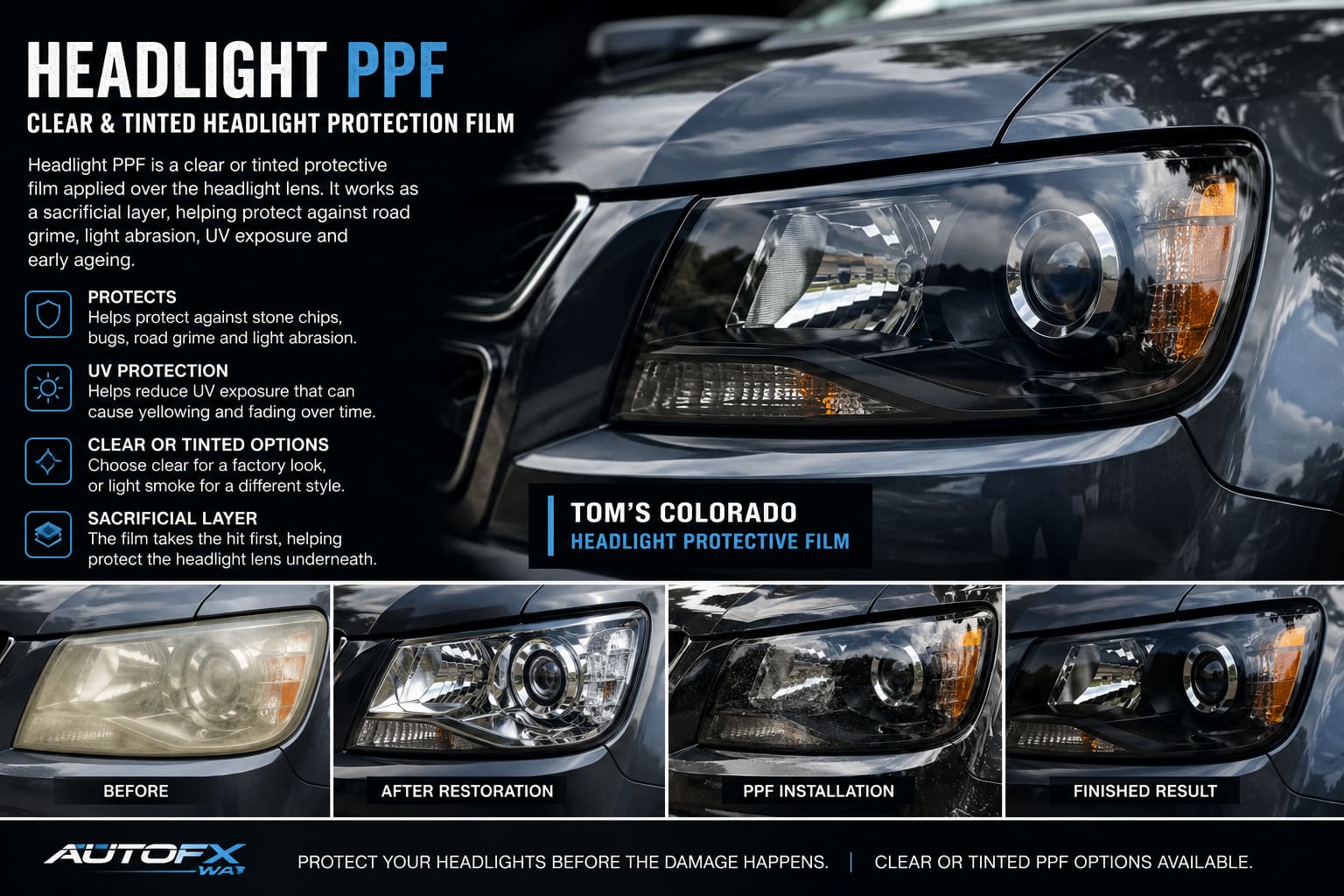
On Tom’s Colorado, the headlights were protected with film because the owner wanted to give the lenses a better chance before they started looking tired.
That is the best time to protect them.
Headlight PPF Perth
Headlight PPF is a clear or tinted protective film applied over the headlight lens.
It works as a sacrificial layer over the plastic lens, helping protect it from normal road use.
Headlights cop a lot.
They sit right at the front of the vehicle, taking bugs, road grime, light abrasion, small stones, washing marks, sun exposure and general weathering.
Film will not make headlights impossible to damage.
It will not stop every mark or every impact.
But it can give the lens a better layer of protection compared with leaving the plastic completely exposed.
Why Headlight Protection Is Important
Modern headlights can be expensive.
On some vehicles, a headlight is not just a simple lens and globe anymore.
There can be LED modules, sensors, projector sections and expensive assemblies behind the plastic lens.
Once the lens becomes badly yellowed, cracked or sandblasted, it can affect the way the car looks and, in some cases, the way the light performs.
Protecting the lens early is usually better than waiting until the damage is already there.
That is the simple reason headlight PPF is worth considering.
Tom’s Colorado Headlight Film
Tom’s Colorado was fitted with headlight protective film as a practical protection upgrade.
A 4WD or ute can see plenty of road grime, bug impact, weather, dust and normal use.
Headlights on this type of vehicle are right in the firing line.
Adding film gives the lenses a sacrificial layer, so the film takes the first hit from normal wear rather than the lens being left completely exposed.
The important part is doing it while the headlights are still in good condition.
PPF is better as protection than as a fix for a badly damaged headlight.
Clear Headlight PPF
Clear headlight PPF is the option for owners who want protection without changing the look of the vehicle too much.
It keeps the headlight looking closer to factory while adding a protective film layer over the lens.
This is usually the safest choice for customers who want the car to look original.
Clear film is also a good option for new cars, 4WDs, daily drivers and vehicles where the owner wants practical protection without a styling change.
The aim is simple.
Protect the lens and keep the appearance clean.
Tinted Headlight Film
Tinted headlight film gives the headlight a different look.
Light smoke or darker film can change the front-end appearance of the vehicle.
Some owners like that look, especially on darker coloured cars, 4WDs or modified vehicles.
But tinted film needs to be chosen carefully.
Any tint over a headlight can affect the look and may affect light output depending on the film and darkness.
The important part is being realistic before choosing it.
Clear film is mainly about protection.
Tinted film is protection plus a styling change.
Headlight PPF Is Not Magic
Headlight PPF is useful, but it is not magic.
A hard enough stone can still mark or damage film.
Sharp impact can still cut through it.
Poor washing can still mark the film surface.
Film can also age over time because it is sitting on the front of the vehicle in a harsh area.
That does not make it a bad product.
It just means it needs realistic expectations.
The film is there to take abuse before the headlight lens does.
PPF Is A Sacrificial Layer
The easiest way to explain headlight film is that it is a sacrificial layer.
The headlight lens is the expensive part.
The film sits over it and takes the day-to-day exposure first.
If the film becomes worn, marked or tired over time, it can be removed and replaced.
That is usually a better situation than having the headlight lens itself badly damaged.
This is why headlight PPF can be a very practical upgrade, especially on vehicles that do a lot of freeway, country, 4WD or daily driving.
Headlight PPF Before The Lenses Go Yellow
The best time to install headlight PPF is when the headlights are still clear.
If the lens is already badly yellowed, oxidised or cloudy, the headlight may need restoration first.
Film does not hide all existing damage.
If the surface underneath is poor, the result will be limited.
That is why inspection is important before fitting film.
Sometimes the headlight can be cleaned and protected.
Sometimes it needs restoration first.
For damaged or cloudy headlights, see Headlight Restoration Perth.
Headlight Restoration And PPF Together
Headlight restoration and PPF can work well together when the lens is already faded or cloudy.
The restoration improves the lens surface first.
The film then helps protect the restored surface going forward.
That can be a good option for older vehicles where the headlights are still worth saving.
Without protection, a restored headlight can start to deteriorate again over time.
Adding film gives the lens a better chance after the restoration work has been done.
Why Some Headlights Age Faster
Headlights can age quickly depending on how the vehicle is used and stored.
Sun exposure, heat, UV, washing habits, road grime, bugs, chemicals and general wear all play a part.
Cars parked outside usually have a harder life than cars stored undercover.
Vehicles that do a lot of country driving or freeway work also tend to collect more bug impact and road grime on the front end.
Headlights sit right in that area, so they take a lot of punishment over time.
Why Good Fitment Is Important
Headlight PPF needs to be fitted properly.
The film needs to follow the shape of the lens, sit cleanly and be trimmed or patterned neatly.
Headlights can have curves, raised sections, sharp edges and complex shapes.
If the film is rushed, it can look untidy or lift at the edges.
The important part is making the film fit the headlight properly, not just putting a piece over the lens and hoping it stays there.
Clear Or Tinted Film?
The choice between clear and tinted film comes down to what the owner wants.
If the goal is mainly protection, clear film is usually the better option.
If the owner wants a darker look as well, a light smoke or tinted film may be considered.
But tinted film should not be chosen without thinking about appearance, light output and legal suitability.
Not every vehicle suits a tinted headlight.
Not every owner wants that look long term.
Sometimes the clean factory look with clear film is the better choice.
PPF And Ceramic Coating Are Different
Headlight PPF and ceramic coating are not the same thing.
PPF is a physical film layer.
Ceramic coating is a liquid-applied coating used mainly for gloss, slickness, water behaviour and easier maintenance.
If the aim is physical protection for the headlight lens, film is the more relevant product.
A coating can help with cleaning, but it will not offer the same physical barrier as PPF.
That is why headlights are a good example of where film makes practical sense.
Maintenance After Headlight PPF
Headlight film still needs to be looked after.
Wash it safely.
Do not dry wipe dust or grit across the film.
Avoid harsh cleaners that are not suitable for film.
Do not hit the edges hard with a pressure washer.
Remove bugs and road grime as soon as practical, especially after long drives.
Good maintenance helps the film stay cleaner and last better.
No Longer A UPPF Service Page
This older AutoFX WA page originally mentioned older film branding that is no longer the current AutoFX WA direction.
The useful message is still the same.
Headlight protective film can be a practical way to protect clear or tinted headlights from normal road use and early ageing.
The current focus is not the old product name.
The current focus is the service itself: protecting headlights with suitable film, fitted properly and explained honestly.
Why This Page Is Worth Keeping
This page is worth keeping because headlight PPF is a useful service that many customers understand once it is explained properly.
Most people know headlights can go cloudy or yellow over time.
Many people also know modern headlights can be expensive.
What they may not know is that film can be fitted while the headlights are still good, giving the lens a sacrificial layer before damage becomes obvious.
That is why this page still has value once the old product wording is removed.
AutoFX WA Headlight PPF Perth
AutoFX WA offers headlight PPF for selected vehicles where protective film can be fitted to the headlight lens.
Clear film is available for a factory-style look, while tinted film may be suitable for some owners who want a darker appearance.
The right choice depends on the vehicle, the owner’s expectations and the condition of the headlights.
For current film services, see Paint Protection Film Perth.
Related AutoFX WA Services
For front-end and headlight protection, AutoFX WA offers Paint Protection Film Perth for physical film protection, Headlight Restoration Perth for cloudy or aged headlights, Ceramic Coating Perth for gloss and easier maintenance, and Car Care Products Perth for safe washing and aftercare.
Final Thoughts
Headlight PPF is a simple but practical protection option.
It is not there to make the headlight impossible to damage.
It is there to give the lens a sacrificial layer against normal road use, light abrasion, bugs, grime, UV exposure and early ageing.
Clear film keeps the factory look.
Tinted film changes the appearance and needs to be chosen carefully.
On Tom’s Colorado, the film was fitted while the headlights were still worth protecting, which is the ideal time to do it.
Protect them before they look tired, not after the damage has already gone too far.