Golf R PPF Removal – What Happens When Old Film Is Left On Too Long
Les comes to AutoFX WA from the Bentley area around three times each year with his Volkswagen Golf R.
The car is parked under a fairly messy tree, and Les is also honest about the fact that he is not someone who is going to wash the car every week.
In reality, it can sometimes be a few months between washes.
That combination is hard on any exterior surface.
Tree debris, sap, dirt, moisture and organic contamination can sit on the vehicle for long periods. Even when a car has paint protection film fitted, the film still needs maintenance and should not be treated as something that can be forgotten forever.
This Golf R is a good example of what can happen when old PPF remains on a vehicle well beyond the period when it should have been removed or replaced.
The PPF Was Left On Around Two Years Too Long
The existing film was a USA-made PPF that had remained on the car for around two years beyond its expected service period.
By the time we started removing it, the job had become difficult.
Very difficult.
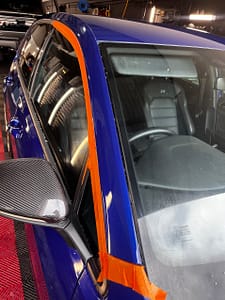
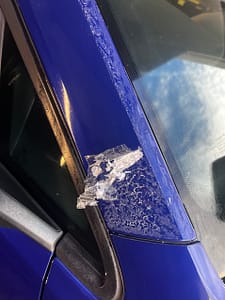
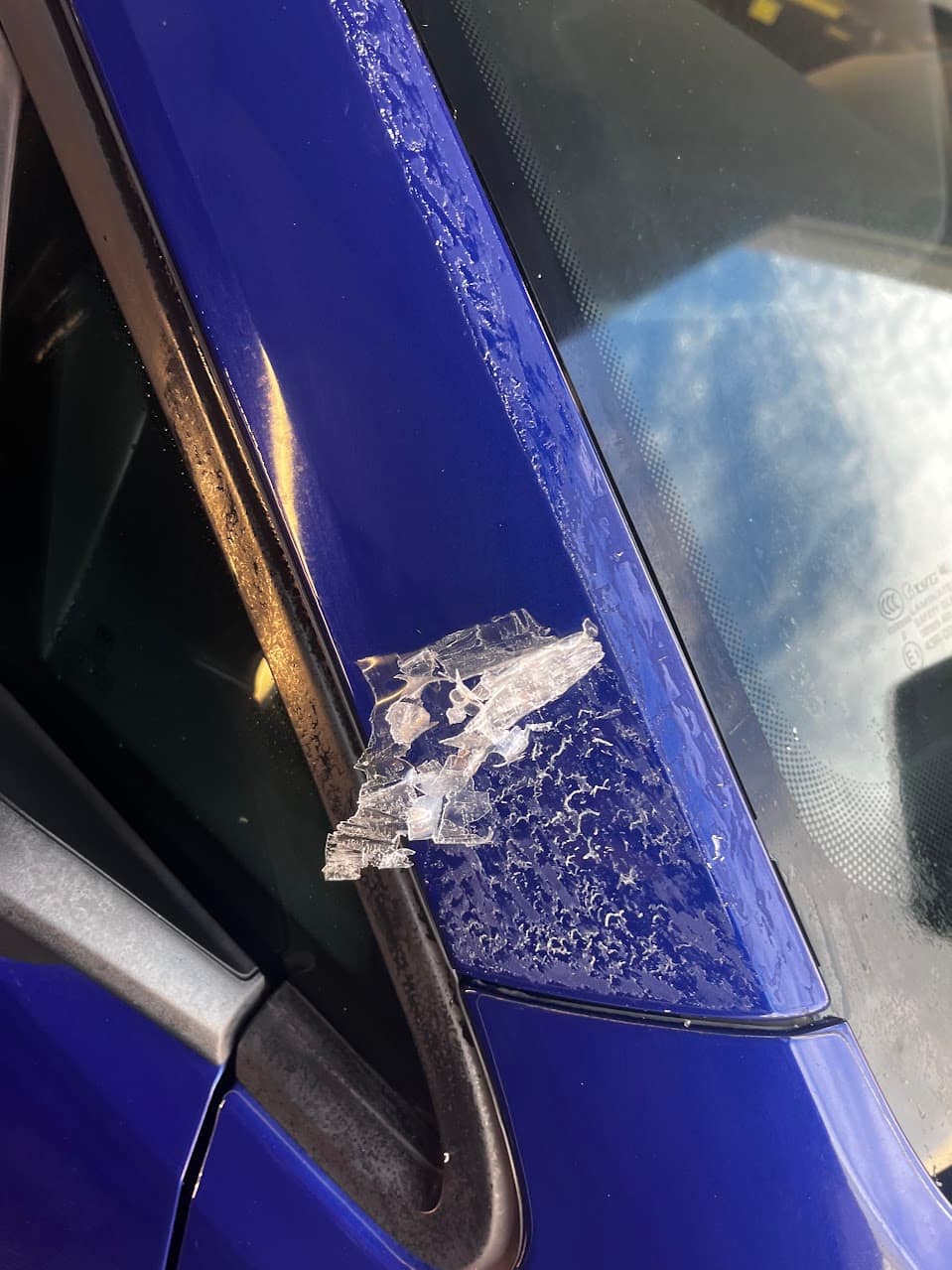
The A-pillar alone took close to one hour to remove.
Instead of lifting away in a clean, manageable piece, the film had become brittle and heavily bonded in places. It broke into smaller sections and needed to be worked away carefully rather than simply peeled from the panel.
This is why delaying PPF replacement can become expensive.
Removing film at the right time is generally much easier than waiting until it has deteriorated, hardened or become difficult to separate from the surface.
You can learn more about the purpose and limitations of paint protection film at AutoFX WA.
PPF Still Needs Maintenance
PPF is a sacrificial protection layer.
It is designed to take damage that would otherwise affect the paint underneath, including stone chips, road wear, light scratching and general environmental exposure.
But sacrificial does not mean permanent.
The film itself ages.
Its top coat is exposed to washing, UV, heat, moisture, tree contamination and whatever else the vehicle experiences during daily use.
A car parked under a messy tree and washed only every few months is living a much harder life than a garaged vehicle that is cleaned regularly.
That does not mean the owner has done something wrong.
It simply means the protection plan and replacement timing need to suit how the vehicle is actually used.
This is something we try to explain honestly with every PPF installation.
Good film helps protect the paint, but it still needs realistic maintenance and eventually needs replacement.
Why Old PPF Can Become Difficult to Remove
As PPF ages, several things can make removal harder.
The film can become brittle.
The adhesive can become more stubborn.
Environmental contamination can sit around edges.
Thin sections can split instead of lifting cleanly.
On narrow areas such as an A-pillar, there is also less film to hold and control while removing it.
When the film comes away in fragments, every small piece needs to be carefully lifted without damaging the paint underneath.
That is where the time disappears.
A section that may have been relatively straightforward to remove earlier can turn into an hour or more of slow, careful work.
There is no value in rushing this process.
The film may be old, but the paint underneath still needs to be treated with care.
This Golf R Will Receive Its Second Generation of PPF
The Golf R will now slowly work its way through a second generation of paint protection film.
We are not trying to replace everything in one hit without considering the condition of each section and what Les wants to spend.
Instead, the older film can be dealt with progressively and replaced where it makes sense.
That is often the practical way to handle an older PPF installation.
Remove the areas that have reached the end of their useful life.
Inspect and clean the paint.
Correct or refine the surface where appropriate.
Then install new film with a fresh adhesive system and top coat.
The important thing is not to leave deteriorating PPF on indefinitely simply because removing it has become inconvenient.
The longer some old films stay on, the more difficult and costly the removal process can become.
PPF Protection Needs a Long-Term Plan
The original PPF still served a purpose.
It protected the paint during its time on the Golf R.
But every protective product has a working life, and that life is affected by how the vehicle is stored and maintained.
For Les’s Golf R, the combination of outdoor tree exposure, infrequent washing and film that remained on beyond its expected life made removal considerably harder.
One A-pillar taking more than an hour tells the story.
The car will now gradually receive newer PPF, giving it a fresh protective layer while allowing us to manage the work sensibly over time.
If your vehicle has older film that is cracking, lifting, discolouring or becoming difficult to maintain, it is worth having it assessed before removal becomes an even larger job.
You can read more about our PPF installation and vehicle protection work in Perth or browse more real workshop jobs on the AutoFX WA blog.
AutoFX WA is based in O’Connor, Perth, providing paint protection film, paint correction, ceramic coating, detailing and specialist vehicle care based on the actual condition and use of each vehicle.