The coating industry can be confusing.
One brand may call a product a glass coating. Another may call it a ceramic coating. Another may use the word quartz, SiO2, nano coating, graphene or hybrid coating.
To a customer, it can sound like every product is completely different.
Sometimes the difference is real. Sometimes it is mostly marketing language.
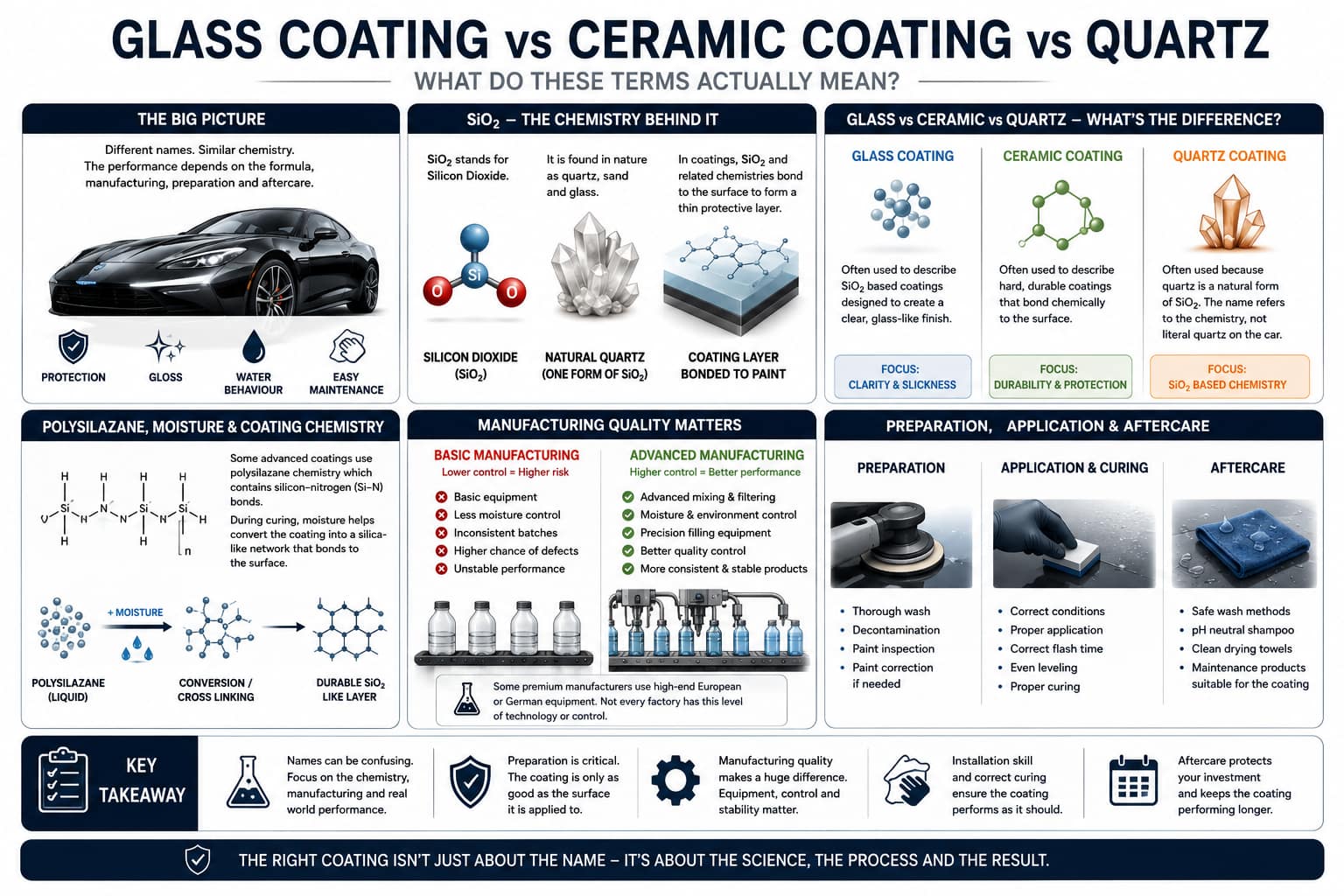
The better question is not only what the coating is called. The better question is what the coating is made from, how it is manufactured, how it is installed, how the paint is prepared, and how the vehicle is maintained afterwards.
What Does SiO2 Mean?
SiO2 stands for silicon dioxide.
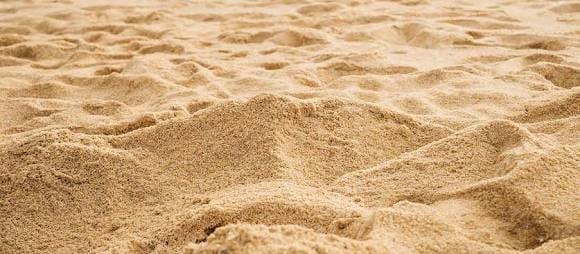
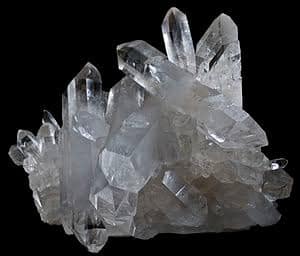
Silicon dioxide is a naturally occurring compound found in materials such as quartz and sand. In the coating industry, SiO2 is often used as a way to describe silicon-based coating chemistry.
However, that does not mean a coating on your car is the same thing as a piece of quartz, a sheet of glass or a ceramic coffee cup.
The words are related to the chemistry, but they should not be taken too literally.
A ceramic coating is a thin protective layer applied to the paint. It is not a thick piece of glass. It is not a hard ceramic tile. It is a coating designed to bond to the surface and help improve gloss, slickness, chemical resistance, water behaviour and ease of maintenance.
Glass Coating vs Ceramic Coating
The terms glass coating and ceramic coating are often used in similar ways.
In many cases, both describe a hard, clear, protective coating applied to the paint or glass. The name can depend on the brand, the chemistry, the market and how the product is positioned.
A glass coating may be marketed around its clear, glass-like finish.
A ceramic coating may be marketed around its hardness, durability and protective behaviour.
But the name alone does not tell you everything.
A poorly made ceramic coating is not automatically better than a well-made glass coating. A coating with the word quartz on the bottle is not automatically better than one without it.
The actual formula, manufacturing quality, installation process and aftercare matter far more than the name on the label.
What Is A Quartz Coating?
Quartz coating is another term often used in the paint protection industry.
Because quartz is linked to silicon dioxide, some coating brands use the word quartz to describe SiO2-based coating technology.
That can be useful as a simple explanation, but it can also create confusion.
A quartz coating does not mean a thick layer of natural quartz has been placed over the car. It usually means the coating uses silicon-based chemistry designed to cure into a hard, clear protective layer.
Again, the marketing word is not the whole story.
The performance depends on the formula, how well the coating bonds, how it cures, how the paint was prepared and how the car is cared for after installation.
Why The Coating Name Is Not Enough
Many customers compare coatings by name alone.
Glass coating.
Ceramic coating.
Quartz coating.
Graphene coating.
Hybrid coating.
Those names can help describe the direction of the product, but they do not prove quality by themselves.
A coating should be judged by how it behaves in the real world. Does it bond well? Does it add gloss and slickness? Does it improve water behaviour? Does it make the car easier to clean? Does it suit the vehicle? Does it have realistic aftercare advice?
That is more important than chasing the most impressive sounding word.
Manufacturing Quality
The quality of a coating is not only about the country it comes from. It is also about the chemistry, raw materials, production control, moisture control, filtration, filling process, packaging and quality testing behind it.
A cheap coating and a high-end coating can both come from Asia. That does not make them equal.
Some manufacturers use basic blending and packaging methods. Others use much more advanced production systems, better equipment and tighter quality control.
In some cases, high-quality Asian-made coatings may be produced using advanced European or German manufacturing equipment. Not every factory has that level of technology or control.
This is why AutoFX WA does not judge a coating only by where it was made. The more important question is whether the coating has good chemistry, consistent manufacturing, stable packaging and real-world performance.
Polysilazane, Moisture And Coating Chemistry
Some modern coatings use polysilazane-style chemistry, which is different from simply calling a coating “glass” or “ceramic” for marketing.
Polysilazane chemistry is important because it contains silicon-nitrogen bonds. During curing, these coatings can react with moisture and convert toward a silica-like or ceramic-like protective network on the surface.
That is why moisture control, curing conditions, application timing and product stability can matter so much with advanced coatings.
This does not mean every coating that uses the word ceramic is the same. It also does not mean every coating behaves like a polysilazane coating.
The real difference is in the chemistry, the manufacturing quality, the stability of the formula, the preparation of the paint and the way the coating is applied and maintained.
Asian Made Does Not Automatically Mean Cheap
There is a common mistake in the coating industry.
Some people assume that if a coating is made in Asia, it must be low quality.
That is not always true.
Some lower-grade coatings are made cheaply, with limited control and very basic manufacturing. But some advanced Asian coating manufacturers have invested heavily in better chemistry, cleaner production, high-end equipment and stronger quality control.
In some cases, good Asian-made coatings can be produced using European or German equipment and more controlled manufacturing systems.
Not every factory has that level of technology.
That is the real difference.
The quality is not just about geography. It is about the formula, the raw materials, the equipment, the testing and the standards behind the product.
Why Better Equipment Can Make A Difference
Coating manufacturing needs consistency.
The formula needs to be mixed correctly. The raw materials need to be controlled. The product needs to be filtered, filled and sealed properly. The packaging needs to protect the coating before it reaches the installer.
Better equipment can help with this.
High-quality filling and production equipment can reduce contamination, improve dosing accuracy and help keep the product more stable before use.
This is not something the customer sees when the car is dropped off.
But it can affect the product that ends up being applied to the paint.
A coating is only as good as the chemistry and manufacturing behind it.
Preparation Still Comes First
Even the best coating will not fix poor preparation.
If the paint is dirty, scratched, hazy, oily or contaminated, the coating is being asked to work over a poor foundation.
That is why preparation matters so much.
The vehicle needs to be washed properly. Bonded contamination needs to be removed where required. The paint needs to be inspected under suitable lighting. If the surface has swirl marks, haze or defects, paint correction may be needed before the coating is applied.
A coating can add gloss, slickness and protection, but the paint underneath decides how clear the final result can look.
For polishing and preparation work, see Paint Correction Perth.
Application And Curing
How the coating is applied also matters.
Some coatings are easy to install. Others need more care, more experience or more controlled conditions. Flash time, temperature, humidity, panel size and wipe-off timing can all affect the final result.
A coating that is not levelled properly can leave high spots, smearing or uneven marks.
A coating that is rushed may not perform as well as it should.
A coating applied in the wrong conditions can become more difficult to control.
That is why professional installation is not just about owning the bottle. It is about understanding the product and how it behaves on the surface.
Aftercare Is Important Too
No coating removes the need for good maintenance.
A ceramic coating, glass coating or quartz coating can help make the car easier to wash and dry, but it does not make the paint impossible to scratch.
Dirty wash mitts, poor drying towels, dry wiping and harsh chemicals can still affect the finish.
Good aftercare helps the coating stay cleaner and perform better for longer.
This means using safe wash methods, suitable shampoo, clean drying towels and maintenance products that suit the coating.
For wash products and aftercare options, see Car Care Products Perth.
What About OPTiX Coatings?
OPTiX coatings have changed over time because coating technology keeps evolving.
Older coating systems may have delivered strong gloss and protection for their time, but newer coatings can offer improved bonding, tougher protection and better long-term practicality.
That is why products are updated or discontinued as the range improves.
The goal is not to hold onto an old coating name forever.
The goal is to keep moving toward coatings that suit real cars, real conditions and realistic maintenance.
For current coating options, see Ceramic Coating Perth.
Glass Coating For Exterior Glass
Glass coating can also refer to a coating designed specifically for exterior glass, such as windscreens and side glass.
This is different from a paint coating.
Exterior glass coatings are designed to improve water behaviour on glass and make the surface easier to clean when maintained properly.
A paint coating and a glass coating may both use protective chemistry, but they are not always the same product and should not be treated as interchangeable.
The surface matters.
Paint, glass, wheels, leather, plastic and fabric all need products suited to that material.
Do Not Get Lost In Marketing Terms
The coating industry loves big words.
- Glass.
- Ceramic.
- Quartz.
- Nano.
- Graphene.
- Hybrid.
Some of those words can be useful. However, they can also distract from what really matters.
The car still needs proper preparation. The coating still needs to be applied correctly. The product still needs to be manufactured well. The owner still needs to maintain the car properly.
That is the practical truth behind coating performance.
Why This Page Still Matters
This older AutoFX WA page is worth keeping because customers still ask these questions.
What is a glass coating?
Is ceramic coating the same as quartz coating?
What does SiO2 mean?
Is one coating automatically better because of the name?
The simple answer is that coating names can help explain the product, but they do not tell the whole story.
The real result comes from the chemistry, manufacturing quality, preparation, installation, curing and aftercare.
Related AutoFX WA Services
For coating education and vehicle protection, AutoFX WA offers Ceramic Coating Perth for modern paint protection options, Paint Correction Perth for proper preparation before coating, Glass Coating Perth for exterior glass protection where suitable, and Car Care Products Perth for coating-safe wash and aftercare products.
Final Thoughts
Glass coating, ceramic coating and quartz coating are often different ways of describing protective coating technology.
The names can be useful, but they should not be the only thing customers focus on.
A coating needs good chemistry, good manufacturing, proper preparation, careful application and sensible aftercare.
Some coatings are basic. Some are more advanced. Some Asian-made coatings are made cheaply, while others are manufactured to a much higher standard using better equipment and stronger production controls.
That is why the real question is not just what the coating is called.
The better question is whether the coating is made well, installed properly and suited to the way the vehicle will actually be used.