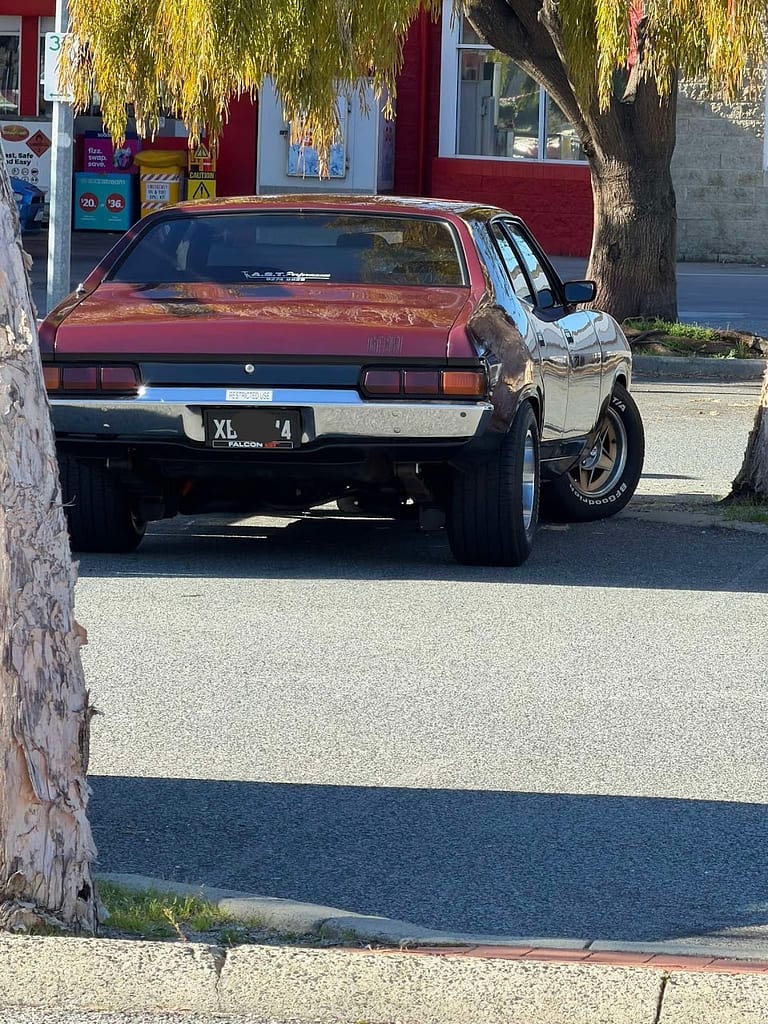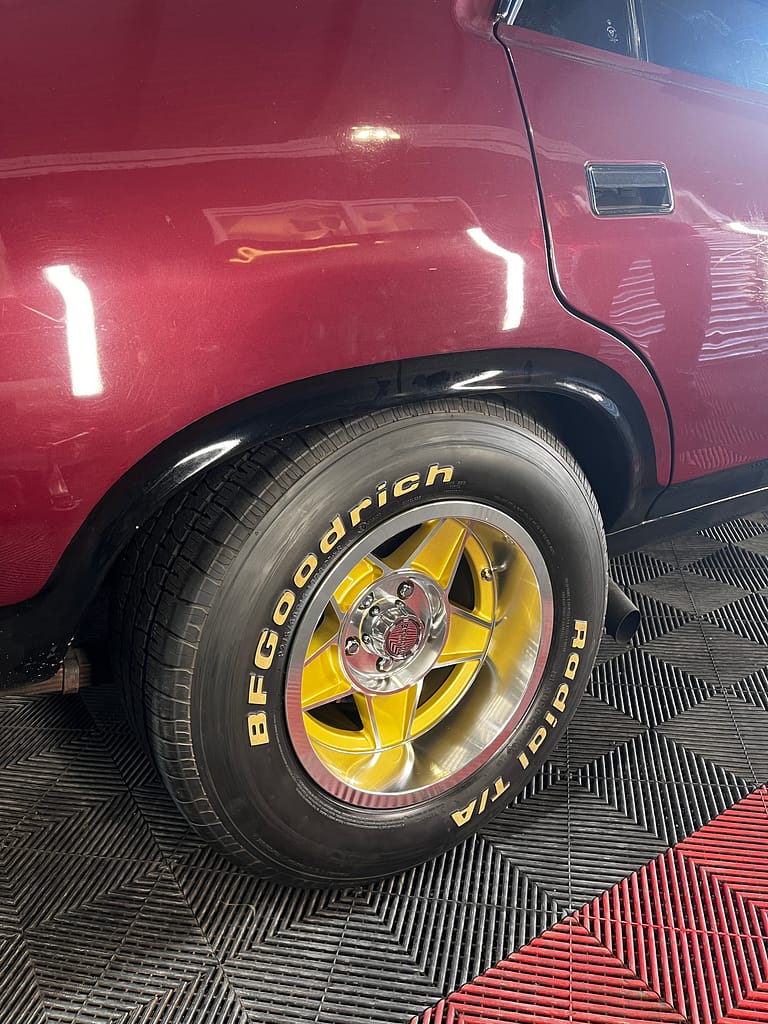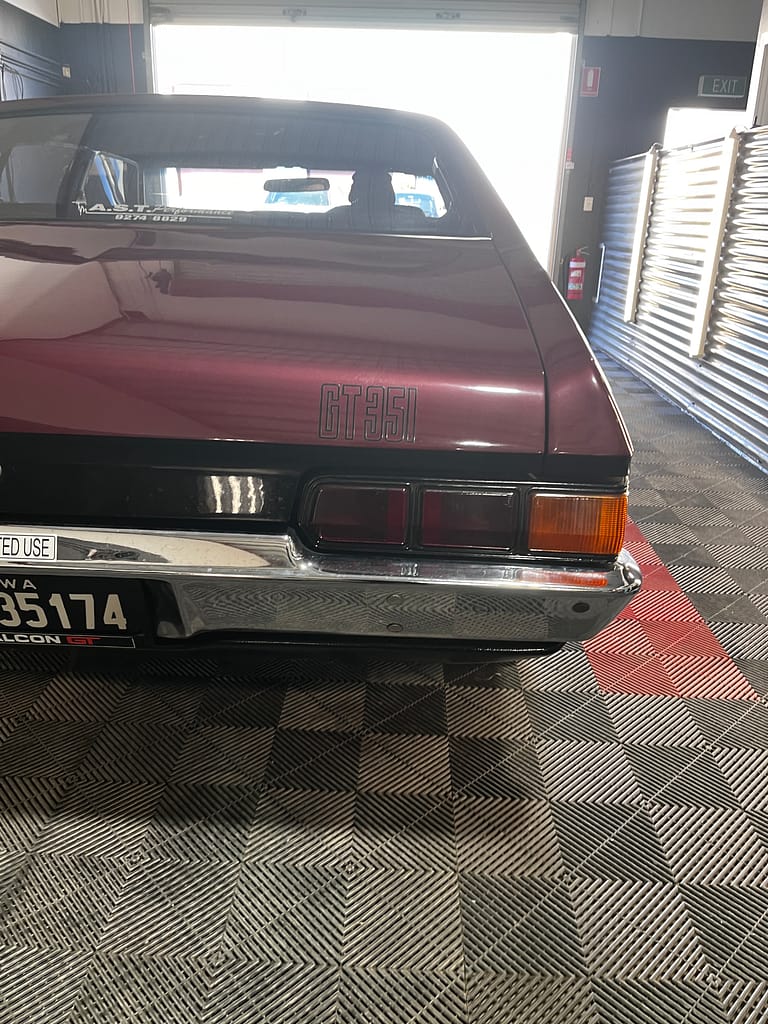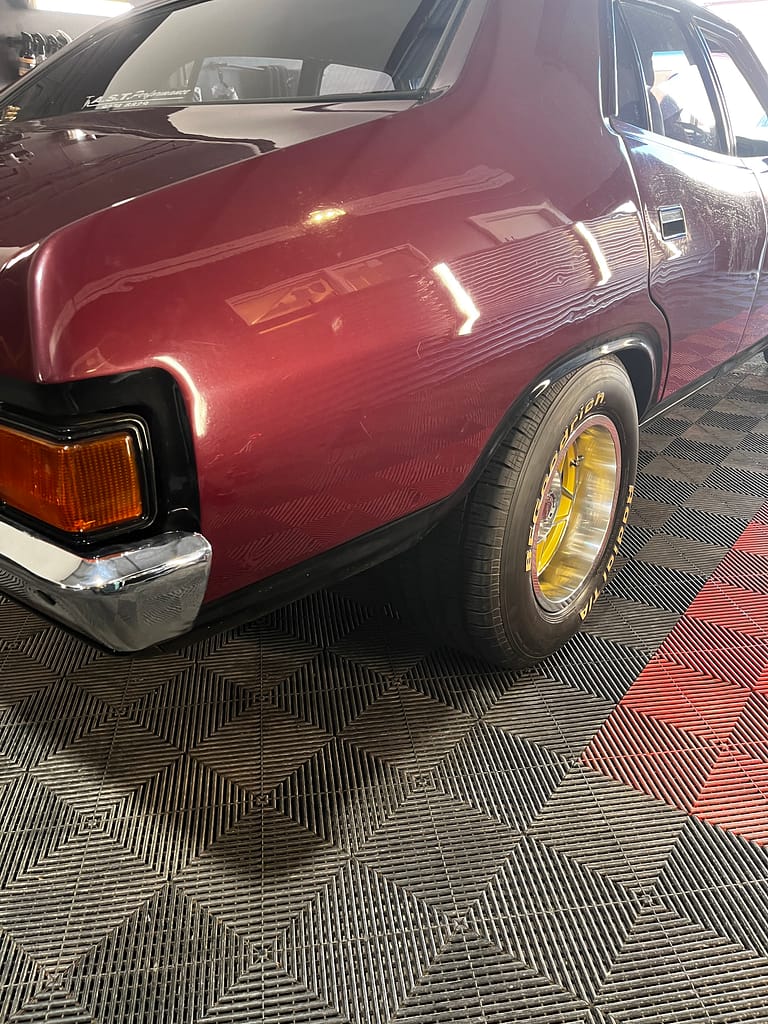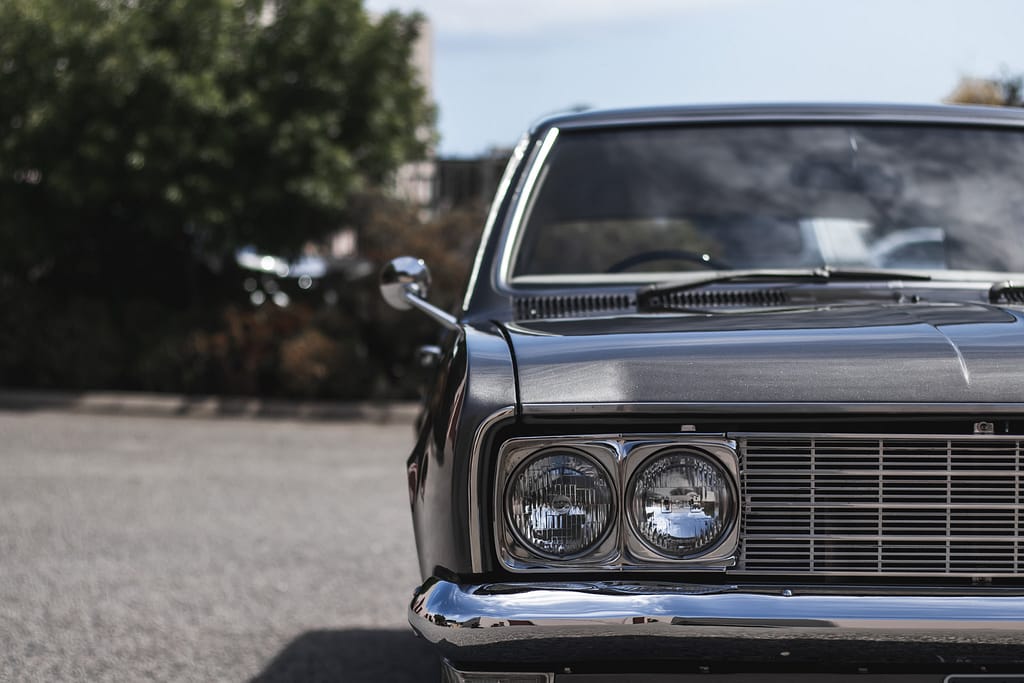
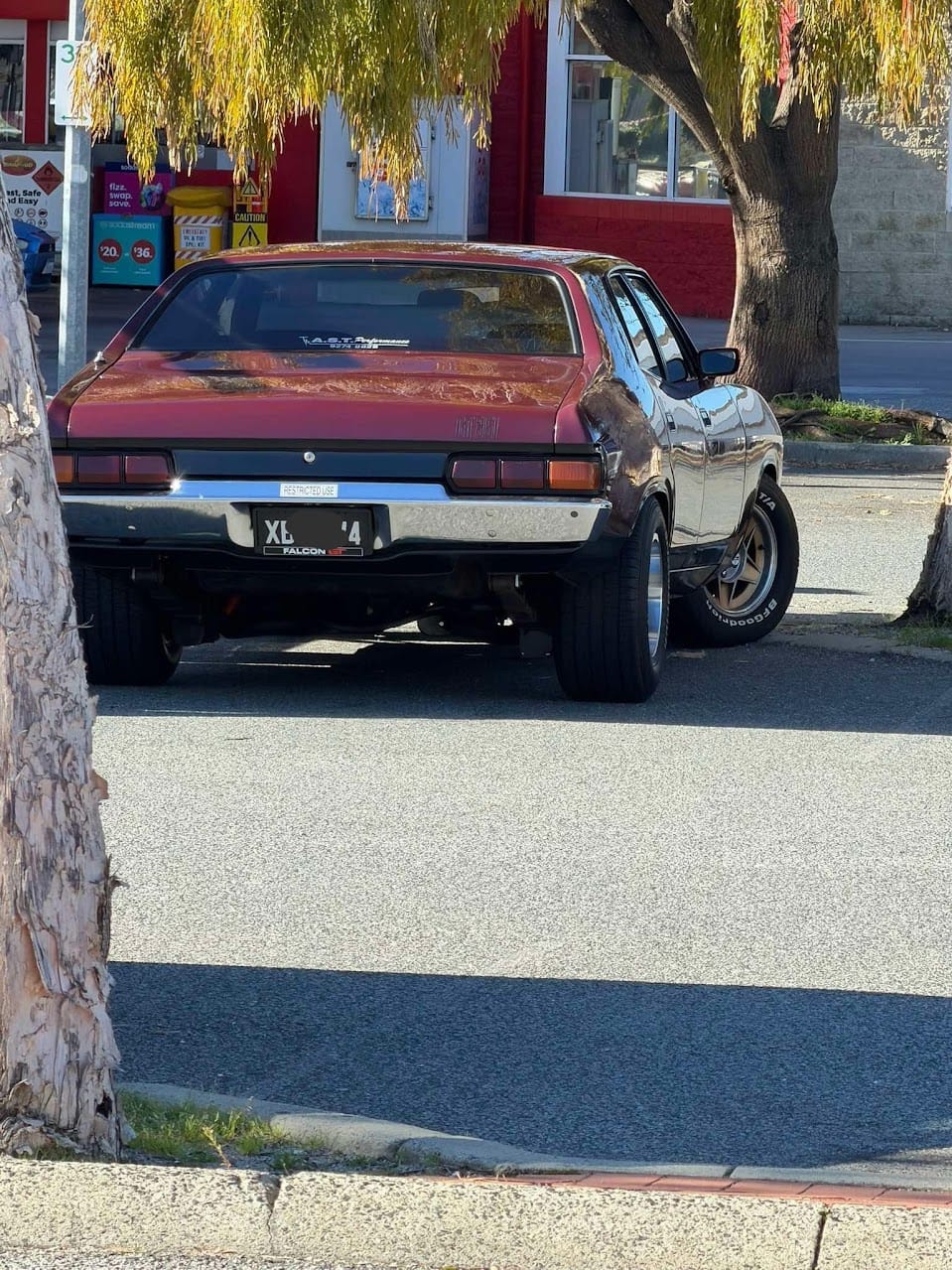
This Ford XB came to AutoFX WA for guard rolling work, but the condition of the guards meant it was not a straightforward conventional roll.
The owner had already cut the guard lips off before the vehicle arrived. That left only a small amount of lip along the edge, so there was not enough material to approach the job as a normal full guard roll. Rather than treating every guard the same way, we inspected what was left and worked from there.
Starting with the condition of the guard
Guard rolling normally involves reforming the existing inner lip. In this case, much of that lip had already been removed. The remaining edge needed to be dealt with carefully so it did not remain sharp, uneven or visually rough where the two panels meet.
This is why inspection comes before tools. On older vehicles, and particularly on cars that have already had previous work carried out, the starting point can vary considerably from one job to the next. What is suitable for an untouched guard may not be suitable once the lip has been cut back.
At our O’Connor workshop, we assess the material that remains before deciding whether rolling, shaving, sanding or a combination of steps is the sensible approach.
The approach used on this Ford XB
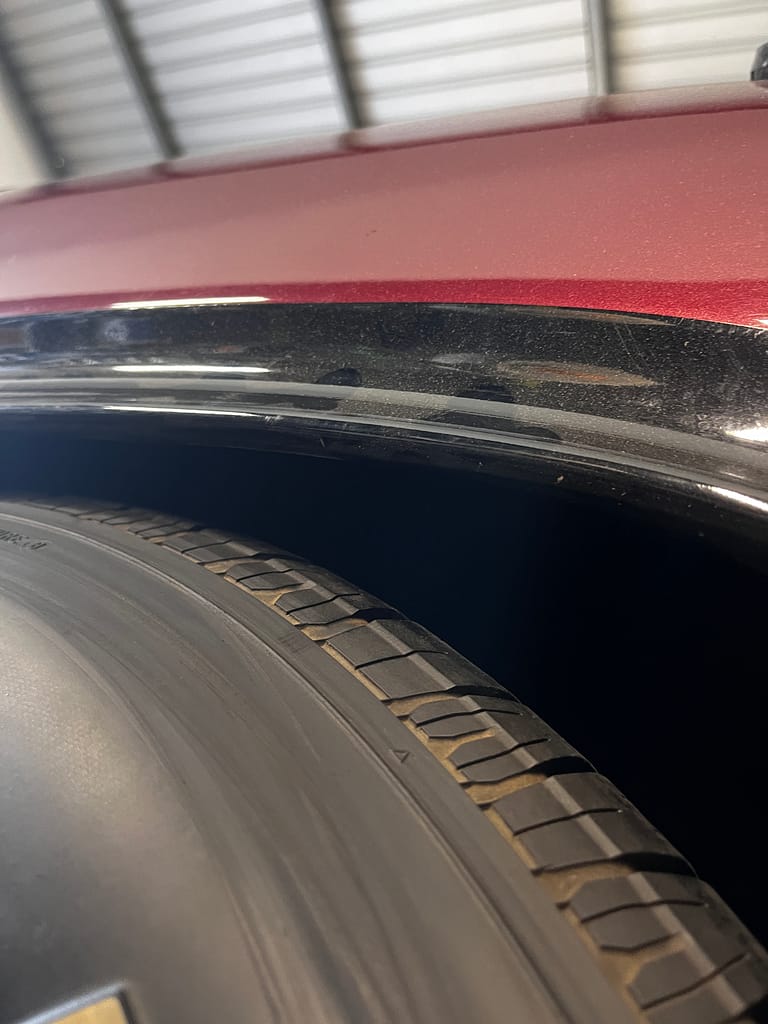
Because only a small lip remained, we first bent that edge to approximately 45 degrees. This helped bring the remaining material into a more controlled position before sanding.
We then used a P40 sanding disc to sand the remaining lip back. The objective was not simply to remove material quickly. It was to work the edge down so the transition where the two panels meet was smoother and more consistent than the previously cut edge.
Once the sanding work was complete, the area had an almost polished smooth appearance at the panel join. That is a more considered finish than leaving behind the sharp or uneven edge that can result from cutting alone.
Why a standard guard roll was not the right description here
It would be easy to call all work around a wheel arch “guard rolling”, but that does not accurately describe this particular job. The original lip had already been cut off, leaving limited material to reshape. The work therefore became more of a guard shaving and edge-finishing process.
That distinction matters because it sets realistic expectations. A guard can only be worked according to its existing condition. Once material has been removed, it cannot be put back through rolling or sanding, and previous cuts influence both the available options and the final shape.
Practical considerations with previously modified guards
- Inspect the remaining lip before selecting a method.
- Do not assume a conventional roller is suitable for every guard.
- Work the remaining edge gradually rather than leaving a sharp cut line.
- Focus on the transition where panels meet, as this is where uneven previous work is often most noticeable.
- Be clear about what has already been removed and what can realistically be improved.
This Ford XB is a good example of why the process matters as much as the job label. The useful result came from working with the small amount of lip that remained, bending it into position, then sanding it back to create a cleaner finish.
For more examples of the practical workshop approach we take to vehicle work, visit AutoFX WA.