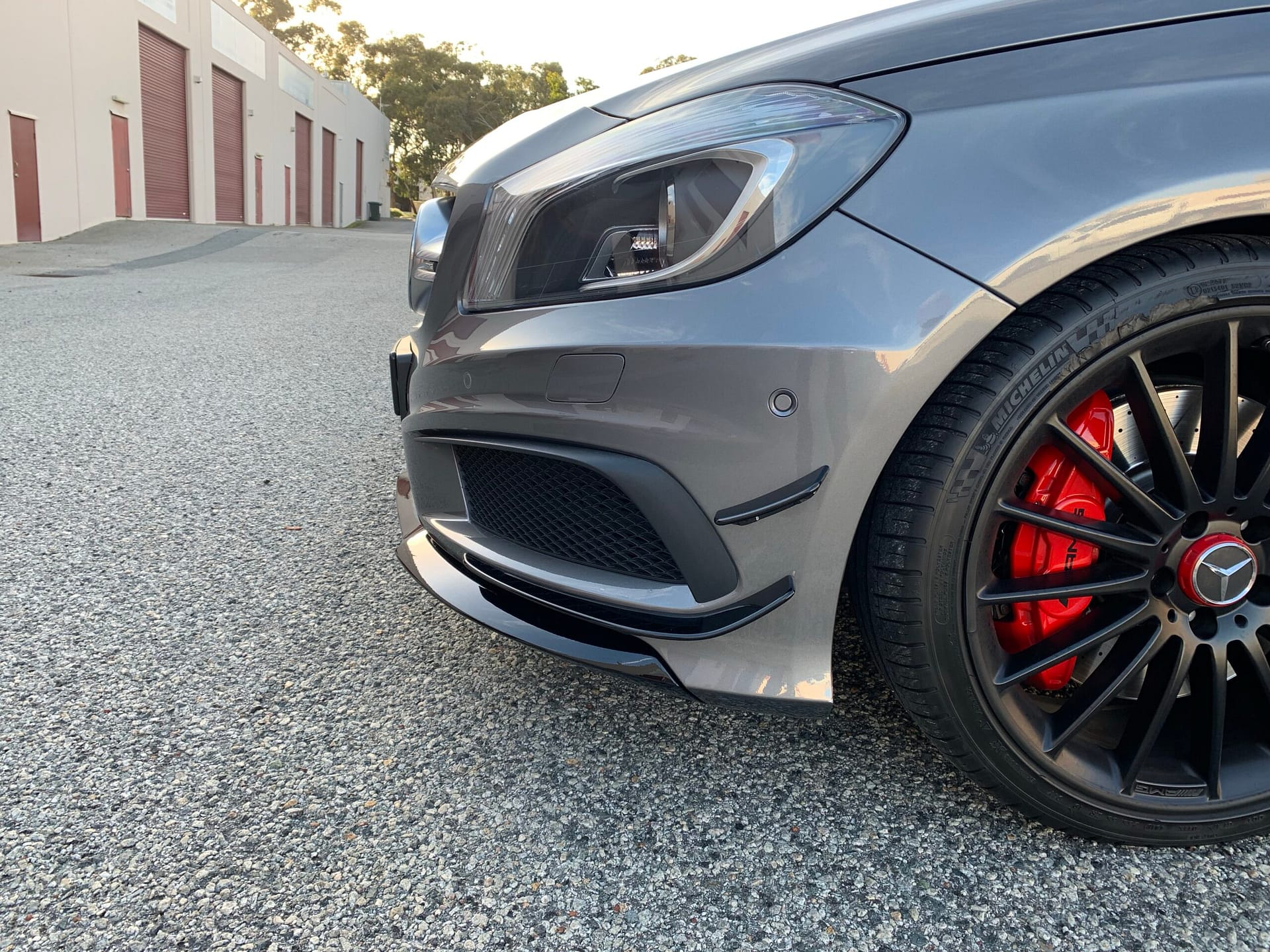
An AMG A45 is a small car with a serious amount of performance.
It is quick, sharp, practical and very easy to use every day, which is exactly why paint protection film makes sense on a car like this.
This AMG A45 came to AutoFX WA for self-healing paint protection film to help protect the vehicle from normal road use. The goal was not to make the car impossible to damage. The goal was to protect the areas that are most exposed to stone chips, bugs, road debris and regular driving wear.
A performance daily driver lives a harder life than many people realise.
It may be driven in traffic during the week, parked at shopping centres, taken on spirited drives, washed regularly and exposed to the same road debris as any other car. The difference is that cars like the AMG A45 are often driven with a bit more enthusiasm, which can make front-end protection even more useful.
AMG A45 Paint Protection Film
Paint protection film, often called PPF, is a clear physical film installed over selected painted surfaces to help protect them from damage.
On an AMG A45, common areas for protection may include the front bumper, bonnet, guards, mirrors, headlights, door cups and sills. These are the areas that tend to see the most road debris, contact and wear during normal ownership.
PPF gives the paint a sacrificial layer.
If the film takes a mark or impact, the paint underneath has a better chance of staying protected. That does not mean the film cannot be damaged, but it does mean the paint is not left completely exposed.
For current film options, see Paint Protection Film Perth.
Why PPF Makes Sense On A Performance Daily Driver
The AMG A45 is not usually a car that sits still.
It is the kind of vehicle that can be used for work, weekend driving, family duties, city traffic and open-road fun. That means the front end can collect bugs, road film, small stones, rubber marks and general contamination from regular use.
Paint protection film helps reduce the risk of direct paint damage in these exposed areas.
This is especially useful when the owner wants to enjoy the car without worrying about every small stone that comes off the road in front.
Protection should help the owner use the car with more confidence, not turn it into something they are too scared to drive.
Self-Healing PPF Explained Realistically
Self-healing paint protection film can help reduce the appearance of light surface marks in the film when heat is applied.
This heat may come from sunlight, warm water or controlled heat used carefully. When the film warms up, light surface marks in the top coat can relax and become less visible.
That is useful, but it needs to be understood properly.
Self-healing film does not mean the car cannot be scratched.
It does not mean the film cannot be damaged.
It does not stop deep cuts, heavy impacts, poor washing or sharp damage.
The realistic benefit is that the film can recover from some light surface marks while still acting as a physical layer over the paint.
Stone Chip Protection
Stone chips are one of the main reasons people choose PPF.
Ceramic coating can help with gloss, slickness and easier washing, but it does not give the same physical impact protection as film. If stone chip protection is the main concern, PPF is usually the better option.
On a car like an AMG A45, the front bumper, bonnet edge, mirrors and guards can all be exposed to small stones and road debris.
PPF helps absorb some of that impact before it reaches the paint.
It is not invincible, but it is a much better barrier than leaving the paint unprotected.
Protection From Bugs And Road Grime
Performance cars often collect bugs and road grime quickly, especially during longer drives or spirited use.
Bug residue can be stubborn, and if left too long, it can mark the surface. Road film can also build up over time and make the car harder to wash.
PPF helps protect the paint underneath from direct contact with this contamination.
The film still needs to be cleaned and maintained, but it gives the vehicle a better starting point and makes it easier to manage the normal build-up that comes from driving.
PPF Is Not Invisible Perfection
Paint protection film can look very clean when installed well, but it is important to keep expectations realistic.
PPF has thickness. It has edges. It needs to be fitted around curves, panel gaps, badges, vents, corners and complex shapes.
Some areas of a vehicle are easier to film than others.
The aim is not to pretend the film does not exist. The aim is to install it neatly, protect the paint properly and give the owner a practical result that suits how the car will be used.
That is a more honest way to look at PPF.
PPF And Ceramic Coating Are Different
Paint protection film and ceramic coating are often mentioned together, but they do different jobs.
PPF is a physical film. It is designed to help protect against stone chips, road rash and light abrasion.
Ceramic coating is a liquid-applied coating. It helps with gloss, slickness, water behaviour and easier washing.
Both can be useful, but they should not be confused.
On some cars, PPF is used on the high-impact areas and ceramic coating is used over the rest of the paint for easier maintenance. That combination can make sense when the owner wants both physical protection and easier washing.
For current coating options, see Ceramic Coating Perth.
High-Impact Areas On An AMG A45
The most common reason to protect an AMG A45 is the front end.
The front bumper, bonnet, guards and mirrors are constantly facing road debris. The headlights can also be exposed to stone chips and sandblasting over time.
Door cups and sills are also worth considering, especially if the car is used daily. Fingernails, shoes, bags and regular entry and exit can all leave marks over time.
The right coverage depends on the owner, the car’s use and the budget.
Some vehicles only need selected areas. Others may justify larger coverage.
Why Newer Cars Still Need Protection Early
PPF is usually best applied before the paint has collected years of chips and marks.
Once stone chips are already in the paint, the film can help protect the area going forward, but it will not make missing paint disappear underneath.
That is why early protection can make sense on a car like this.
If the owner plans to keep the car looking cleaner for longer, protecting the exposed areas early gives the vehicle a better chance.
Preparation Before PPF
Before film is installed, the surface needs to be cleaned and prepared properly.
Dirt, road grime, wax, old residue, contamination or poor preparation can affect the result. The paint also needs to be inspected so the owner understands what is already there before the film goes on.
If the paint has swirl marks, scratches or other defects, paint correction may be recommended before PPF or coating work, depending on the condition and the areas being protected.
For polishing and preparation, see Paint Correction Perth.
Safe Washing After PPF
A car with PPF still needs safe washing.
The film helps protect the paint underneath, but poor washing can still mark the film. Dirty mitts, old towels, dry wiping and harsh chemicals can all reduce the quality of the finish over time.
Use clean wash gear.
Use suitable shampoo.
Dry with clean, soft towels.
Do not wipe dust from dry film or paint.
Remove bugs, bird droppings and road grime as soon as practical.
These simple habits help the film stay cleaner and better looking for longer.
Why This AMG A45 Page Still Matters
This older AutoFX WA page is worth keeping because it shows a practical PPF example on a performance daily driver.
Not every protected car is an exotic car or show car.
Some are small performance cars that get used often, driven properly and exposed to normal road conditions.
The AMG A45 fits that category well.
It is quick enough to benefit from front-end protection, but practical enough to be used every day. That makes it a very good example of why self-healing PPF can make sense.
A Practical Approach To AMG Paint Protection
This AMG A45 did not need exaggerated claims.
It needed practical protection in the areas most likely to see wear.
Self-healing paint protection film helped give the paint a physical layer against stone chips, bugs, road debris and regular driving conditions.
That is the real value of PPF.
It helps protect the car while still allowing the owner to drive and enjoy it.
Related AutoFX WA Services
For performance and prestige vehicle protection, AutoFX WA offers Paint Protection Film Perth for stone chip and road rash protection, Paint Correction Perth for polishing and preparation, Ceramic Coating Perth for gloss and easier maintenance, and Car Detailing Perth for careful cleaning and ongoing maintenance.
Final Thoughts
This AMG A45 is a good example of why PPF makes sense on a performance daily driver.
The car is quick, practical and likely to be used in the real world, which means it is exposed to bugs, stones, road film, washing and normal driving wear.
Self-healing paint protection film gives the paint a sacrificial layer and helps reduce the risk of direct damage to exposed areas.
It does not make the car impossible to damage, and it still needs proper care.
But for an AMG A45 that is going to be driven and enjoyed, PPF is a sensible way to protect the finish.