Choosing paint protection film should not come down to chasing the biggest number. The continuing OPTiX clear PPF range is centred on 7.5 mil, 8.5 mil and 10 mil because each thickness has a clearer purpose. The right choice depends on the vehicle, where it is driven, the panels being protected and the level of impact protection the owner wants.
In the workshop, I would rather look at the complete film, how the vehicle is used and the quality of the installation than choose a film from thickness alone. A well-chosen film installed properly is more important than creating an unnecessary contest between numbers.
What does “mil” mean in PPF?
A mil is one thousandth of an inch. It does not mean one millimetre, which is an easy mistake to make when reading PPF specifications.
| Nominal PPF thickness | Approximate metric thickness | Practical interpretation |
|---|---|---|
| 7.5 mil | 0.1905 mm | A lighter clear PPF option where flexibility, appearance and practical everyday surface protection are the priorities. |
| 8.5 mil | 0.2159 mm | The balanced middle option for everyday vehicles and owners wanting a strong all-round level of protection. |
| 10 mil | 0.254 mm | The thickest option for owners prioritising additional material against higher exposure to road debris and impacts. |
These conversions are straightforward, but published thickness still needs context. Depending on the manufacturer’s specification, the stated figure may describe the complete film construction, including layers such as the adhesive and top coat, rather than only the TPU base film. That is why two products carrying a similar thickness figure are not automatically identical.
Does thicker PPF provide better stone-chip protection?
All else being equal, extra thickness means there is a little more material available to absorb or spread an impact before it reaches the paint. That can make 10 mil attractive for vehicles doing regular highway or country driving, larger four-wheel drives, performance cars with wide or vulnerable bodywork, and owners who simply want the thickest option available.
However, I would not turn half a mil into a dramatic percentage claim. We do not tell customers that 10 mil makes the paint invincible, because it does not. A sharp or high-energy impact can still mark the film, damage it or pass through to the paint. PPF reduces risk; it cannot remove every possibility of damage.
Why thickness is only one part of choosing PPF
The TPU base, adhesive, top coat and construction of the film are all important. A film also needs to suit the curves and edges of the vehicle so the installer can obtain a clean, stable result without placing unnecessary stress on difficult areas.
- TPU quality: the base material influences flexibility, clarity and how the film behaves over time.
- Adhesive: it needs to hold reliably while allowing the film to be installed and finished correctly.
- Top coat: this affects stain resistance, surface behaviour and ease of maintenance.
- Preparation: contamination, old film, polish residue and existing paint defects need to be addressed before installation.
- Installation: edge finishing, stretching, alignment and component removal can have more influence on the visible result than half a mil of thickness.
- Maintenance and replacement: no film should be neglected indefinitely. Age, exposure and condition all need to be considered.
Why the OPTiX range is moving to 7.5, 8.5 and 10 mil
The 9.5 mil clear film is being phased out. There was simply not enough practical separation between 9.5 and 10 mil to justify keeping both as main variants. A clearer range of 7.5, 8.5 and 10 mil gives customers and installers three more distinct choices without adding another thickness that sits too close to the top option.
A real Mazda example: waiting for the chosen 10 mil film
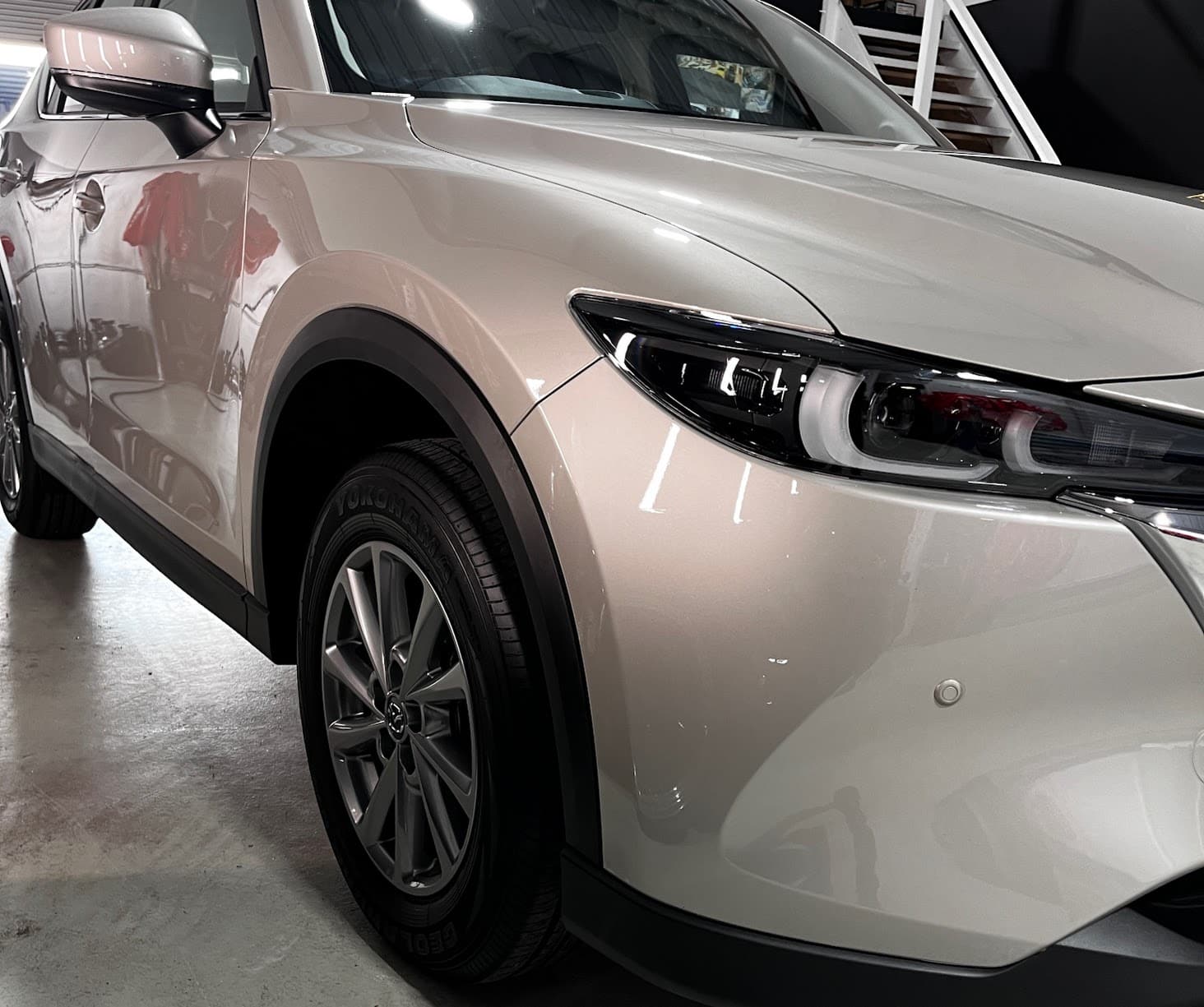
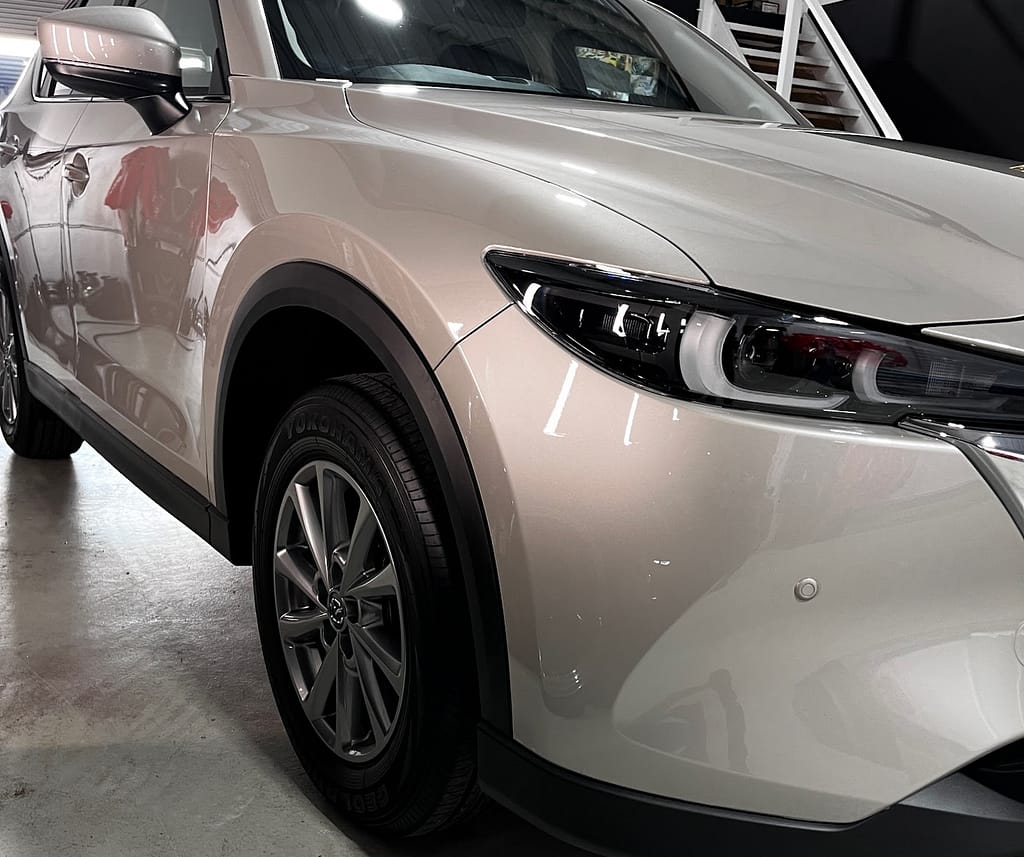
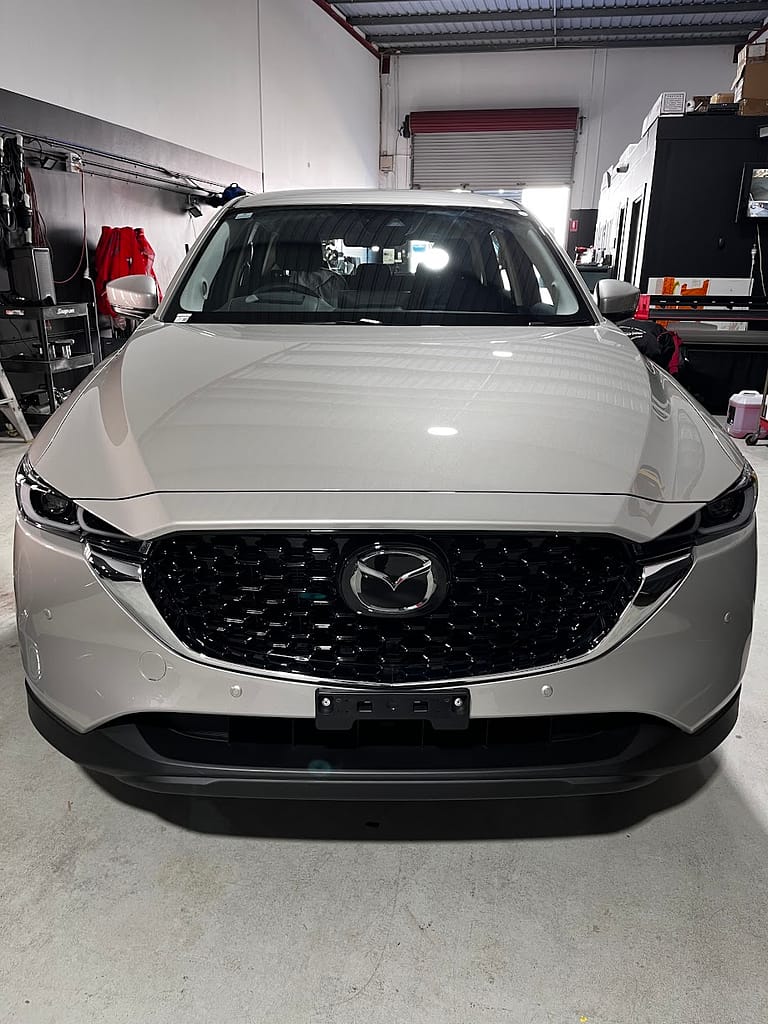
A one-year-old Mazda we completed at AutoFX WA provides a good real-world example. Chris had selected 10 mil PPF for extensive coverage, including the roof, bonnet, front bumper, front guards, all four doors and the rear bumper deck.
Because of a communication error with our material order, the 10 mil film was delayed. At the time we had 9.5 mil available, and I explained that it remained a reasonable option. Chris was prepared to proceed because the practical difference was small.
After thinking about the bigger picture, I advised him to wait. He had chosen 10 mil from the beginning, and a short delay was less important than being satisfied with that choice for years afterwards. The experience also reinforced why there was little value in retaining two main products that were so close together. With the range now focused on 7.5, 8.5 and 10 mil, the differences between the choices are easier to explain.
You can read the full Mazda story in our case study about why the best result is not always the most convenient option.
The importance of coverage and installation detail
A thicker film cannot protect a panel that has not been covered, and it cannot compensate for poor preparation or rushed edges. On Chris’s Mazda, the door handles were removed where appropriate so the film could be wrapped more neatly around the handle recesses and edges. That installation decision had a much more obvious influence on the finish than the visible difference between 9.5 and 10 mil film.
Coverage should also match the way the vehicle is used. One owner may need the bonnet, bumper, guards and mirrors protected from highway driving. Another may place more importance on doors, loading areas or rear bumper decks because of family use, work equipment or regular parking.
Which thickness should you choose?
There is no need to overcomplicate the decision. Consider the following:
- How much highway, country-road or high-speed driving does the vehicle do?
- Which panels are most exposed to stone chips or everyday contact?
- Are you looking for balanced protection, or do you specifically want the thickest practical option?
- Is the film from a suitable construction with a reliable adhesive and top coat?
- Can the installer finish the chosen film cleanly on the shape of your vehicle?
- Are you comparing the same type of published thickness measurement?
For many everyday vehicles, 8.5 mil provides a strong balance of protection, appearance and installation practicality. The 7.5 mil option may suit areas or vehicles where a lighter film is appropriate, while 10 mil is available for owners who want the thickest choice in the range. The recommendation should still be based on the complete job rather than marketing language alone.
Talk to AutoFX WA about the complete PPF package
At AutoFX WA, we would rather discuss your driving, the areas you want covered and the finish you expect before recommending 7.5, 8.5 or 10 mil film. Thickness is part of that conversation, but it is not the whole conversation.
Learn more about our approach to paint protection film in Perth, installed from our O’Connor workshop, or contact us with the vehicle model and the areas you are considering protecting.