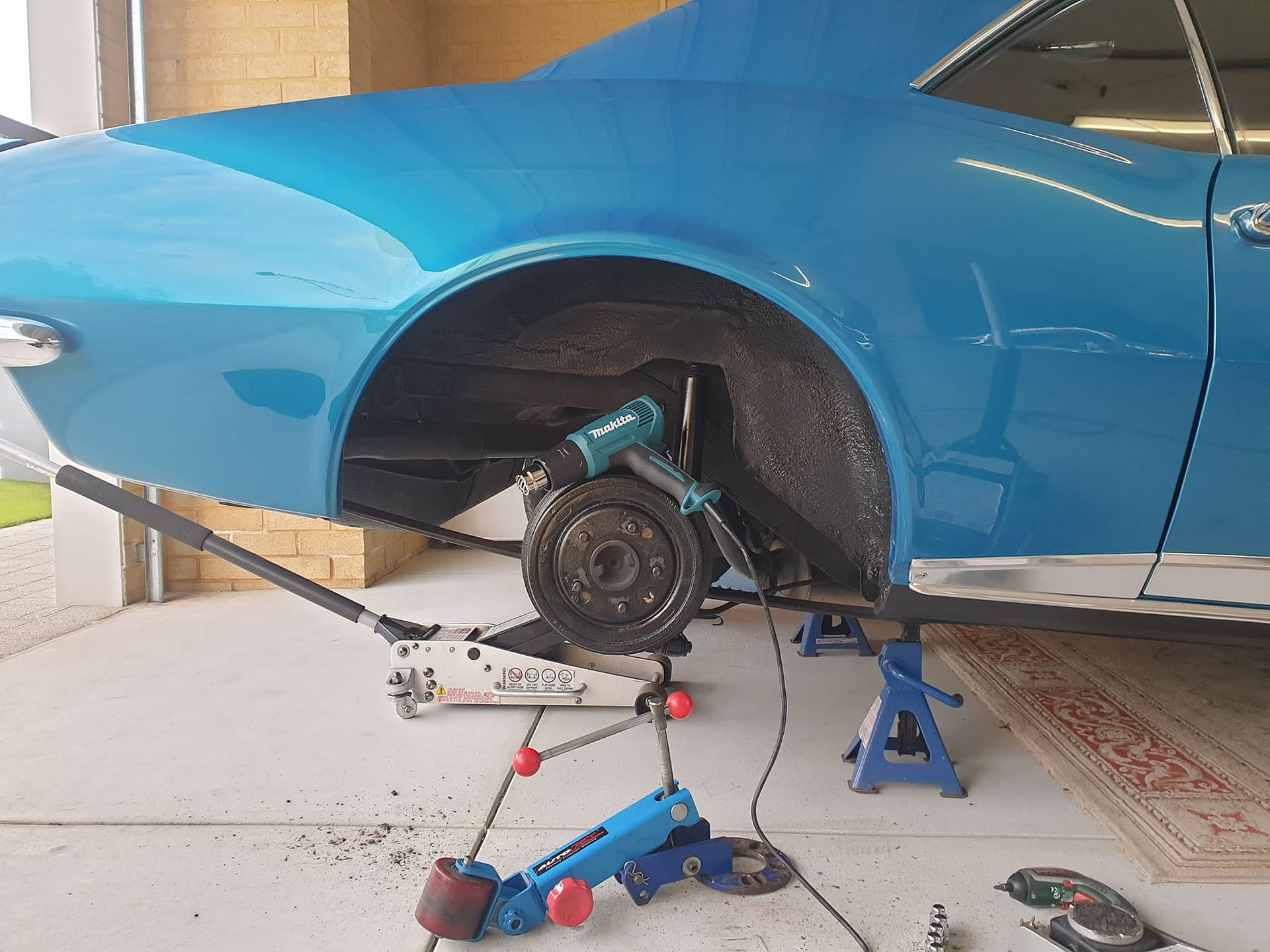
Garry’s 1967 Camaro came in after new wheels and tyres had been fitted.
The car looked mint, but the problem showed up straight away.
As soon as the Camaro reversed out of the driveway, the rear tyre grabbed the guard lip and pulled it down.
That is the sort of thing you want to stop before it gets worse.
On a car like this, you do not just rush in and start forcing the guard. It is an older classic, the paint matters, the trim matters and the shape of the rear quarter matters.
The job needs to be done with some care.
1967 Camaro Rear Guard Rolling Perth
This 1967 Camaro needed the rear guards rolled because the tyre was catching the lip under normal movement.
That can happen when wider wheels, bigger tyres or a different offset are fitted.
The car might look right when it is sitting still, but once the suspension moves, the tyre can travel up into the guard and start hitting the metal.
In Garry’s case, the tyre had already grabbed the rear guard lip.
Once that starts happening, the tyre can keep pulling at the edge, damage the paint, bend the lip further or even cut into the tyre.
That is why guard rolling is sometimes not about chasing stance or making the car look tough.
Sometimes it is simply about stopping the tyre from damaging the car.
The Problem With Tyre Rubbing
Tyre rubbing is not something I like to ignore.
If the tyre is only touching lightly, some people think it will wear itself in or sort itself out.
That is not how I look at it.
If the tyre is hitting the guard, something is making contact that should not be making contact.
On the rear of a classic Camaro, that can become a bigger problem very quickly because the tyre can grab the inner lip and pull it down.
Once the lip is bent or the paint is cracked, the job becomes more than just clearance.
Now you are talking about damaged paint, exposed edges and possibly bodywork later on.
Why The Alloy Trim Had To Come Off
This Camaro had alloy trim around the rear guard area.
That trim needed to be removed before the guard could be rolled properly.
You do not want to roll the guard with trim sitting in the way and hope it all behaves.
The trim can bend, mark, distort or stop the guard from moving the way it needs to.
So the first step was to remove the alloy trim, work on the guard lip properly, then refit the trim afterwards.
Once the trim was back on, it also needed to be worked carefully so it followed the new guard shape.
That is the sort of detail that matters on an older car.
Classic Cars Need A Different Approach
A 1967 Camaro is not the sort of car you treat like a rough drift shell.
The rear quarters are part of the car’s character.
The paint, the trim and the original body shape all matter.
With a classic car, I would rather take more time and keep the job controlled than try to force a quick result.
Some modern cars can be fairly straightforward to roll.
Older cars can be different.
The metal can behave differently. The paint can be older or harder. Repairs may have been done at some point in the car’s life. Trim pieces can be fragile or hard to replace.
That is why I like to look at the car in front of me, not just assume every guard will move the same way.
Rolling The Rear Guards
Guard rolling is about moving the inner lip out of the tyre’s way.
The idea is to create extra clearance where the tyre is touching, without damaging the outside appearance of the guard.
On this Camaro, the rear guards needed to be rolled carefully because the tyre was already grabbing the lip.
The aim was not to change the look of the car.
The aim was to give the tyre enough room to move without catching the edge again.
That is a big difference.
Good guard rolling should solve the clearance issue while keeping the car looking as natural as possible from the outside.
Paint Risk Is Always Real
Any time a guard is rolled, there is some risk to the paint.
I do not like pretending there is no risk, especially on older cars.
Paint can crack. Old repairs can show up. Filler can move. Previous paintwork can react differently to factory paint.
Heat and care can reduce the risk, but they do not remove it completely.
That is why the owner needs to understand what is involved before the job starts.
On a clean classic like this Camaro, the goal is always to reduce risk as much as possible and only move the metal as far as needed.
New Wheels Can Change Everything
A car can be fine for years, then a new wheel and tyre package changes everything.
Different offset, wider tyres, different sidewall shape or even a small ride height change can create rubbing that was not there before.
That is why the car needs to be checked after new wheels and tyres are fitted.
It might look good parked, but the real test is what happens when the car moves.
Driveways, bumps, passengers, cornering and suspension travel can all show clearance problems that do not appear when the car is sitting still.
The Tyre Needs Room To Move
This is the simple part people sometimes forget.
The tyre does not just sit still inside the guard.
It moves.
The suspension compresses. The body rolls. The tyre sidewall flexes. The car loads up when it turns or goes over a driveway.
If there is not enough room, the tyre will find the closest edge and start touching it.
On this Camaro, that closest edge was the rear guard lip.
Once the tyre grabbed it, the problem became obvious.
Guard Rolling Is Not Just For Modified Imports
People often think guard rolling is only for Japanese imports, drift cars or lowered cars.
It is not.
Classic cars, muscle cars, HSVs, Holdens, Mustangs, Camaros and plenty of other vehicles can all need guard rolling after wheel and tyre changes.
The reason is the same.
The tyre needs clearance.
If the guard lip is in the way, the car may need the lip rolled carefully so the tyre can move without grabbing the edge.
Why This Camaro Job Is A Good Example
This job is a good example because the problem was real and easy to understand.
New wheels and tyres were fitted.
The car reversed out the driveway.
The tyre grabbed the guard lip.
That is exactly the type of problem guard rolling is used to prevent.
It also shows why the job needs judgement.
The alloy trim had to come off. The guard had to be rolled. The trim had to be refitted and shaped to suit the new edge.
That is more than just pushing metal out of the way.
When Guard Rolling Makes Sense
Guard rolling makes sense when the tyre is catching the inner guard lip and the rest of the setup is close enough to work.
If the wheel and tyre package is only slightly rubbing, a proper roll can often give the extra clearance needed.
That can save the tyre, protect the guard and make the car much nicer to drive.
But guard rolling is not magic.
If the wheel is too wide, the offset is too aggressive or the car is too low, rolling alone may not be enough.
That is why the vehicle needs to be looked at properly.
When More Than Rolling May Be Needed
Sometimes a guard roll is enough.
Sometimes the guard may need a small pump.
Sometimes the wheel and tyre setup needs to be changed.
On some builds, cutting or more serious bodywork may be needed, but that is a different conversation.
With a classic car like this Camaro, I would always rather start with the least aggressive solution that gives the tyre the room it needs.
There is no point cutting or heavily modifying a clean car if a careful roll will solve the problem.
AutoFX WA Guard Rolling Perth
AutoFX WA offers guard rolling for vehicles that need extra tyre clearance after wheel, tyre or suspension changes.
I look at where the tyre is rubbing, the shape of the guard, the condition of the paint, the wheel fitment and what the owner is trying to achieve.
Some jobs are simple.
Others need more care.
Classic cars and older performance cars usually need a slower approach because the bodywork and trim are part of the value of the car.
For current service information, see Guard Rolling Perth.
Related AutoFX WA Services
For wheel clearance and vehicle presentation, AutoFX WA offers Guard Rolling Perth for rolled guards and tyre clearance, Suspension And Guard Rolling Perth for fitment-related clearance advice, and Paint Correction Perth for vehicles that also need paint refinement or presentation work.
Final Thoughts
Garry’s 1967 Camaro is a good reminder that guard rolling is sometimes about protecting the car from further damage.
The new wheels and tyres looked right, but the rear tyre was grabbing the guard lip as soon as the car moved out the driveway.
On a classic car like this, the answer is not to rush in and force the guard.
The trim, paint, metal and tyre clearance all need to be considered.
The alloy trim had to be removed, the rear guards rolled carefully, then the trim refitted and worked to suit the new shape.
That is the sort of approach I prefer.
Fix the rubbing, respect the car and only move what needs to be moved.