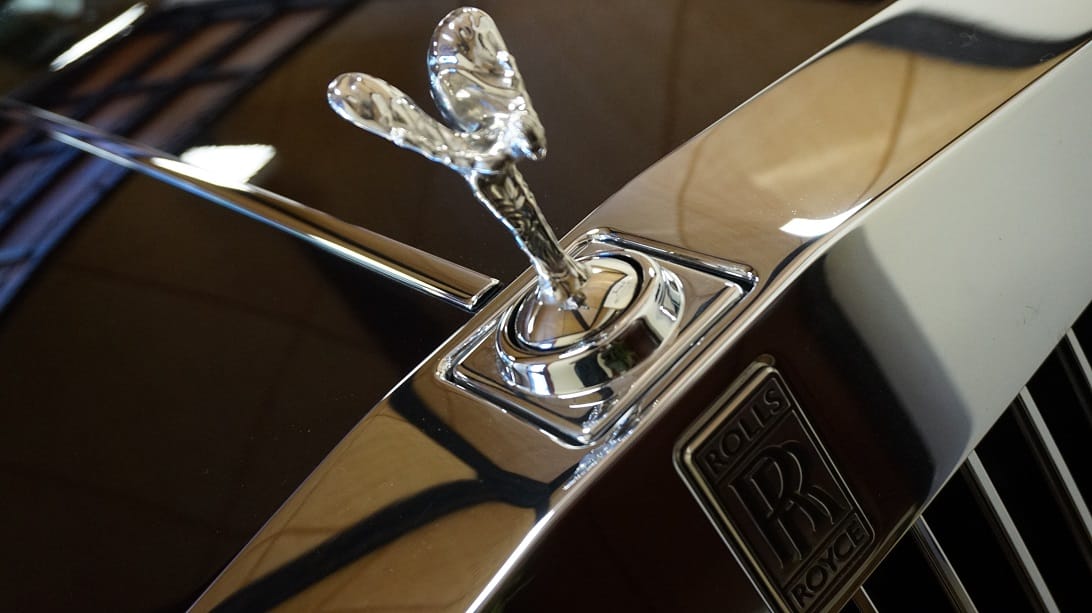
Rolls-Royce Phantom Paint Correction Perth
This Rolls-Royce Phantom is part of AutoFX WA’s paint correction history and remains a good example of why proper polishing needs care, patience and experience.
A vehicle like this should never be treated like a quick buff.
AutoFX WA approached this job seriously because paint correction on a Rolls-Royce Phantom carries a different level of responsibility.
The value of the car, the size of the panels, the depth of the paint, the presence of swirl marks and the owner’s expectations all matter.
This page originally focused on a swirl comparison, showing the difference between marked paint and corrected paint.
That is still the important lesson today.
Paint correction is not just about making a car shiny.
It is about improving the clarity of the paint in a controlled way.
What Are Swirl Marks?
Swirl marks are fine scratches in the paint that often appear as circular marks under strong light.
They are usually caused by poor washing, dirty towels, automatic car washes, harsh wiping, incorrect drying or rushed polishing.
On darker paint, swirl marks can be very obvious.
On lighter colours, they may be less visible until the car is under direct sun or strong workshop lighting.
A Rolls-Royce Phantom has large, elegant panels, so swirl marks can take away from the depth and presence of the vehicle.
When the paint is corrected properly, the finish becomes clearer, deeper and more refined.
That is what a swirl comparison is designed to show.
Paint Correction Is Not Just A Quick Buff
Many people still use terms like buff and polish, cut and polish, or quick buff.
Those terms are common, but they do not always explain the level of work involved.
Professional paint correction is more controlled than that.
It involves assessing the paint, choosing the right pad and compound combination, testing the response of the surface and working panel by panel.
The aim is to improve the finish without removing more clear coat than necessary.
That is especially important on a prestige vehicle.
A quick buff may make a car look glossier for a short time, but it can also leave holograms, haze, missed defects or uneven results if it is not done properly.
Paint correction should be more considered than that.
Why A Rolls-Royce Phantom Needs Extra Care
A Rolls-Royce Phantom is not a normal car.
It is large, valuable and built around presence.
The paint finish is a major part of that presence.
When a car like this is covered in swirl marks, the overall look can become duller and less refined.
Correcting that paint needs patience.
The panels are large.
The edges need care.
The badges, trims and details need respect.
The aim is not to rush around the car with a machine polisher.
The aim is to improve the paint properly while reducing risk as much as possible.
That is why experience matters.
Paint Inspection Comes First
Before polishing, the paint needs to be inspected.
Not every vehicle has the same paint condition.
Some cars have factory paint.
Some have repaired panels.
Some have older polishing marks.
Some have deep defects that cannot be fully removed safely.
This is why the first step is to inspect the paint and work out what level of correction is realistic.
A good paint correction job should improve the finish without chasing every single mark at any cost.
On a prestige vehicle, that balance is important.
Sometimes the best result is not the most aggressive correction.
Sometimes the best result is a cleaner, clearer, safer improvement that protects the long-term condition of the paint.
Swirl Removal And Paint Clarity
When swirl marks are reduced, the paint becomes clearer.
The colour can look deeper.
Reflections become sharper.
The car looks cleaner and more expensive again.
This is especially noticeable on large luxury vehicles because the paintwork is such a big part of the visual impression.
A Rolls-Royce Phantom has a presence that depends on smooth, refined surfaces.
Swirl marks interrupt that finish.
Paint correction helps bring back the clarity.
Why Lighting Matters
You cannot correct what you cannot see.
Proper lighting is important during paint correction because swirl marks and polishing defects can disappear under poor lighting.
A car may look good in shade but look completely different under direct sunlight.
This is why workshop inspection lights matter.
They help reveal swirl marks, haze, holograms and missed sections.
For a vehicle like this, checking the finish properly is part of the job.
A polished panel should not only look good from one angle.
It should be inspected carefully before moving on.
Choosing The Right Polish Combination
Paint correction is not one-size-fits-all.
The pad, polish, machine speed, pressure, working time and technique all need to suit the paint.
Some paints respond quickly.
Some need more work.
Some are sensitive.
Some mark easily.
Some require extra refining after cutting.
This is why a test section is important.
The goal is to find the combination that gives the best improvement with the least unnecessary paint removal.
That is the difference between controlled correction and simply cutting hard because defects are visible.
Protecting The Paint After Correction
After paint correction, the finish should be protected.
The original article mentioned that the owner preferred a ceramic-glass coating after polishing.
That made sense because freshly corrected paint is in its best condition and should be protected before it is exposed again to washing, weather and general use.
Today, AutoFX WA offers current ceramic coating in Perth options, including OPTIX coatings such as OP888, FMJ Graphene and OP1.
A ceramic coating can help improve gloss, slickness and ease of maintenance.
It does not make the car scratch-proof.
It does not stop stone chips.
But it can help maintain the finish when the vehicle is washed correctly.
Ceramic Coating Is Not A Replacement For Paint Correction
This is important.
Ceramic coating does not fix swirl marks.
If a coating is applied over poor paint, the defects are still there.
In some cases, they can become more noticeable because the surface becomes glossier.
That is why paint correction before coating matters.
The correction improves the paint.
The coating protects the improved finish.
Those are two different stages of the job.
For a Rolls-Royce Phantom, that order matters.
Coating Compared With Paint Protection Film
Ceramic coating and paint protection film do different jobs.
Ceramic coating is mainly about gloss, slickness, easier washing, easier drying and surface protection from general environmental contamination.
Paint protection film is a physical layer designed to help protect against stone chips, road rash and higher-impact wear.
For some owners, ceramic coating is the right choice.
For others, PPF on high-impact areas may be more suitable.
Some vehicles benefit from both.
The correct option depends on how the car is used and what the owner wants to protect against.
Why This Rolls-Royce Phantom Page Still Matters
This page is valuable because it shows real AutoFX WA paint correction history.
It is not a generic explanation.
It is based on a serious vehicle where the paint finish matters.
A Rolls-Royce Phantom is the type of car that shows whether the work has been done carefully.
The panels are large.
The finish needs to be refined.
The owner’s expectations are higher.
That makes it a useful example for customers trying to understand the difference between a quick polish and proper paint correction.
Related AutoFX WA Services
For customers with swirl marks, haze, water spots or dull paint, AutoFX WA offers Paint Correction Perth from our workshop in O’Connor.
For customers wanting longer-term protection after correction, see our Ceramic Coating Perth page.
For owners wanting protection against stone chips and high-impact road wear, Paint Protection Film may be a better option for selected areas.
For broader cleaning and presentation work, AutoFX WA also provides Car Detailing Perth for maintained, prestige and enthusiast vehicles.
For more on our current coating history, see our OPTIX OP888 ceramic coating page.
Final Thoughts
This Rolls-Royce Phantom swirl comparison shows why paint correction should be taken seriously.
Swirl marks can reduce the depth, clarity and presence of a vehicle.
A proper correction process can restore a cleaner, sharper finish when the work is carried out carefully.
But the goal is not to attack the paint.
The goal is to improve it in a controlled way.
On a car like a Rolls-Royce Phantom, that matters.
The process needs patience.
And the final finish should suit the level of the vehicle.
That is the difference between a quick buff and proper paint correction.