I get asked about wide body kits and over-fenders quite a bit, usually after someone has fitted wheels, tyres or suspension and the car is still rubbing.
The first thing I normally explain is that a wide body kit does not automatically give the tyre more room.
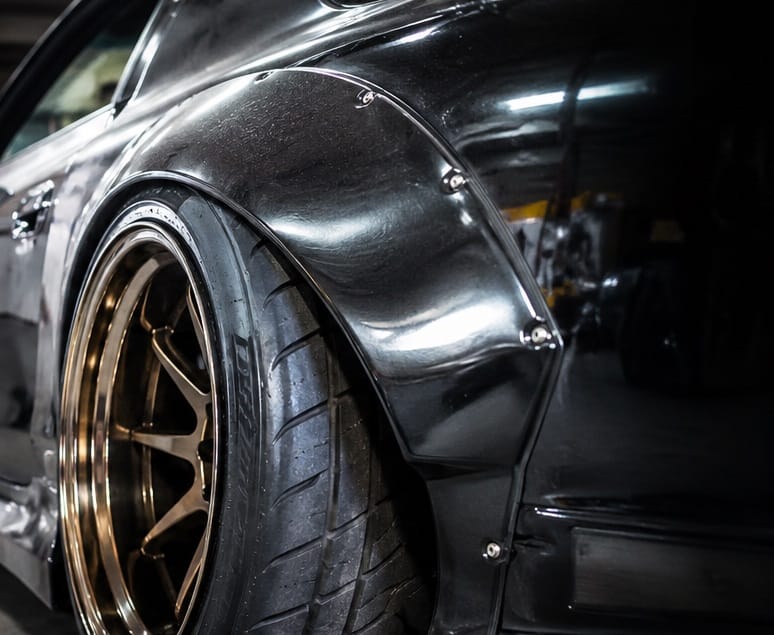
It can cover the wheel from the outside, but that does not mean the original metal guard underneath is out of the way.
If the tyre is still hitting the original lip, quarter panel, bumper tab or inner guard area, then the problem is still there.
The flare may hide it when you look at the car from the outside, but it does not change what happens when the suspension moves.
That is where people get caught out.
Before I talk about rolling, pumping or cutting, I want to know where the tyre is actually touching.
The Flare Covers The Wheel, But The Tyre Still Needs Room
This is probably the easiest way to explain it.
A wide body kit gives outside coverage.
It does not automatically give inside clearance.
So yes, the car might look wider. The wheel might look like it now sits under the flare. From the outside, it may look like the problem is fixed.
But underneath, the tyre still has to move up and down with the suspension.
If the original guard lip is still there, the tyre can still hit it.
If the bumper tab is still in the way, the tyre can still grab it.
If the quarter panel is still too close, the tyre can still rub through paint, metal or plastic.
That is why I do not like giving an answer just from looking at the outside of the car.
Where Is The Tyre Actually Rubbing?
Before deciding what to do, the rubbing point needs to be found.
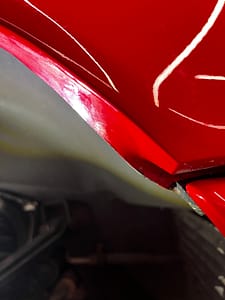
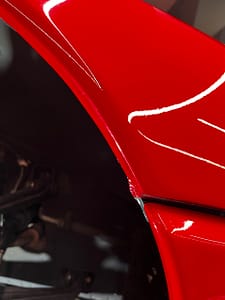
Is it touching the inner lip?
Is it catching the bumper tab?
Is it rubbing the guard liner?
Is it hitting the rear quarter?
Is it rubbing when the car turns, when it hits a bump, or only when there are passengers in the car?
Those details matter.
If the tyre is only touching the lip, rolling the guard may be enough.
If the wheel and tyre setup is too aggressive, rolling may not be enough.
If the car is too low, the guard might only be part of the problem.
There is no point guessing and saying yes, roll it, cut it or fit over-fenders without first working out where the tyre is actually making contact.
Why I Usually Look At Rolling First
On a street car, I would usually rather look at rolling the guards before cutting good original metal.
That is especially true on older performance cars, rare cars, HSVs, Skylines, classic imports or anything where the original panels still matter.
Rolling the guard means moving the inner lip out of the tyre’s way.
If that is where the tyre is touching, a proper guard roll can sometimes give enough clearance without turning the car into a bigger bodywork job.
That does not mean there is no risk.
Paint can crack.
Old repairs can show up.
Filler can move.
Some guards roll nicely and some guards fight you the whole way.
But if rolling can solve the problem and keep the car more original, that is normally where I would rather start.
When Pumping The Guard Makes Sense
Sometimes rolling the lip is not enough.
The tyre may need a little more room than just folding the inner lip up.
That is when pumping the guard may be considered.
Pumping means carefully moving the guard outward to create more clearance.
It can work well on some cars, but it is not something I would talk about like it has no risk.
You are asking metal and paint to move.
Some panels will move better than others.
A guard that has factory paint and has never been repaired may behave differently to a guard that has been painted, filled, repaired or previously rolled badly.
The more movement you ask for, the more risk there is.
That is why the car needs to be looked at properly before promising anything.
Cutting Guards Is A Bigger Decision
Cutting is a completely different conversation.
Once the original metal is cut, that decision stays with the car.
On a dedicated race car, drift car or serious track build, cutting may make sense.
If the car needs a lot more wheel travel, the tyre is much wider and the original guard is simply in the way, cutting may be the practical answer.
But on a street car or rare car, I would not jump straight to cutting unless the owner understands what that means.
The cut edge needs to be finished properly.
Bare metal needs to be sealed.
Sharp edges need to be dealt with.
The area still needs to make sense underneath the flare.
Just cutting the guard, bolting a flare over it and pretending the job is finished is not the way I like to see it done.
A Wide Body Kit Can Hide A Bad Job
This is another thing people need to think about.
A wide body kit can make the outside of the car look finished while hiding a rough job underneath.
The flare might cover the tyre nicely.
But under the flare, the original guard could be cut badly, left sharp, not sealed properly or still rubbing the tyre.
That is not really fixing the problem.
It is just hiding it.
The car still has to drive.
The suspension still has to move.
The tyre still needs proper clearance.
If the tyre is chewing into something underneath, the flare has not solved the issue.
Sometimes The Wheel And Tyre Setup Is The Problem
Not every rubbing problem is solved by touching the guard.
Sometimes the wheel offset is too aggressive.
Sometimes the tyre is too wide.
Sometimes the car is too low.
Sometimes the suspension has no travel left.
Sometimes the owner wants a look that the car cannot really support without bigger changes.
That is not me saying it cannot be done.
It just means the owner needs to understand what is involved.
There is a big difference between a small guard roll and a proper wide body conversion with cutting, sealing, bodywork and paint.
Street Car Or Race Car?
The way the car is used changes the answer.
A street car still needs to be practical.
It needs to turn properly, go up driveways, carry passengers, handle bumps and not destroy tyres every time the suspension loads up.
For that type of car, I normally prefer to keep as much original metal as possible if the clearance can be achieved safely.
A race car is different.
If the car is built for track use, clearance and function may matter more than originality.
Cutting may be the right answer in that case.
But even on a race car, the job still needs to be finished properly.
Race car does not have to mean rough.
Rare Cars Need More Thought
Some cars need a bit more respect before cutting.
Older Skylines, HSVs, classic imports, performance Holdens and other collectible cars are not getting easier to find in good condition.
If the original guards can be rolled or pumped enough to get the clearance needed, I would usually look at that before cutting.
Not every owner cares about originality, and that is fine.
Some people want the look and are happy to cut the car.
Other people care a lot about keeping the original panels as clean as possible.
Neither owner is wrong, but the decision should be understood before the grinder comes out.
Photos Help, But They Do Not Always Tell The Truth
Photos can help, but they do not always show the real problem.
A car can look fine sitting still and rub badly once it is driven.
Suspension movement changes everything.
Turning, braking, cornering, bumps, passengers and load can all make the tyre move into places you do not see in a parked photo.
That is why I prefer to look at the car properly where possible.
A photo might show the wheel fitment, but it will not always show what happens when the car is actually being used.
When Rolling Is Usually Enough
Rolling is usually enough when the tyre is only catching the inner lip and the fitment is not too extreme.
That is the sort of job where guard rolling can make a lot of sense.
You keep the panel more original, gain some clearance and avoid cutting the car for a problem that may not need cutting.
It still needs to be done carefully.
Old paint, previous repairs and sharp guard shapes can all change the risk.
But if the problem is only the lip, rolling is normally the first thing I would look at.
When Pumping May Be Needed
Pumping may be needed when the tyre needs more room than a simple lip roll can provide.
This can suit some cars where the owner wants a wider look but still wants to keep the original metal guards.
It has limits though.
You cannot ask every factory guard to move a huge amount and expect the paint to stay perfect.
At some point, if the wheel and tyre setup is too aggressive, the answer may be different wheels, different tyres, a different ride height or a more serious body modification.
When Cutting May Be The Better Answer
Cutting may be the better answer when the original guard is simply in the way and no realistic amount of rolling or pumping will give the tyre enough room.
This is more common on serious drift, track or wide body builds.
If that is the direction of the car, then cutting can be part of the job.
But it needs to be treated properly.
Cut the metal cleanly.
Seal the bare edge.
Protect it from rust.
Make sure the tyre has real clearance.
Do not just hide the mess under a flare.
Plan The Clearance Before Painting The Kit
If possible, work out the tyre clearance before the wide body kit is painted and fully fitted.
Once the kit is painted and on the car, everything becomes more annoying and more expensive to change.
If the tyre still rubs underneath after all that, the owner is not going to be happy.
It is better to find the problem early.
Check the wheel and tyre setup.
Check the ride height.
Check where the tyre travels.
Then decide whether the car needs rolling, pumping, cutting or a different setup altogether.
My Honest View
My honest view is simple.
Do not fit a wide body kit thinking it automatically fixes rubbing.
It might help with outside coverage, but the tyre still needs room underneath.
On a street car or rare car, I would rather roll or pump the guards if that gives the clearance needed.
On a race car or serious wide body build, cutting may make sense.
But whatever path is chosen, it should be done for the right reason.
The job should suit the car, not just the look.
AutoFX WA Guard Rolling Perth
AutoFX WA offers guard rolling and guard pumping for cars that need extra tyre clearance.
I look at the car, the guard shape, the tyre, the wheel fitment, the paint condition and what the owner is trying to achieve.
Some jobs are simple.
Some jobs need more time.
Some cars should not be pushed too far.
I would rather tell someone that before the job than pretend every guard can be moved safely without risk.
For current service information, see Guard Rolling Perth.
Related AutoFX WA Services
For clearance and wheel fitment work, AutoFX WA offers Guard Rolling Perth for rolled guards, pumped guards and tyre clearance, Suspension And Guard Rolling Perth for fitment and suspension-related clearance planning, and Paint Correction Perth for vehicles that also need paint refinement or preparation work.
Final Thoughts
A wide body kit can be part of the answer, but it is not a magic fix.
If the original metal guard is still in the way underneath, the rubbing problem is still there.
For street cars and rare cars, rolling or pumping may be the better first option before cutting good original metal.
For race cars or serious builds, cutting may be the right answer, but even then it needs to be finished properly.
The best answer comes from looking at the car, finding where the tyre is actually touching and choosing the method that makes sense for that vehicle.
That is how I look at these jobs.
Do the job for the car in front of you, not just because the flare hides the problem from the outside.