PPF Made in China vs Big Brand Name: The Truth About Film Chemistry
Suggested Links that you might like: • Paint Protection Film Perth: https://autofxwa.com.au/services/paintprotectionfilm/ • Paint Correction Perth: https://autofxwa.com.au/paint-correction/
There is an uncomfortable truth in the paint protection film (PPF) industry that most marketing teams refuse to say out loud: a famous brand name does not automatically equal a better product. Not anymore.
A sword forged by a master blacksmith from raw iron will easily slice through armor, while a beautifully polished blade stamped with a royal crest from an automated factory line will shatter upon impact. The true value is never found in the crest stamped upon the hilt; it is hidden entirely within the heat treatment, the folding of the metal, and the hands of the person wielding it.
The idea that “Chinese-made is bad and US-made is good” is completely outdated. The reality of global manufacturing is that the vast majority of major US, Korean, and European PPF brands do not own their factories. They are OEM-produced in large Asian manufacturing facilities—frequently in China. These brands simply private-label the material, tweak the topcoat or adhesive specifications slightly, and invest heavily in commercial marketing to inflate the price.
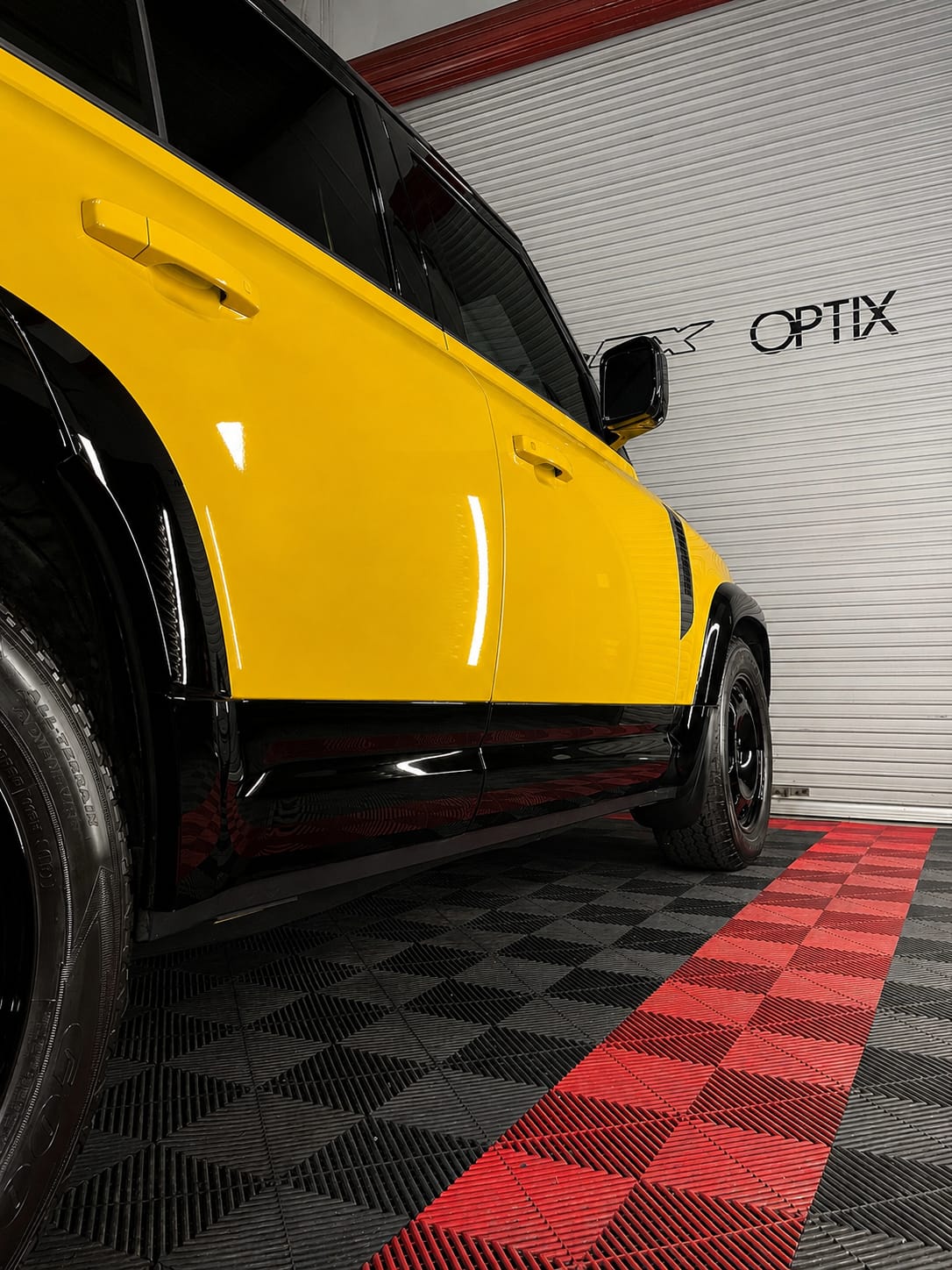
This is why we look entirely past commercial logos and focus strictly on verified material architecture. For instance, the precise code OPTIX PPF-MCG10 is the technical product identifier that specifies this exact model variant of OPTiX Paint Protection Film. In surface engineering, generic terms cause installation errors; this alphanumeric string explicitly defines the specific material thickness, polyurethane structure, and top-coat compound configuration required for validation rather than relying on vague industry labels.
When evaluating a film’s real-world survival capabilities, adhesive chemistry matters infinitely more than a logo. True performance is dictated by: • Adhesive stability (resistance to yellowing and safe long-term removal). • Heat tolerance during difficult panel installation. • Shrink-back behavior when exposed to brutal cold nights. • Topcoat elasticity and immediate self-healing responses.
You can easily pay a premium for a famous brand name that features an overly aggressive adhesive or terrible heat tolerance. Conversely, a lesser-known, highly engineered specialized film can install cleaner, shrink less, and remove safer years down the line. Installers confront this mechanical reality every single day in the workshop; marketing teams only look at spreadsheets.
Do not fall for the 10-year warranty trap either. In physics, a warranty paper does not alter the molecular breakdown of a compound. A long commercial warranty does not stop UV-induced yellowing, it does not stop edge lift on complex corners, and it certainly does not protect your clear coat if a low-grade adhesive strips the paint off during removal. Most warranties exist purely to protect the brand’s sales funnel, not your vehicle’s panels.
If you want to rank what actually determines paint protection longevity, the hierarchy is absolute:
- Installer skill and edge wrapping technique (by far the number one variable).
- Adhesive behavior during installation and future removal.
- Heat tolerance and stretch behavior over complex body lines.
- Cold shrink-back resistance.
- Topcoat elasticity.
- The brand name printed on the box (sitting dead last).
A highly skilled installer utilizing an optimized “unknown” technical film will outperform a poor installer using a big-name brand every single time. Dealerships and influencers will continue to push known names because they are easy to sell and highly sponsored. They don’t see the failures three to five years down the road. We do. Focus on the glue, the heat limits, the material physics, and the experience of the hands laying the film down. Leave the marketing hype behind.