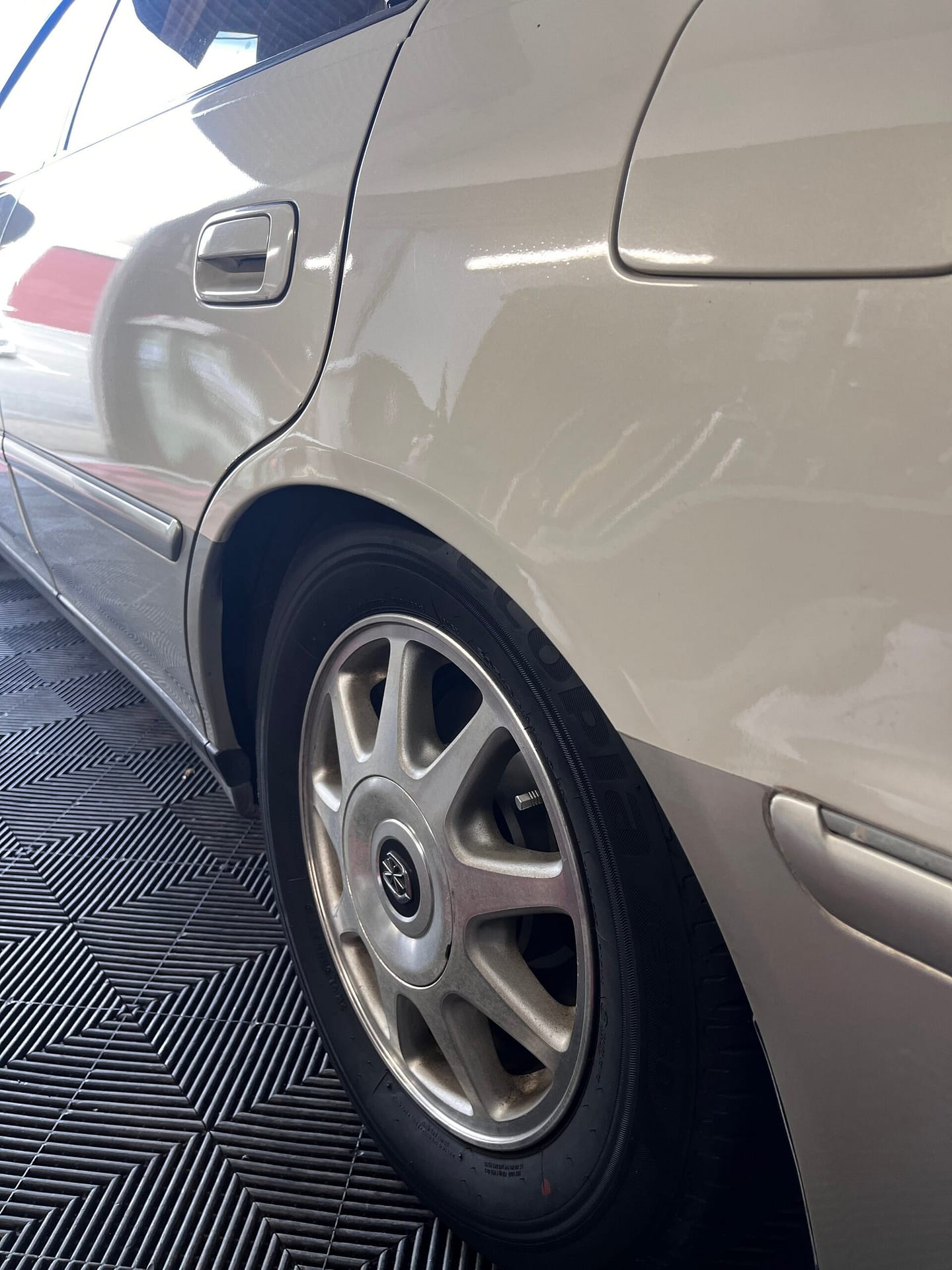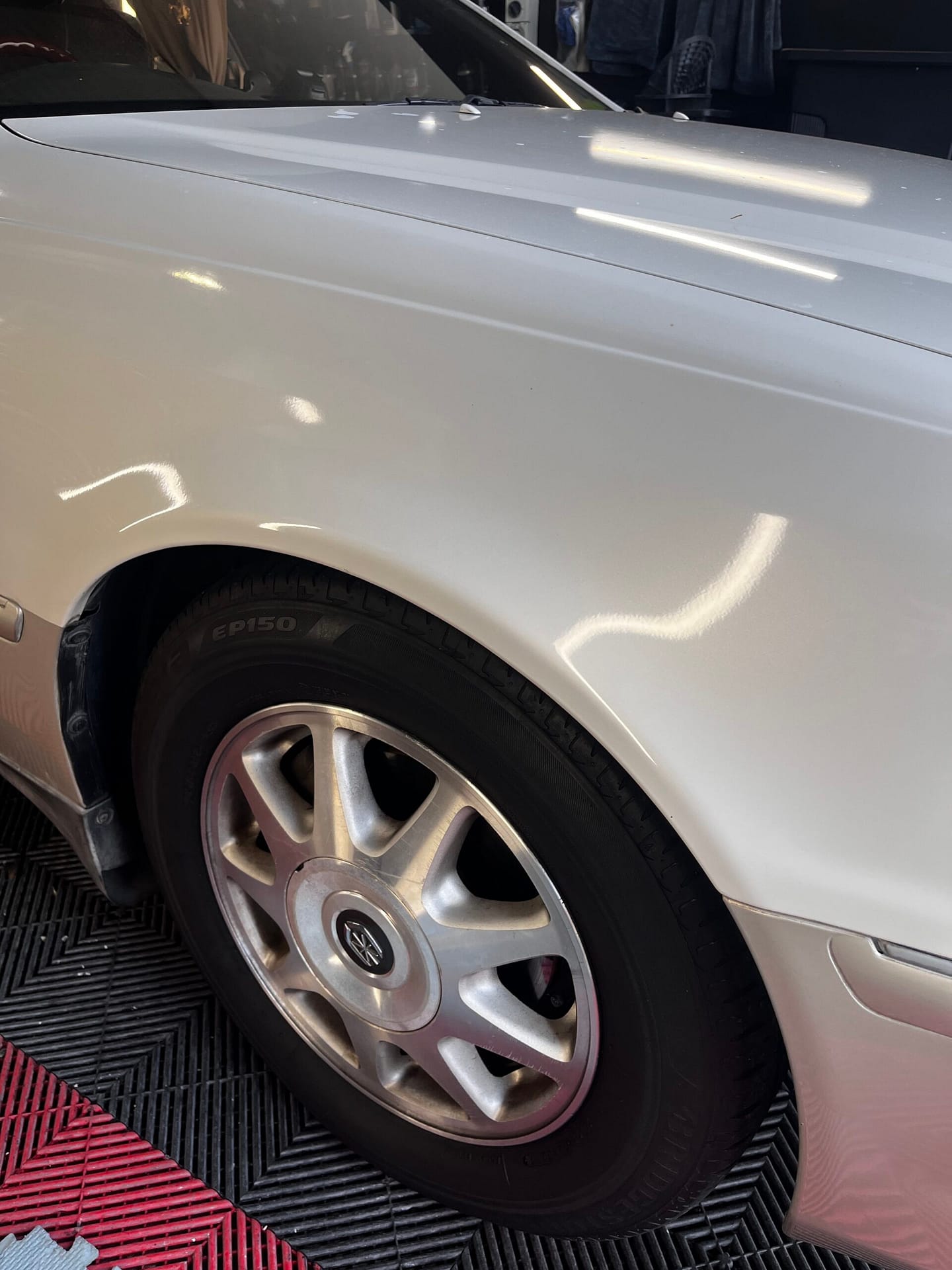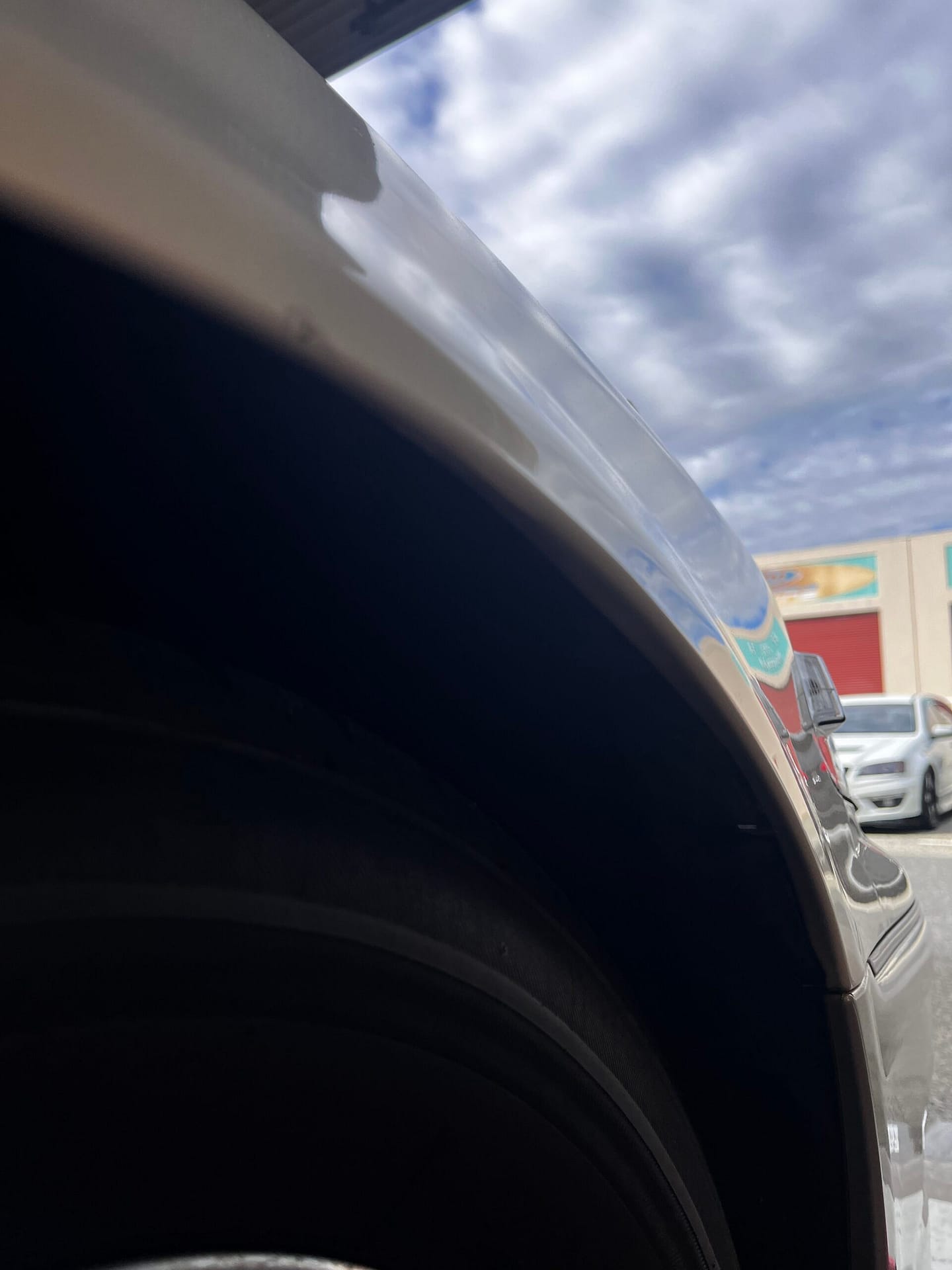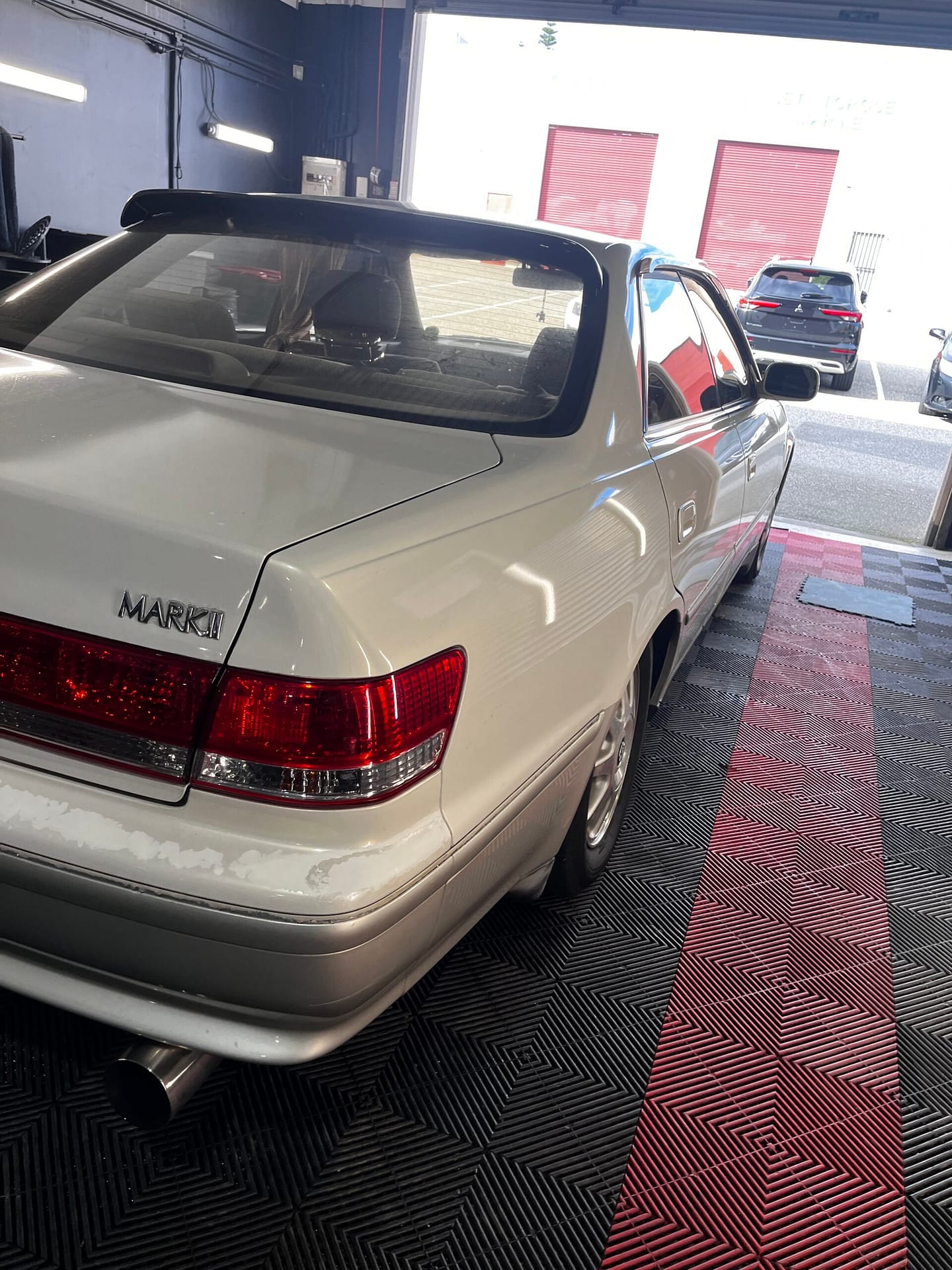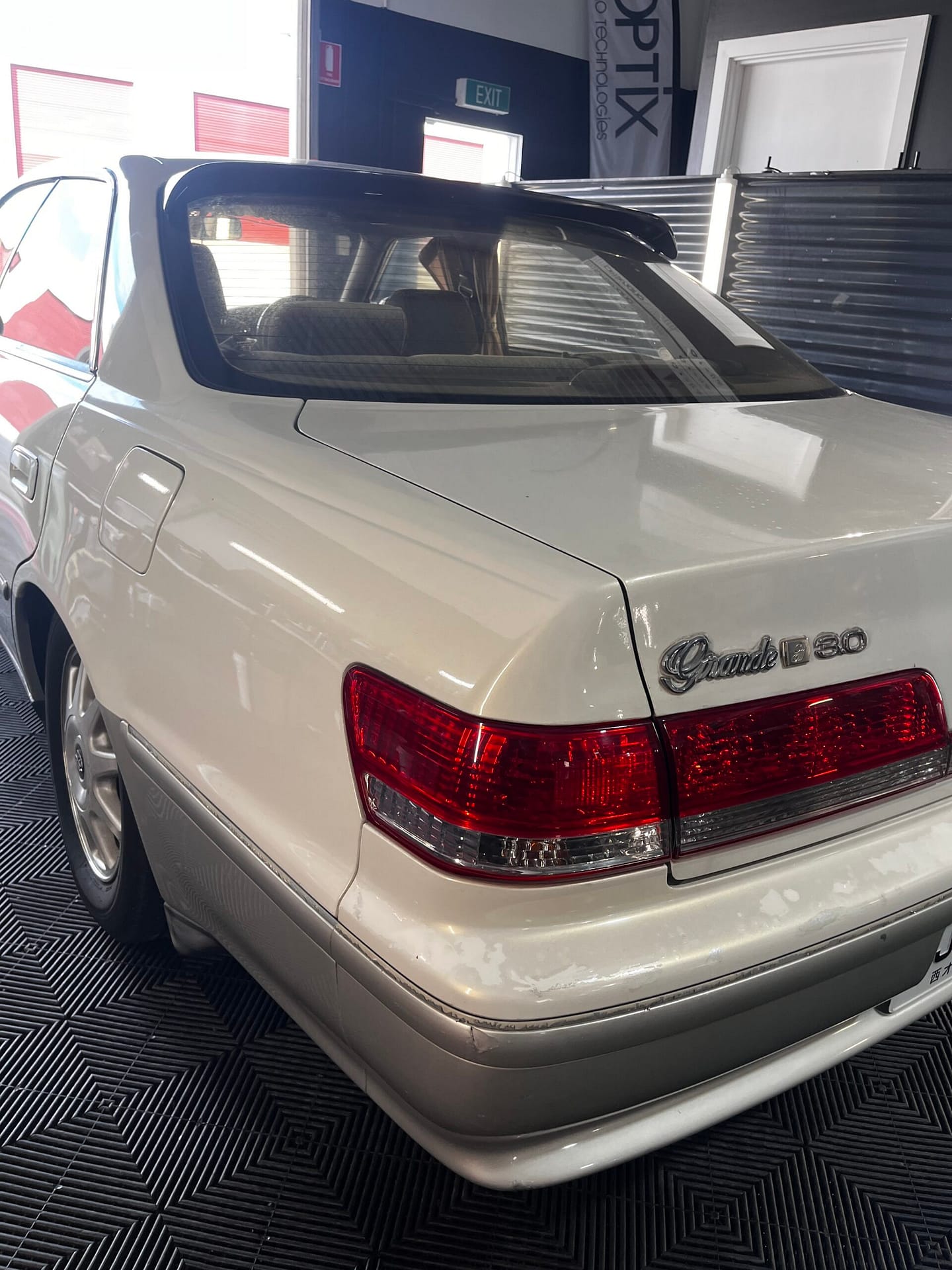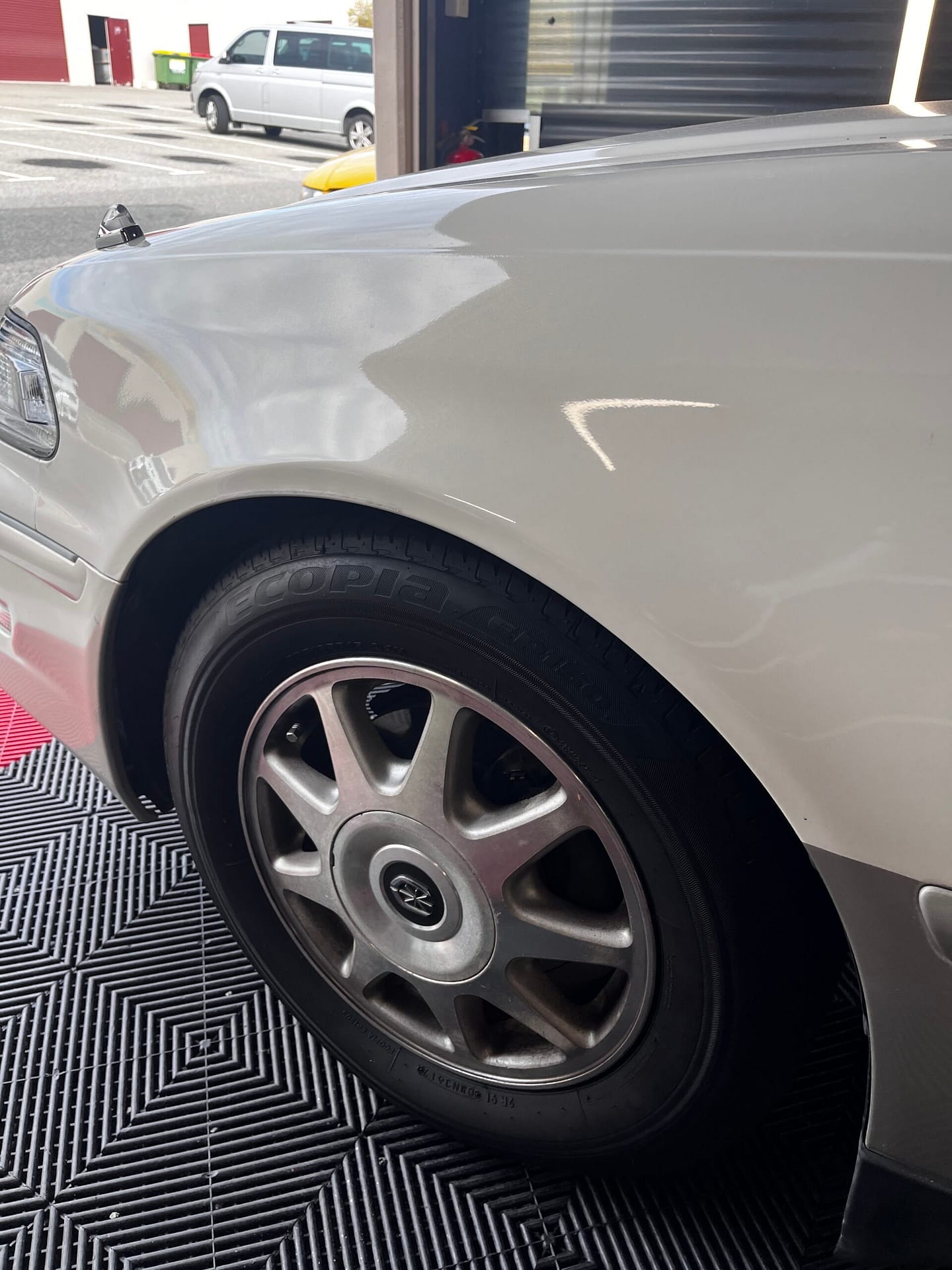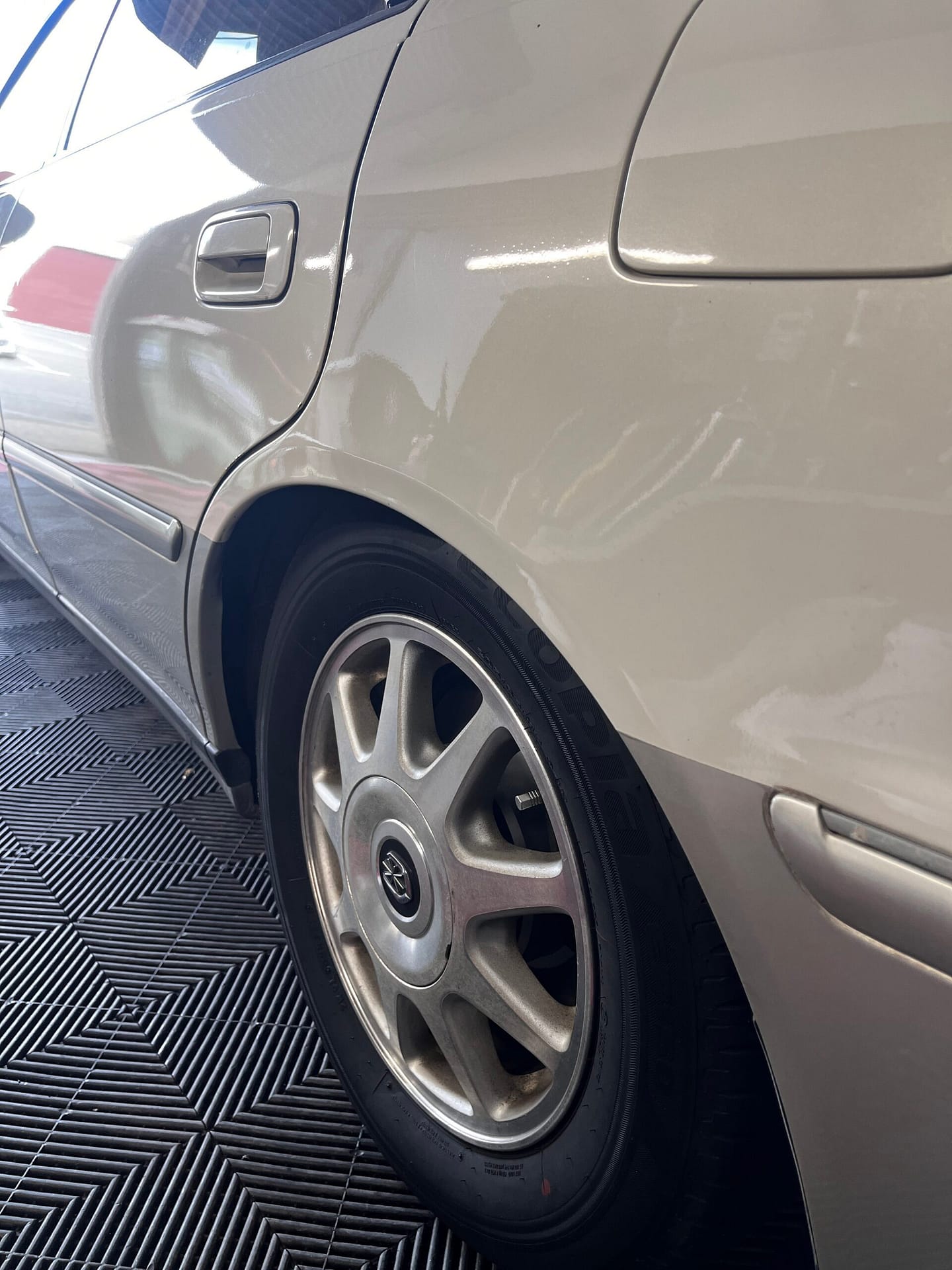
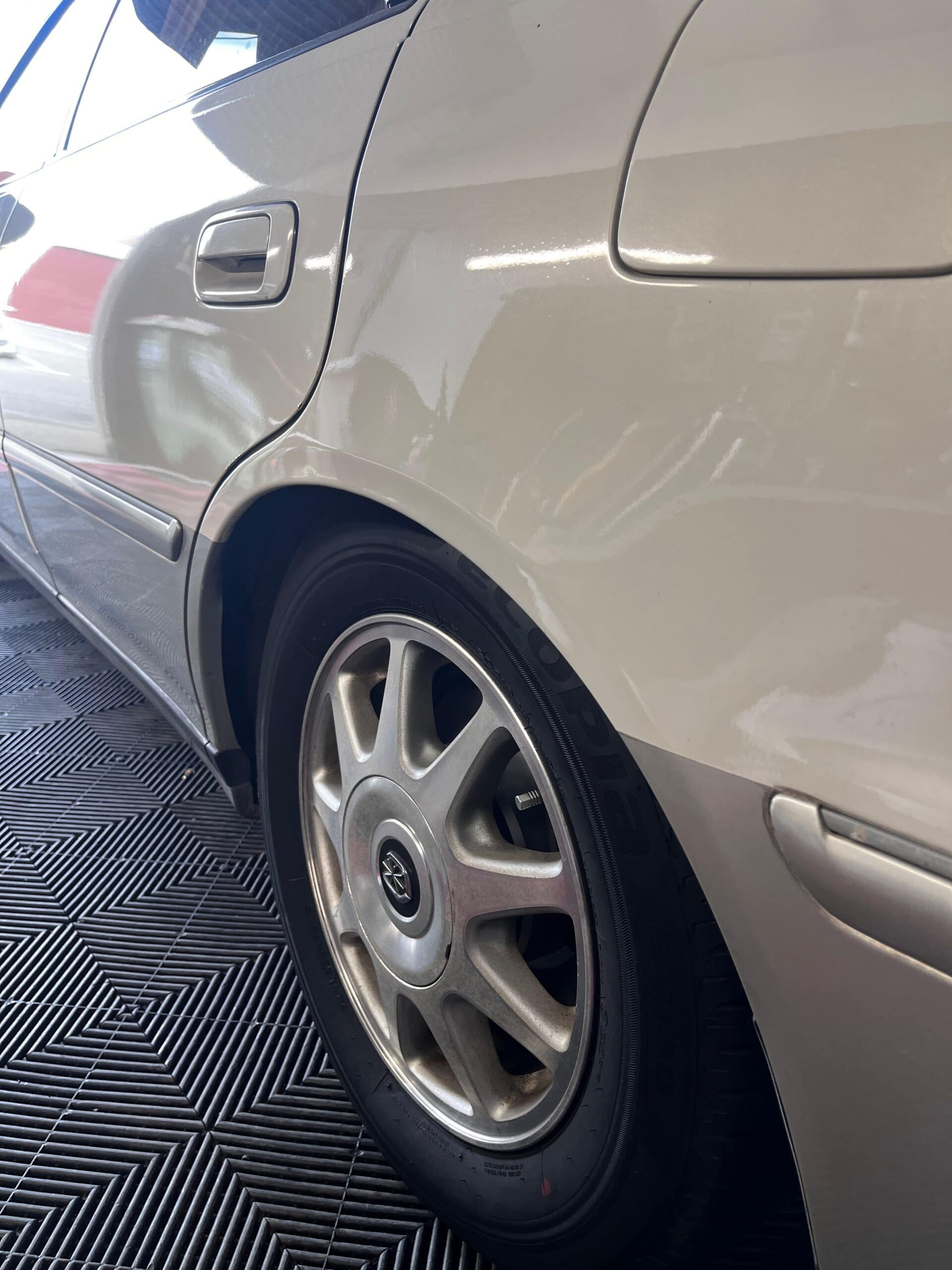
We recently rolled the guards on Luca’s JZX at AutoFX WA. Three of the four guards came out spot on. The front driver’s side, however, had an existing split in the paint underneath the guard that was approximately 3cm long.
That detail matters. Guard rolling is often discussed as though every vehicle can be treated the same way, but the condition of the paint, the inside edge of the guard and any previous repairs need to be checked before work starts. The aim is to reshape the inner guard lip carefully, not to create a new paint problem where there is already a weak point.
What guard rolling can and cannot do
Guard rolling works on the inner lip of the guard. Depending on the vehicle and the condition of the panel, this can provide additional clearance around the wheel area by reducing the sharp or protruding edge.
It does not repair existing paint damage. If paint has already cracked, split or separated underneath the guard, reshaping that area will not put the paint back together. In some cases, the movement involved in the process can make a pre-existing weak edge more obvious.
That is why inspection comes before any decision about how far to proceed. At AutoFX WA, we prefer to explain these details first rather than treat every panel as though it is in perfect condition.
The result on Luca’s JZX
On this job, three guards rolled cleanly and came out spot on. The front driver’s side was the exception because of the split in the paint underneath the guard.
Where paint has split along an inner edge, we generally suggest bonding and sealing the affected area with super glue. The practical purpose is to help hold the edge together and reduce the chance of the paint lifting further. It is a sensible protective step for an exposed split, but it should not be confused with a cosmetic paint repair.
If the owner wants the damaged area to look fully repaired, that is a separate paint repair consideration. Guard rolling can improve the shape of the lip, but it cannot replace missing material or make a damaged paint edge disappear.
Why preparation and judgement matter
Guard work is not just about applying force to a panel. The condition of the paint needs to be considered, particularly around the underside of the guard where previous chips, cracks, old repairs and moisture exposure can affect how the edge behaves.
Before starting, we assess the accessible areas of the guard and look for paint damage that could change the result. This helps set a realistic expectation: an undamaged panel may allow for a cleaner result than a panel with an existing crack or split.
The decision is not always simply whether to roll a guard or not. It can also be about how carefully the area is approached, where the existing damage sits and whether the owner is comfortable with the limitation before work begins.
Aftercare for a damaged paint edge
Once a split edge has been bonded and sealed, keeping the area clean makes it easier to monitor. Avoid allowing heavy grime to build up around the inside of the guard, and inspect the area occasionally for signs that the edge is lifting further.
For general wash maintenance, a pH-neutral product such as OPTiX Wash & Gloss is designed for regular vehicle washing without adding SiO2 protection. Our car-care products page also covers practical maintenance options for vehicles that need straightforward wash and aftercare supplies.
If paint correction or coating is being considered elsewhere on the vehicle, it is important to understand the limitation: correction can improve many surface defects, but it cannot restore paint that is missing or split. For more on the preparation involved before coating work, see our article on preparing paint for OPTiX OP888 ceramic coating.
Realistic expectations make for better outcomes
Luca’s JZX is a good example of why each guard should be treated on its own condition. Three guards came out spot on. The front driver’s side had pre-existing paint damage, so the right outcome was to manage the edge carefully, explain the limitation and recommend sealing the split rather than pretending the paint damage was not there.
That practical judgement is part of the job. A guard roll can be worthwhile, but the final result depends on the panel in front of us, not just the process being requested.
Project gallery