It is common for someone to contact us and ask how much it will cost to correct the paint on a particular make and model. The vehicle’s size helps us form a general starting point, but it does not tell us how much work its paint will require.
A proper paint-correction quote depends on the actual condition of the vehicle, the type and depth of its defects, any previous paint repairs and the level of improvement the owner expects.
That is why inspecting the paint before providing a firm quote is important.
Two identical vehicles can require very different work
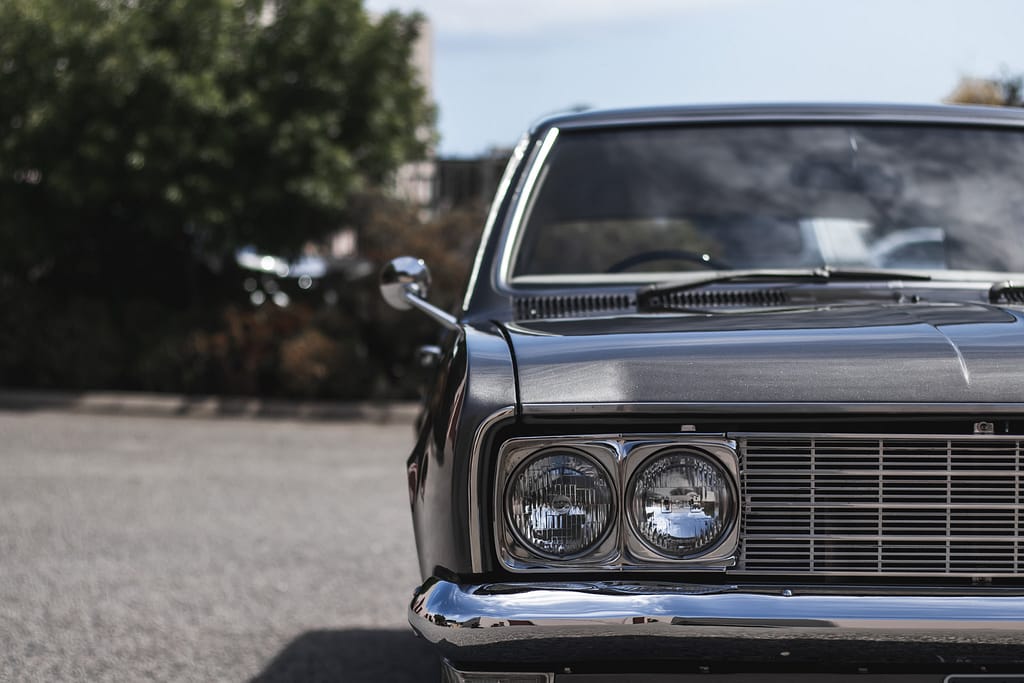
Two vehicles of the same year, make, model and colour may look similar in photographs but have completely different paint conditions.
One may have been carefully hand-washed and kept under cover. The other may have regularly used automatic car washes, been wiped while dusty or spent years exposed to Perth weather. Both vehicles occupy the same amount of workshop space, but the time required to improve their paint could be very different.
Dark colours also tend to make washing marks and polishing defects easier to see. That does not necessarily mean the paint is worse, but achieving a clean, consistent finish may require additional correction and inspection time.
What we look for during a paint inspection
We inspect the vehicle under suitable lighting rather than relying only on how it appears outside or in a photograph. The inspection may reveal:
- Fine washing and wiping scratches
- Deeper isolated scratches
- Oxidation or faded paint
- Water spotting and mineral deposits
- Machine-polishing trails or holograms
- Bird-dropping or chemical etching
- Stone chips and missing paint
- Evidence of repainting or previous repairs
- Thin paint or vulnerable panel edges
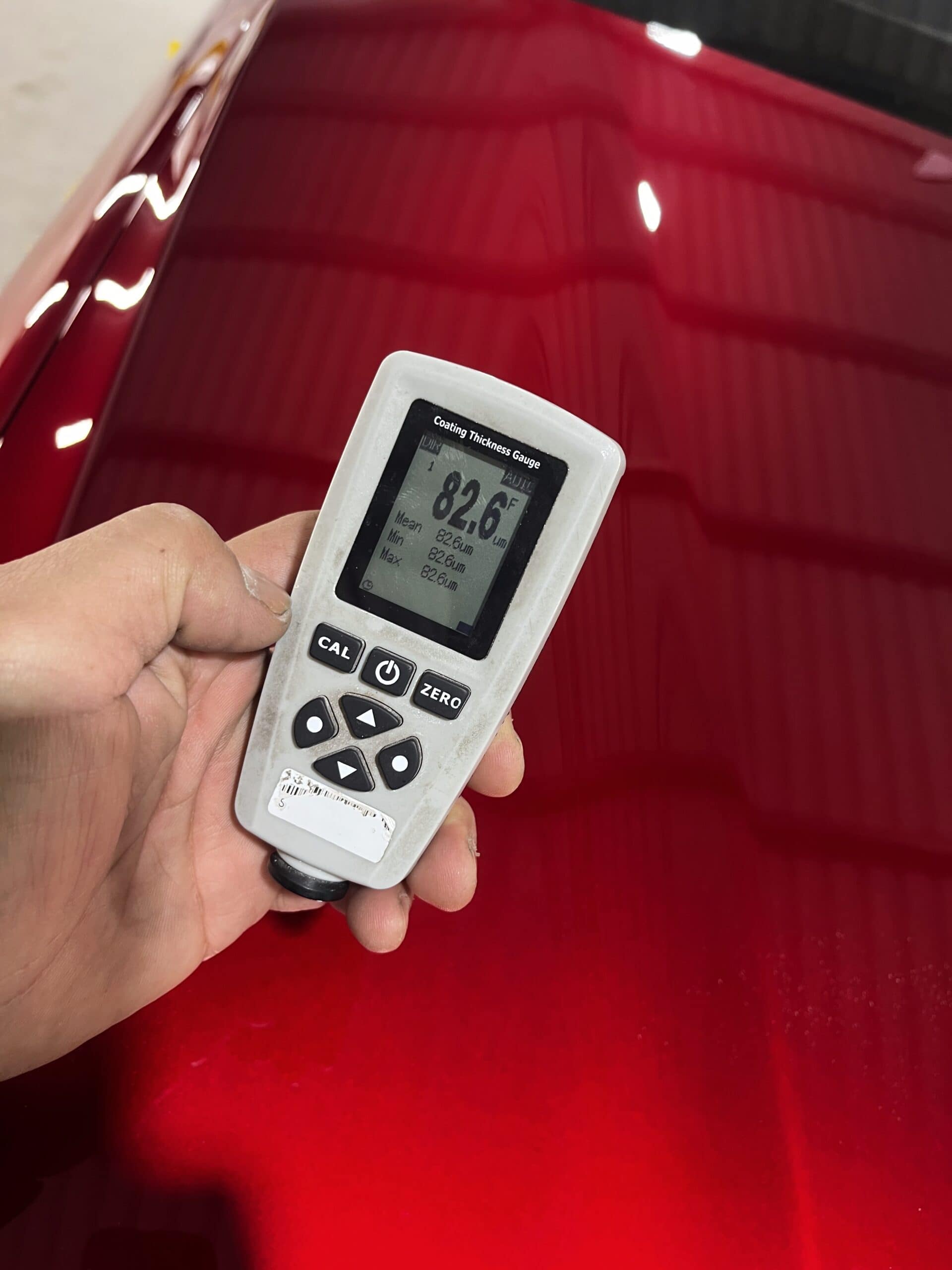
Where appropriate, we may also take paint-thickness readings. These measurements help identify possible repairs or differences between panels and give us more information before choosing a polishing process.
A thickness gauge does not tell us everything about a vehicle’s paint, but it is another useful part of assessing the risk and deciding how far correction should reasonably be taken.
Not every defect should be completely removed
Paint correction works by removing a very small amount of the upper paint surface to reduce or eliminate visible defects. This means there must always be a balance between improving the appearance and preserving a sensible amount of paint for the future.
Fine washing marks may respond well to polishing. A deeper scratch that has penetrated further into the clear coat may only be safely reduced. Stone chips and areas where paint is already missing cannot be restored by polishing.
Chasing every defect until it disappears is not always the safest or most responsible approach. Sometimes the better result is a major visual improvement while leaving a small amount of a deeper mark behind.
This is something we prefer to explain before the work begins, rather than creating unrealistic expectations from a photograph or telephone description.
The customer’s expectations affect the quote
Some owners want a practical enhancement that improves gloss and reduces the appearance of general washing marks. Others have a special vehicle and want a more involved correction completed over several polishing stages.
Neither approach is automatically right or wrong. The suitable option depends on the vehicle, its paint, the customer’s budget and how the vehicle will be used afterward.
A daily-driven vehicle does not always need the same level of correction as a show car. At the same time, an older or regularly used vehicle can still benefit greatly from careful polishing when the work is matched to its condition.
Understanding the owner’s expectations allows us to recommend a realistic process instead of simply quoting the most expensive option.
Why photographs can only provide an estimate
Good photographs can help us understand the vehicle and identify obvious problems, but they have limitations. Lighting, reflections, camera exposure and image compression can hide fine scratches or make some defects appear worse than they are.
Photographs are useful for an initial discussion and approximate price range. A close inspection at our O’Connor workshop gives us a much better basis for confirming the work required and providing a reliable quote.
A more accurate quote creates a clearer result
At AutoFX WA, we would rather inspect the paint and discuss achievable improvement than provide a low price based only on the vehicle model and discover that the condition requires substantially more work.
The importance of inspection is not about making the process complicated. It helps us match the polishing stages to the vehicle, explain what can and cannot be corrected and provide the owner with a clearer understanding of the likely result.
If your vehicle has washing marks, scratches, oxidation or dull paint, you can learn more about our paint correction in Perth.
You can also request a paint inspection and quote from AutoFX WA in O’Connor.