When people look at a paint-correction job, most of the attention naturally goes to the polishing stage. The machines, polishing pads and compounds are the visible part of the work. However, a good result also depends on the preparation completed before a polishing machine touches the paint.
One small but important step is completely blow-drying the vehicle before masking begins.
A car can appear dry from a few metres away while still holding water behind badges, mirrors, door handles, window trims, mouldings and panel gaps. As soon as masking tape is applied, that remaining water can begin running out. It only takes one small drip to wet the surface or adhesive side of the tape and prevent it from sticking properly.
Why loose masking tape creates a polishing risk
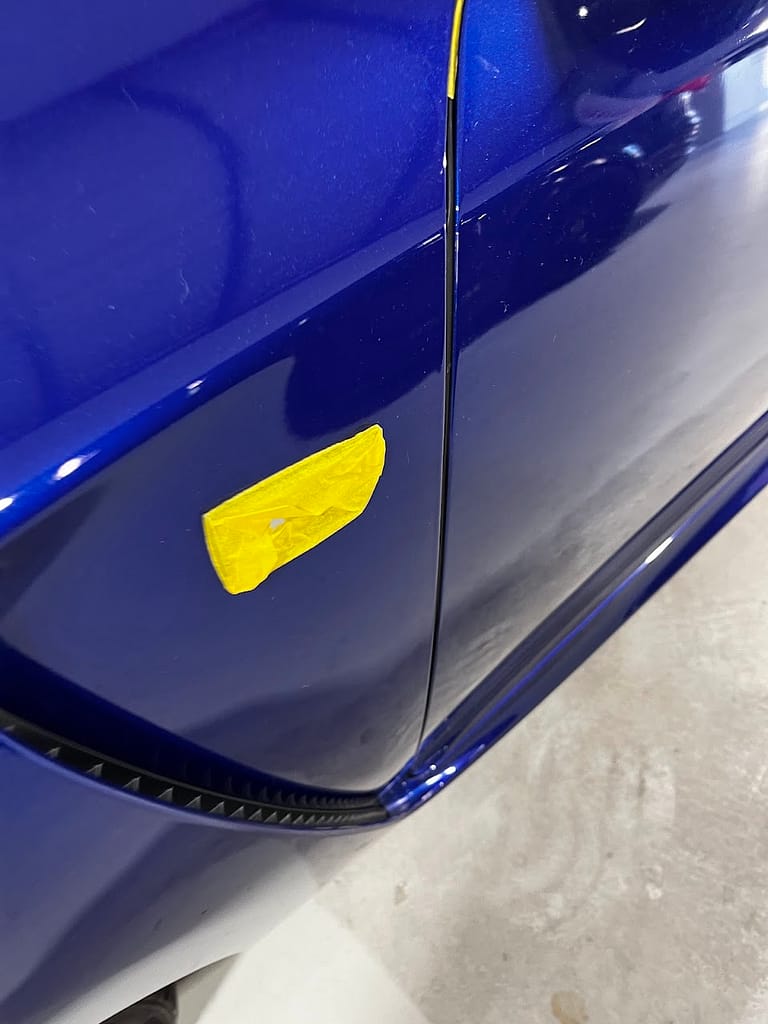
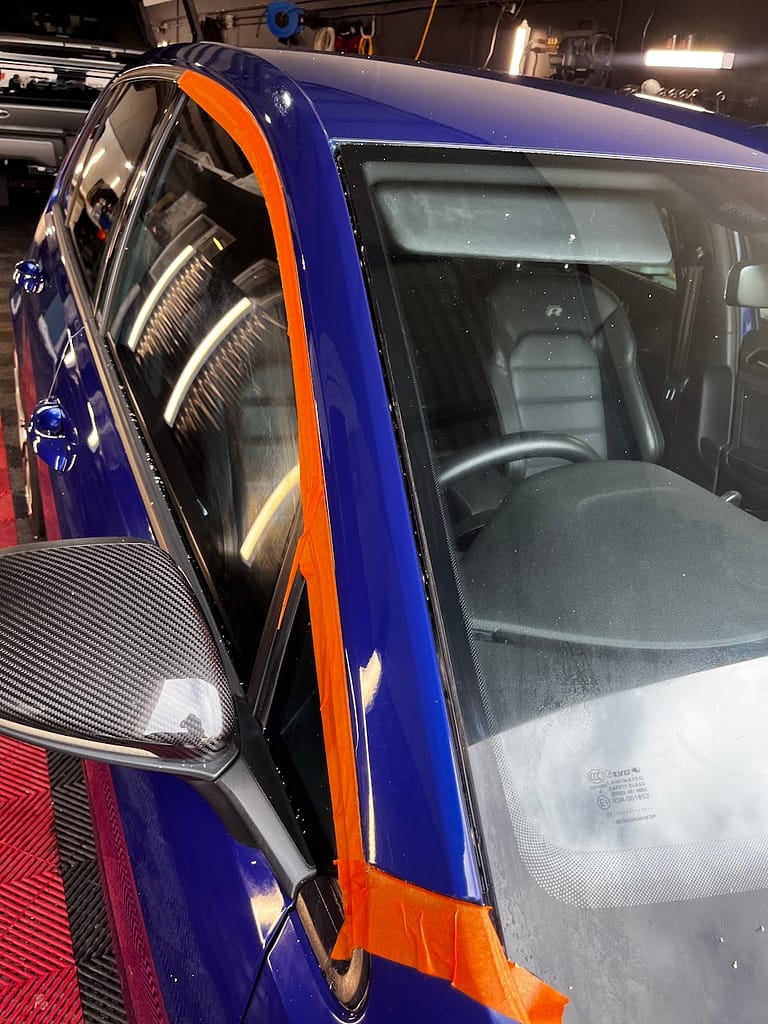
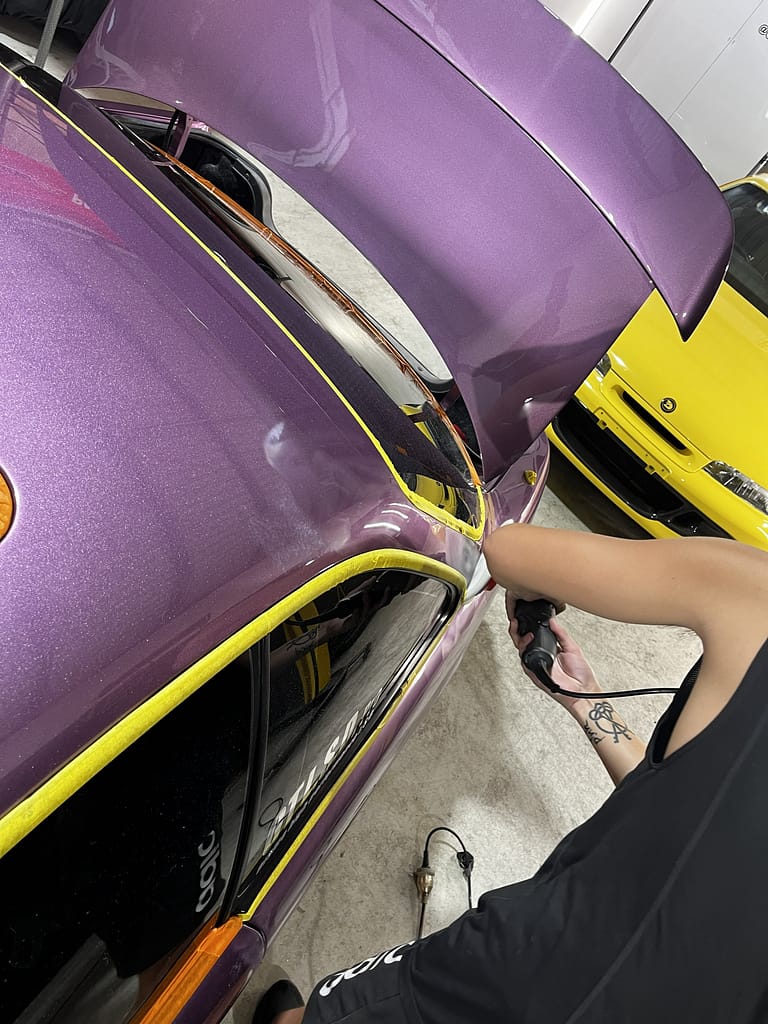
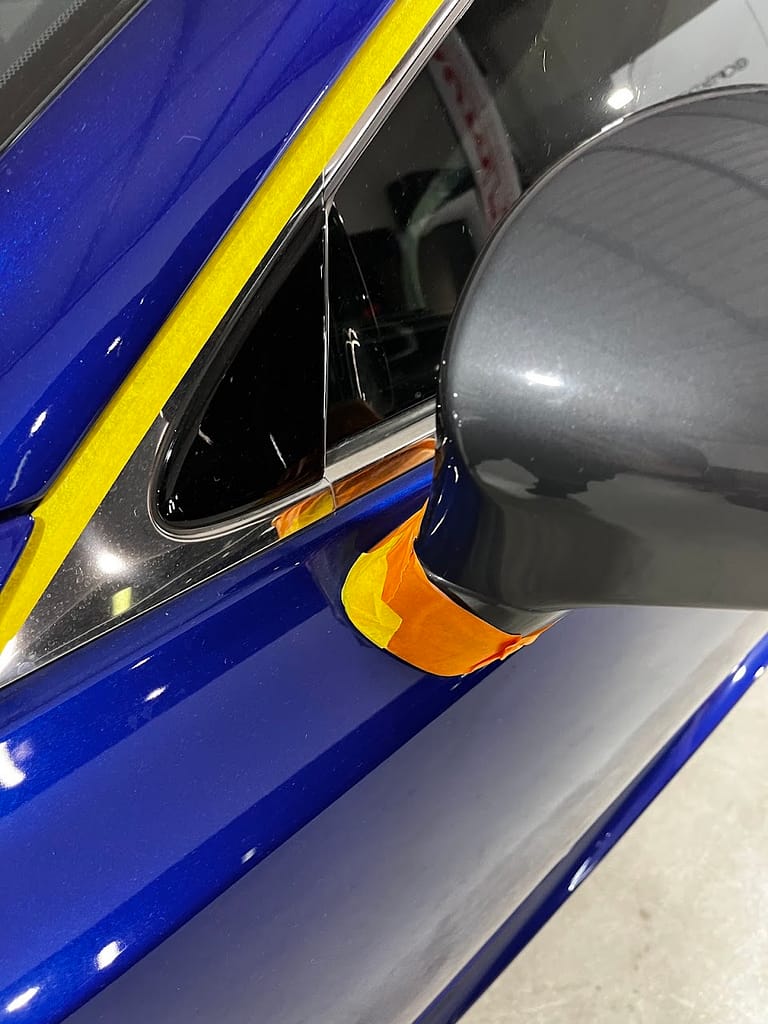
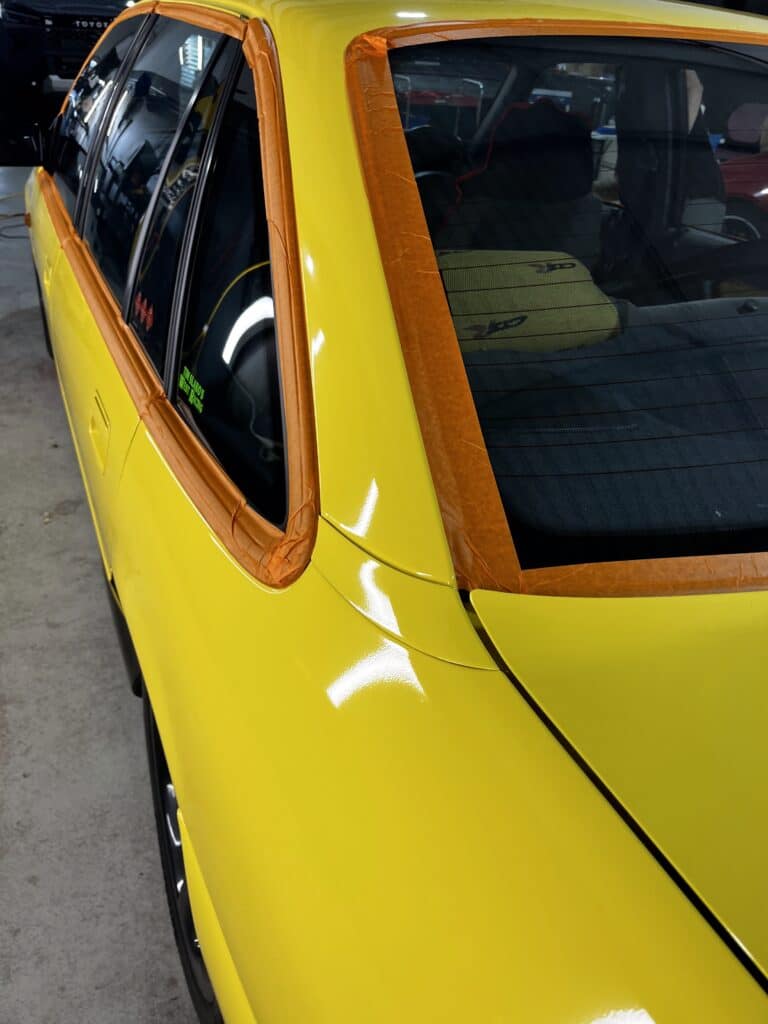
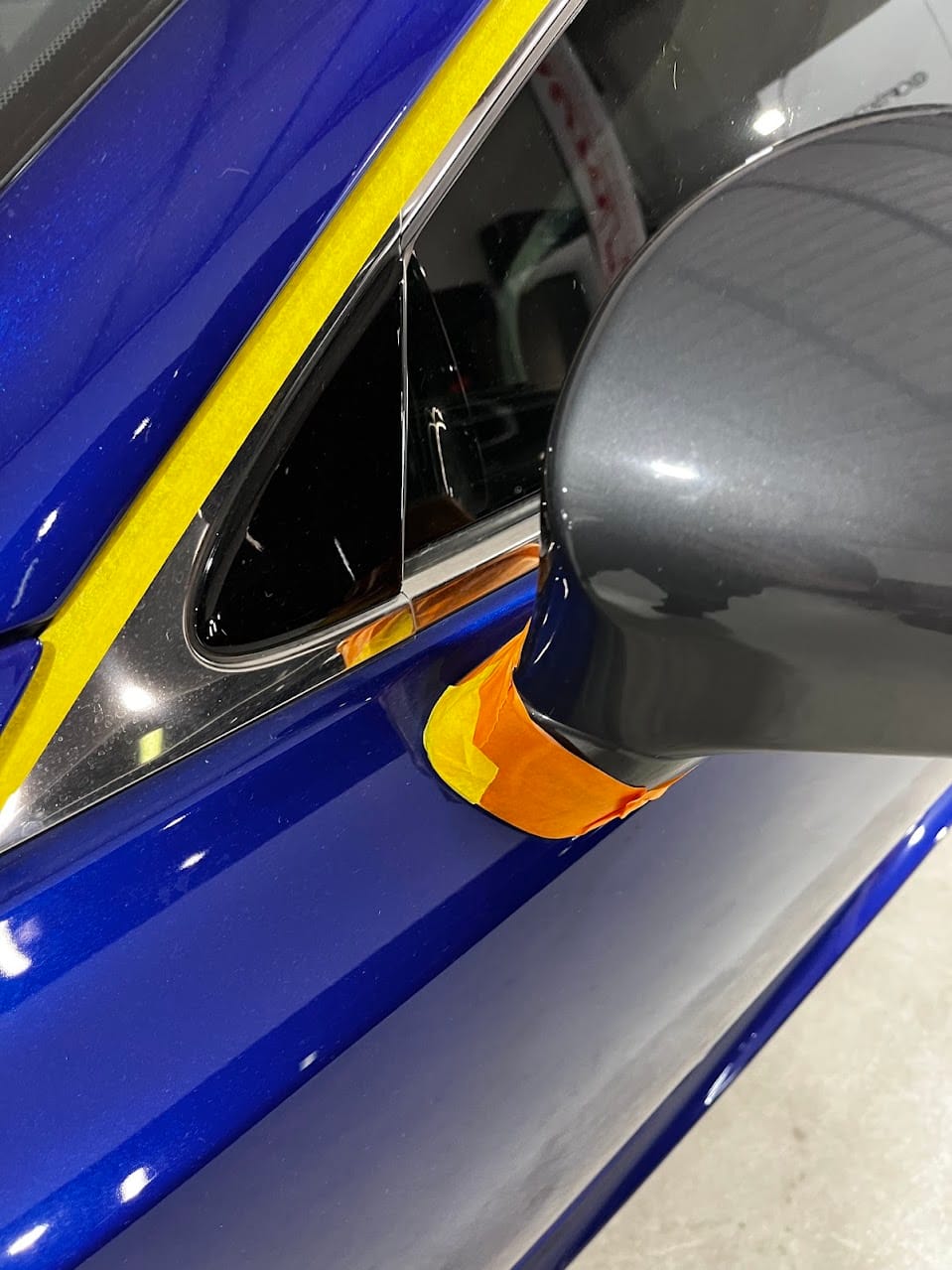
Masking tape is used to protect vulnerable areas such as textured plastics, rubber seals, badges, sharp edges and adjoining panels. It also provides the person polishing with a clear visual boundary between the painted surface and an area that should not be touched by the polishing pad.
If the tape lifts while the machine is operating, the area it was intended to protect becomes exposed. Compound may stain porous plastic trim, a polishing pad could catch an edge, or loose tape can move around and interfere with the work.
These situations do not automatically mean that serious damage will occur, but they introduce avoidable risk and unnecessary cleaning. Trying to push wet tape back down is also rarely a reliable solution. Once its adhesive has been contaminated by water, polish or dust, it will normally not hold with the same confidence.
Replacing loose tape during polishing takes considerably longer than drying the vehicle correctly before the masking process starts.
Where water normally remains hidden
After washing and rinsing a vehicle, we pay particular attention to areas that commonly retain water, including:
- Badges and emblems
- Door mirrors and mirror bases
- Door handles
- Window rubbers and exterior trims
- Fuel-filler doors
- Headlights, taillights and grilles
- Panel joins and body mouldings
Compressed air or a suitable vehicle dryer helps move trapped water out of these areas. We then allow enough time to see whether any further moisture appears before applying the masking tape.
On a vehicle with numerous trims, badges or complicated panel gaps, complete drying can take longer than people expect. It may not look like a major part of the job, but it helps the following correction stages proceed properly.
Preparation is part of paint correction
Paint correction is not simply a matter of choosing an aggressive compound and attempting to remove every visible mark. The preparation helps determine how safely and consistently the polishing can be completed.
Clean paint allows us to inspect its true condition. Complete drying helps the masking tape adhere securely. Careful masking protects the areas that should not be polished. Only then can suitable pads, compounds and machine-polishing stages be selected for that particular vehicle.
This is also why a proper paint-correction quote cannot always be based purely on the vehicle’s make, model or size. Two vehicles of the same model may require very different amounts of preparation due to their condition, design, previous repairs and the amount of water retained around their trims.
Taking the extra time before polishing
Blow-drying is not the most exciting stage of a correction job, and it will probably never be the photograph that attracts the most attention online. It is still one of the workshop habits that supports a safer and more consistent result.
At AutoFX WA in O’Connor, we would rather spend the extra time removing trapped water and applying the masking tape properly than repeatedly stop during polishing to replace tape that has lifted.
It is a simple example of why the work completed before correction is just as important as the polishing itself. Preparation does not create the dramatic before-and-after comparison, but it gives us the controlled working environment needed to achieve it.
If your vehicle has washing marks, scratches, oxidation or other paint defects, learn more about our professional paint correction in Perth. We can inspect the paint, explain what level of improvement is realistic and recommend an appropriate approach for its condition.
You can also contact AutoFX WA for an inspection and quote.