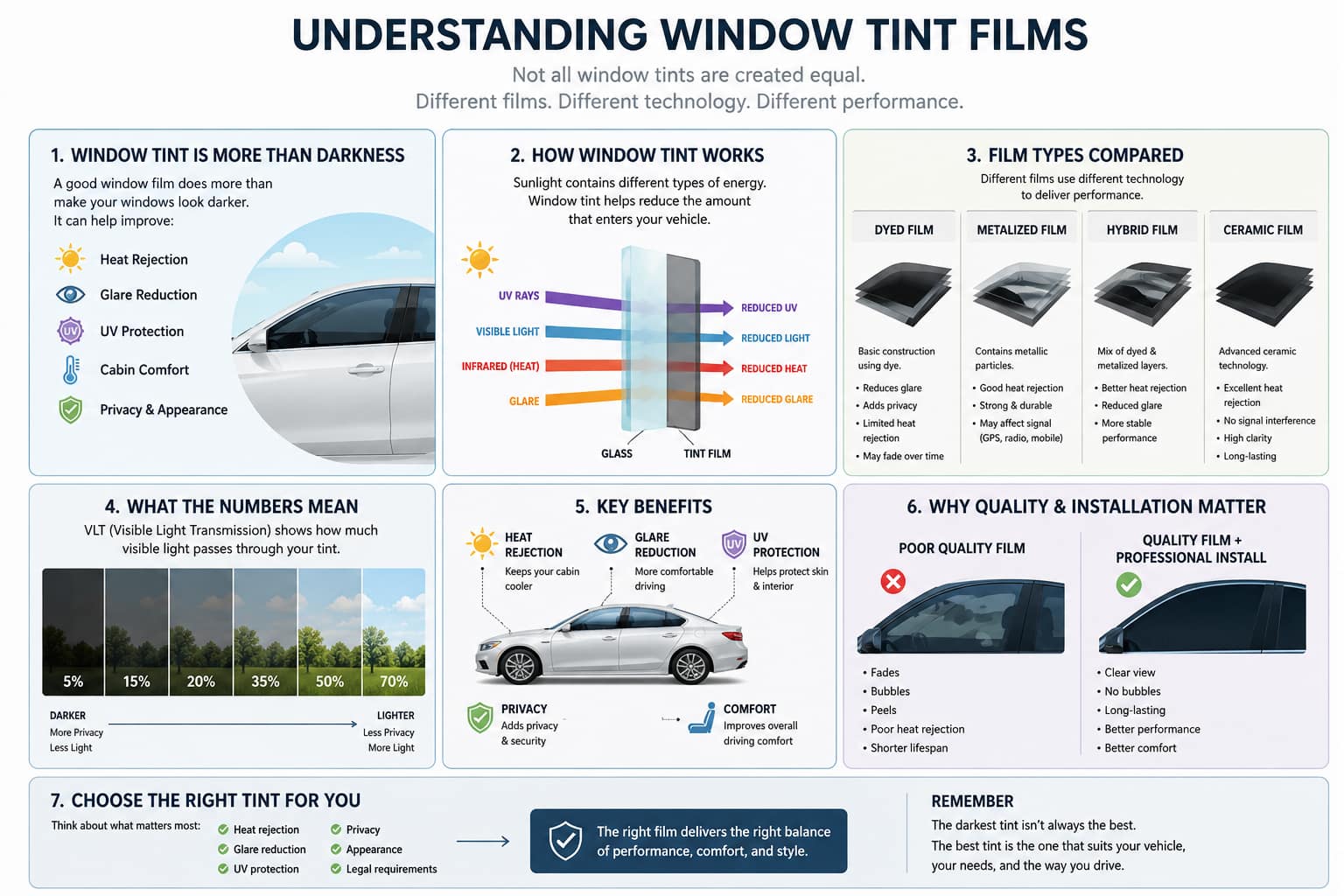
Window tint is often misunderstood.
Many people think tint is only about making the glass darker. Darkness is part of the conversation, but it is not the whole story.
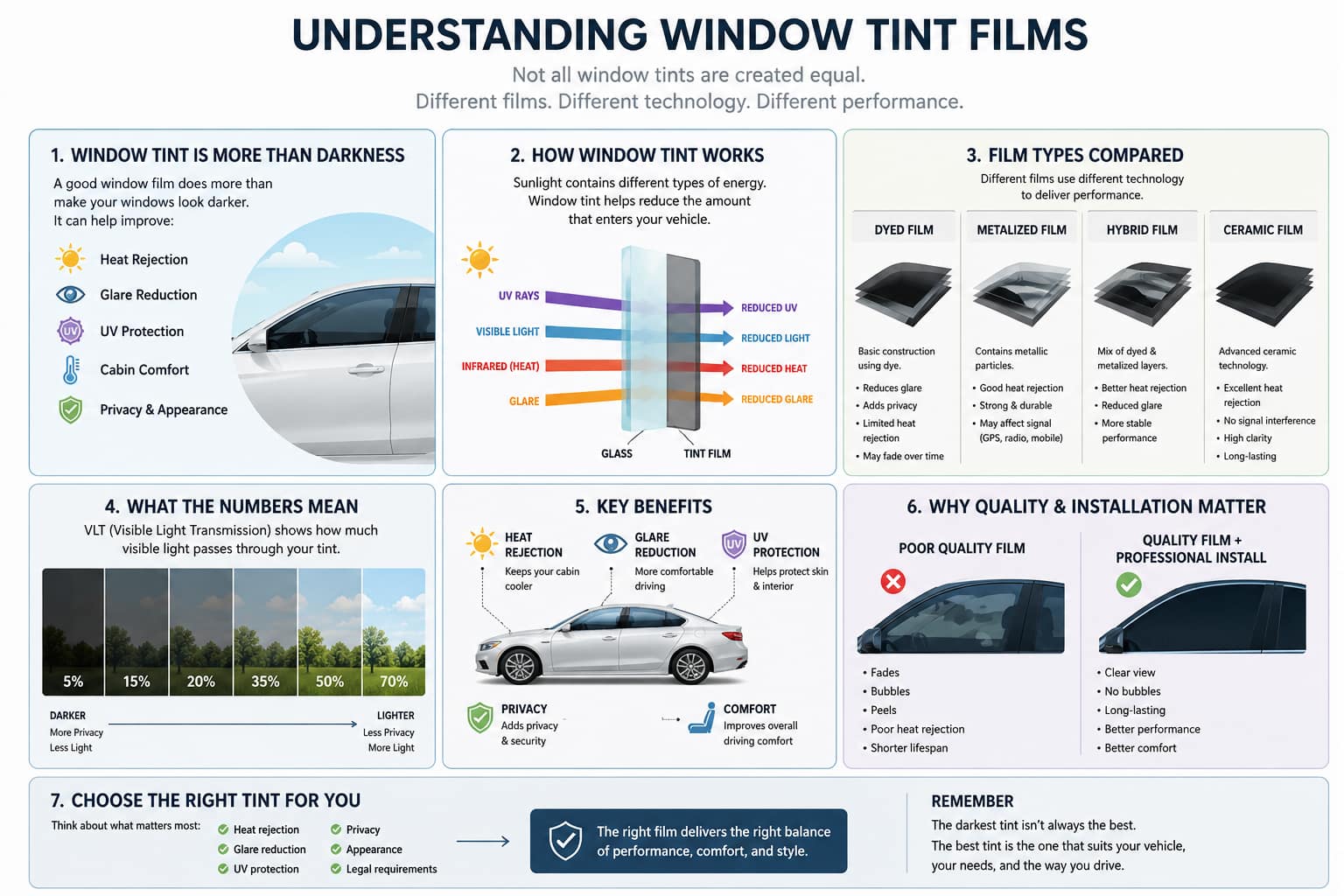
A good window film can help reduce glare, improve comfort, block UV, reduce heat entering the cabin and give the vehicle a cleaner finished look.
However, not all window tint films are the same.
Different films are made with different materials and different technology. Some are basic dyed films. Some are hybrid films. Some use metalised layers. Others use ceramic technology to help control heat without relying on a metallic construction.
This is why the film choice matters.
Window Tint Is Not Just About Darkness
The darkest tint is not always the best tint.
Some people choose window tint mainly for appearance. Others want more comfort, less glare or better heat control. In many cases, the best film is the one that gives the owner the right balance of appearance, comfort and legal compliance.
A darker film may reduce visible light, but that does not automatically mean it is the best at controlling heat.
Heat rejection depends on the film technology, not just how dark the film looks.
This is where ceramic tint has become popular. It can offer strong performance while still keeping the vehicle looking clean and practical.
What VLT Means
VLT stands for visible light transmission.
In simple terms, it describes how much visible light passes through the glass and tint film.
A lower VLT number means a darker film. A higher VLT number means more light passes through.
For example, a very dark film allows less light through than a lighter film. However, VLT only explains visible darkness. It does not tell the full story of heat rejection, UV protection or overall comfort.
This is why two films with similar darkness can perform differently.
Legal Tint Matters
Window tint needs to stay within the legal requirements for the vehicle and the windows being tinted.
The rules can vary depending on the location of the glass and the type of vehicle. Because of this, tint choice should not be based only on what looks darkest.
A good tint choice should suit the car, the owner’s preference and the legal limits that apply.
There is no value in choosing a film that creates problems later because it is too dark or not suitable for the vehicle.
Dyed Window Tint Films
Dyed window tint is usually one of the more basic film types.
It can make the glass darker and reduce some glare. However, cheaper dyed films may not offer the same heat control or long-term stability as better film technology.
Over time, lower-quality dyed films can fade, change colour or lose performance.
This does not mean every dyed film is bad. It simply means the owner should understand what they are choosing and why a higher-quality film may be better for long-term use.
Metalised And Hybrid Films
Some window films use metallic layers or hybrid construction to help with heat rejection and durability.
These films can perform well, but metallic films may not suit every vehicle or customer. In some cases, metallic construction can create concerns around signal interference with antennas, GPS, mobile reception or other electronic systems.
This depends on the film and the vehicle.
Modern vehicles have more electronics than older cars, so the construction of the film matters more than many people realise.
Ceramic Window Tint Explained
Ceramic window tint is designed to offer good heat rejection without needing a metallic film construction.
This is one of the reasons ceramic tint is often chosen for modern vehicles.
It can help reduce heat entering the cabin, reduce glare and improve comfort while keeping a clean appearance. It can also be a good option for drivers who want performance without choosing the darkest possible film.
Ceramic tint is not magic, and it does not remove all heat from a parked car.
However, it can make the vehicle more comfortable and reduce some of the heat load that comes through the glass when compared with lower-quality film options.
IR Rejection And Heat Control
IR stands for infrared.
Infrared energy is one of the parts of sunlight that contributes to the heat you feel through glass.
Many window tint films advertise IR rejection because it is linked to heat control and cabin comfort. However, it is important to understand that film performance should be looked at as a whole.
IR rejection is useful, but it is not the only number that matters.
The overall film quality, visible light transmission, UV protection, total solar energy rejection and the way the film performs in real conditions all matter.
UV Protection
UV protection is another important part of window tinting.
UV light can contribute to fading, ageing and deterioration of interior materials over time. Leather, vinyl, plastics, fabrics and trims can all be affected by long-term sun exposure.
A quality window film can help reduce UV entering through the glass.
This does not mean the interior becomes immune to ageing. Perth sun and heat are still harsh. However, UV reduction is one part of helping the cabin stay better protected over time.
For interior cleaning and protection, see Leather Cleaning And Interior Care Perth.
Glare Reduction
Glare reduction is one of the most noticeable benefits of window tint.
Bright sunlight, reflections from the road and glare from surrounding vehicles can make driving less comfortable. A suitable window film can help soften that glare and make the cabin feel more settled.
This is not only about comfort.
Less glare can also make the driving experience feel calmer, especially in bright Perth conditions.
Cabin Comfort
Window tint can help improve cabin comfort, especially when the vehicle is being driven in strong sunlight.
A good film can reduce some of the heat coming through the glass and make the interior feel more comfortable for the driver and passengers.
It is important to keep expectations realistic.
No window tint will stop a car from getting hot if it is parked in the sun for hours. Heat can still build inside the cabin.
However, a better film can help reduce heat transfer through the glass and improve comfort once the vehicle is being used.
Why Film Choice Matters On Modern Cars
Modern cars are different from older cars.
They often have more electronics, more sensors, more complex glass shapes and more interior materials that can be affected by heat and UV over time.
This is why tint choice should be made carefully.
The film needs to suit the vehicle, the glass, the owner’s expectations and the legal requirements.
A cheap film may look fine on day one, but the long-term result depends on film quality, installation quality and how the vehicle is used.
Installation Still Matters
A quality film still needs proper installation.
Poor installation can leave contamination, bubbles, poor edges, lifting, creases or an uneven finish. Even a good film will not look right if it is installed badly.
Window tinting needs clean preparation, careful cutting, correct fitting and proper finishing around the edges.
The film is important, but the installation process is just as important.
Ceramic Tint And Vehicle Protection
Ceramic tint can be part of a broader vehicle protection package.
Some owners choose ceramic coating for the paint, glass coating for exterior glass, interior protection for leather and trim, and window tint for heat, glare and UV control.
Each product does a different job.
Ceramic paint coating helps with gloss, slickness and easier washing. Interior protection helps suitable cabin surfaces stay easier to clean. Glass coating helps exterior glass with water behaviour. Window tint helps with comfort, glare and UV through the glass.
They are not the same product, but they can work together as part of a practical protection plan.
For current paint protection options, see Ceramic Coating Perth.
Do You Need The Darkest Tint?
Not always.
Some owners want the darkest legal appearance. Others want a cleaner factory-style look with better heat control. Some people care more about comfort than privacy.
The right tint depends on the vehicle and the owner.
A good film choice should consider appearance, comfort, legal limits and long-term performance.
That is usually better than choosing a film only because it looks dark.
Why This Page Still Matters
This older AutoFX WA page is still worth keeping because the subject is still relevant.
Customers still hear terms like ceramic tint, nano ceramic, IR rejection, UV protection, darkest legal tint and heat rejection. However, those terms can be confusing without a plain-English explanation.
The product names and film technology have changed over time, but the basic lesson remains the same.
Window tint is not just about colour.
It is about comfort, appearance, protection, legality and choosing the right film for the vehicle.
A Practical Way To Choose Window Tint
The best way to choose window tint is to start with the result you actually want.
Do you want a darker appearance?
Do you want better heat control?
Do you want less glare?
Do you want to help protect the interior from UV?
Do you want a film that suits a modern vehicle with electronics and antennas?
Once those questions are answered, it becomes easier to choose the right film.
A good tint choice should be practical, legal and suited to the way the vehicle is used.
Related AutoFX WA Services
Window tint can work alongside other protection services such as Ceramic Coating Perth for paint gloss and easier maintenance, Leather Cleaning And Interior Care Perth for cabin cleaning and interior protection, Car Detailing Perth for full vehicle presentation, and Car Care Products Perth for aftercare products.
Final Thoughts
Window tint is more than dark glass.
A good film can help with glare, comfort, heat control, UV reduction and the overall feel of the vehicle.
Ceramic tint has become popular because it can offer strong performance without relying on a metallic film construction. However, the best choice still depends on the vehicle, the owner’s expectations and the legal requirements.
The aim is not simply to make the car darker.
The aim is to choose a film that looks right, performs well and suits the way the vehicle is used.