The short answer for Cockburn drivers
What ceramic coating actually does
A professional coating bonds to the clear coat after decontamination and paint preparation. Its slick, water-repellent surface helps dirt, road film, bird droppings, insect residue, and mineral deposits release more readily during careful washing. That means less aggressive scrubbing and wiping, which are common causes of fine wash marks. The visible result is usually deeper gloss and paint that stays cleaner between washes, provided maintenance remains sensible. A coating is protection, not permission to neglect the vehicle.
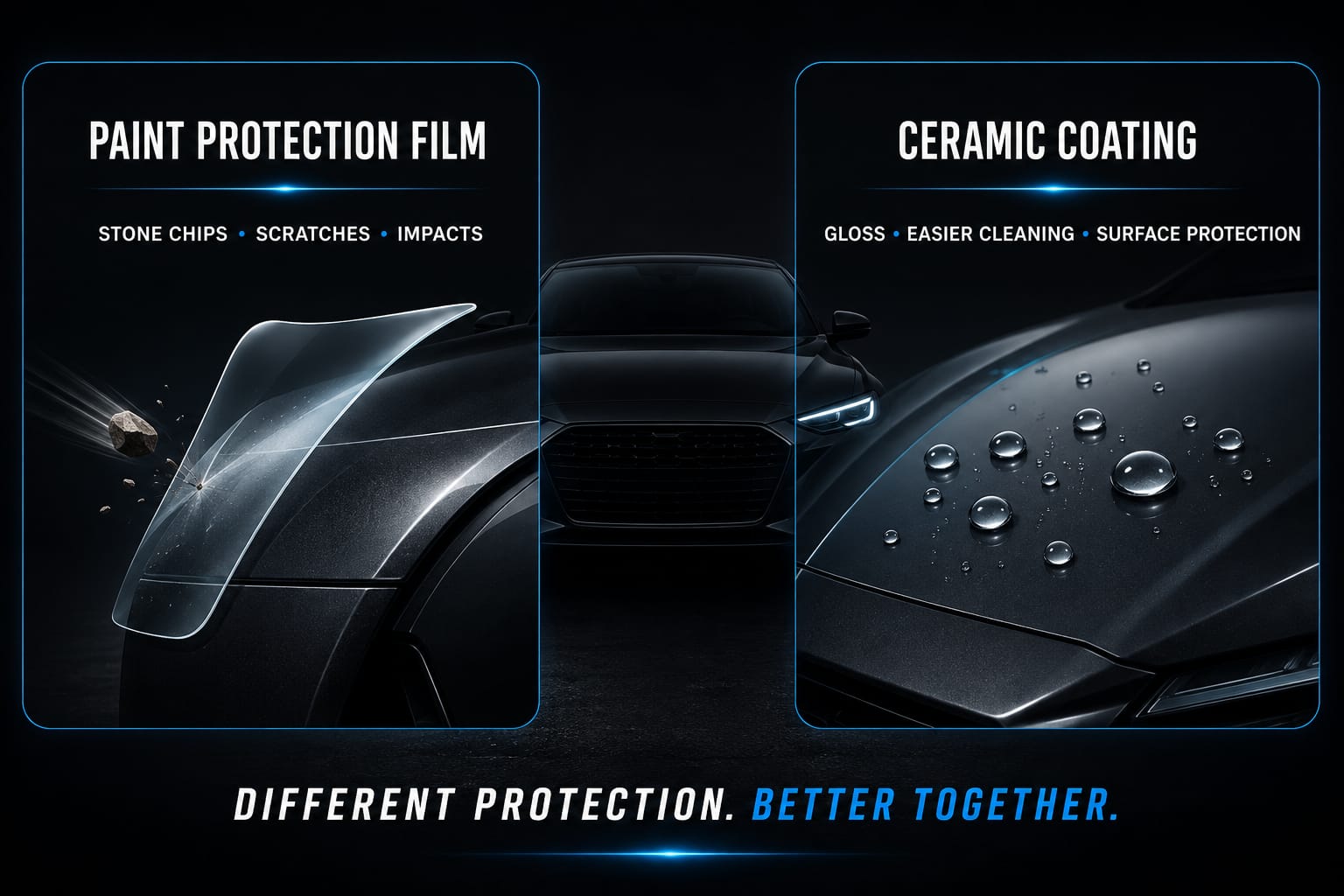
Ceramic coating, paint protection film, or both?
These options solve different problems. Ceramic coating helps with cleaning, gloss, and environmental contamination. Paint protection film, often called PPF, adds a physical sacrificial layer for areas exposed to chips and abrasion. A driver doing frequent freeway kilometres may choose PPF for the front bumper, bonnet edge, mirrors, or other high-impact zones, then ceramic coating over suitable painted and filmed surfaces.
For a garaged weekend car, careful correction and coating may be enough. For a daily vehicle parked outside near the coast, preparation, coating choice, and PPF for bonnet & roof, as well as a realistic maintenance matter more than chasing the most expensive package. Existing chips will not disappear beneath either product; they should be assessed before protection is installed.
- Choose ceramic coating when easier cleaning, gloss, and contamination resistance are the priorities.
- Choose PPF for maximum physical and best UV protection
- Combine them like bonnet, roof and spoiler in PPF then coat the rest.
Preparation determines the finish
A coating locks in what sits beneath it, so preparation is the part I never rush. The process should begin with a proper wash, chemical and mechanical decontamination where required, paint inspection, and measured correction suited to the clear coat. New vehicles can still carry transport marks, dealership wash scratches, adhesive residue, or water spotting. Older paint may need a more conservative approach, especially around thin edges, previous repairs, badges, and textured trim. Good preparation aims for improvement without needlessly removing clear coat.
Questions worth asking before booking
- What paint inspection and correction are included in the quoted price?
- Which panels, trim, wheels, or glass are included, and which are optional?
- How long must the vehicle remain dry while the coating cures?
- What washing products and method should be used afterwards?
- How will existing chips, touch-ups, repainted panels, or matte finishes be handled?
Living with coated paint in Cockburn
Maintenance does not need to be complicated. Wash in shade when the panels are cool, use a clean wash mitt and suitable automotive shampoo, then dry with soft, clean towels or controlled air. Avoid automatic brush washes and household detergents. If bore water, sprinklers, or sea spray dries on the surface, deal with it early rather than repeatedly polishing the marks. Cockburn’s mix of industrial fallout, freeway grime, and coastal exposure rewards regular, gentle cleaning.
Watch the coating’s behaviour rather than relying only on beading. Slow drying, stubborn traffic film, or rough paint may indicate contamination rather than coating failure. A maintenance wash or decontamination can often restore performance, but random abrasive polishes may partly remove the coating.
Get the protection matched to your car
There is no single package that suits every Cockburn vehicle. The sensible next step is to inspect the paint, discuss where the car is parked and driven, and decide whether coating, targeted PPF, or a combination fits the risks and budget. AutoFX WA works from O’Connor, convenient for drivers across Fremantle, Melville, Cockburn, and surrounding suburbs. Bring honest details about previous repairs, washing habits, outdoor parking, and the finish you expect. That conversation is more useful than choosing from a product name alone.
We can then explain the preparation required, what each option will and will not do, and how to maintain the result after collection, without sales theatre.