Car Detailing Courses Perth – AutoFX WA Training History
This page was originally created for a 2018 AutoFX WA detailing course.
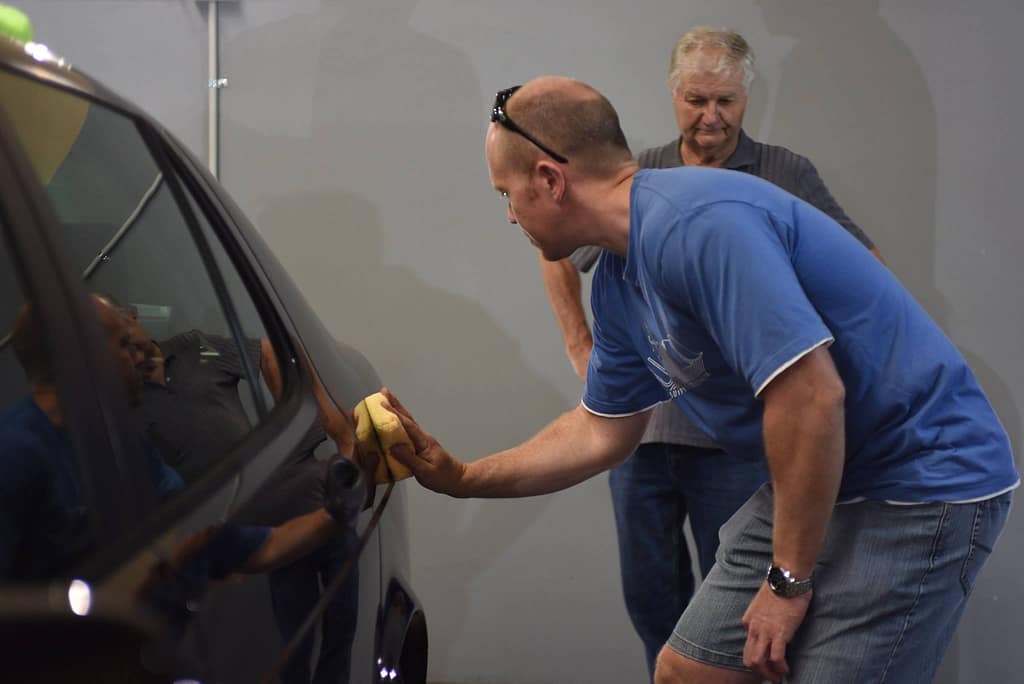
It has now been updated as a training-history and education page to show the foundation skills behind proper car detailing, safe washing, clay decontamination, interior cleaning, machine polishing, paint correction and paint protection.
The old course was structured around three main learning stages.
Week one covered washing, interior cleaning and basic maintenance.
Week two moved into machine polishing and paint enhancement.
Week three introduced paint correction, scratch judgement and the difference between simply making paint shiny and actually correcting defects.
That structure is still useful today because the basics have not changed.
Products change.
Brands change.
Tools improve.
But the process still matters.
Why Detailing Training Matters
A lot of people think detailing is just washing a car and applying something shiny at the end.
That is not really how it works.
Good detailing is about process.
It is about using the right method for the vehicle, the right product for the surface, and the right amount of work for the condition of the car.
A bad wash can damage paint.
A dirty towel can create swirl marks.
A machine polisher used incorrectly can leave haze, holograms or even cause paint damage.
That is why training matters.
You do not need to know everything on day one, but you do need to understand the basics properly.
Week One: Safe Washing And Basic Maintenance
The first stage of the original course focused on safe washing and basic vehicle maintenance.
This is where every good detail starts.
If the wash process is poor, the rest of the detail is already compromised.
A safe wash is designed to remove dirt without dragging contamination across the paint.
That means using clean wash media, proper buckets, good towels and a method that reduces the chance of creating swirl marks.
At AutoFX WA, this is still one of the first things we explain to customers.
If you want the car to stay looking good, the wash method matters.
The Bucket Method
The old training covered a bucket system for washing.
The basic idea is simple.
One bucket is for clean wash solution.
One bucket is for rinsing the wash mitt.
A separate wheel bucket can be used for wheels because brake dust and road grime should not be introduced back onto the paint.
This helps reduce the chance of scratching.
It does not make washing risk-free, but it gives you a much better system than using one dirty bucket for the whole car.
That is where many swirl marks begin.
The damage often happens during normal washing, not during some big accident.
Wheels First
Wheels should normally be cleaned before the body.
They are usually the dirtiest part of the car.
Brake dust, road grime, iron contamination and dirt can build up heavily on wheel faces, barrels and around wheel nuts.
Using separate brushes and wash media for wheels is important.
You do not want brake dust and wheel grime transferred onto the paint.
For vehicles that are harder to clean, wheel protection or ceramic coating on suitable wheel surfaces can also help make future cleaning easier.
Clay Decontamination
The course also covered clay decontamination.
Clay is used when the paint feels rough after washing.
That roughness is usually bonded contamination sitting on the surface.
Normal shampoo will not always remove it.
Clay can help remove contamination such as overspray, industrial fallout, road grime and other bonded material.
But clay needs to be used properly.
The surface needs lubrication.
The clay should be worked gently.
And the paint should be checked as you go.
Clay can improve smoothness, but it can also mark paint if used carelessly.
That is why decontamination is not just a “rub it over the car” process.
Interior Cleaning Basics
Interior cleaning was also part of the first training stage.
A proper interior clean starts with vacuuming.
Not just the obvious areas.
Carpets, mats, seat rails, vents, cup holders, door pockets, boot areas and tight corners all hold dust and dirt.
Brushes can help lift dirt from carpets and vents before or during vacuuming.
Once the loose dirt is removed, the cleaning process becomes easier.
Different surfaces need different approaches.
Leather, vinyl, plastic, fabric, carpet and glass should not all be treated the same way.
That is why product choice and technique both matter.
Interior Shampooing And Drying
Interior shampooing can be useful when carpets, mats or fabric seats are dirty.
But it needs to be done carefully.
Using too much moisture can create problems, especially in winter.
If the interior stays wet for too long, the car can develop musty smells or mould issues.
The goal is to clean the material, extract as much moisture as possible, and dry it properly.
Airflow matters.
Warmth helps.
Time matters.
In colder months, supermarket moisture absorbers can also be used inside the vehicle to help reduce dampness while the interior continues drying.
AutoFX WA does not sell those moisture absorbers, but they can be a useful, low-cost helper when used sensibly.
Week Two: Machine Polishing And Paint Enhancement
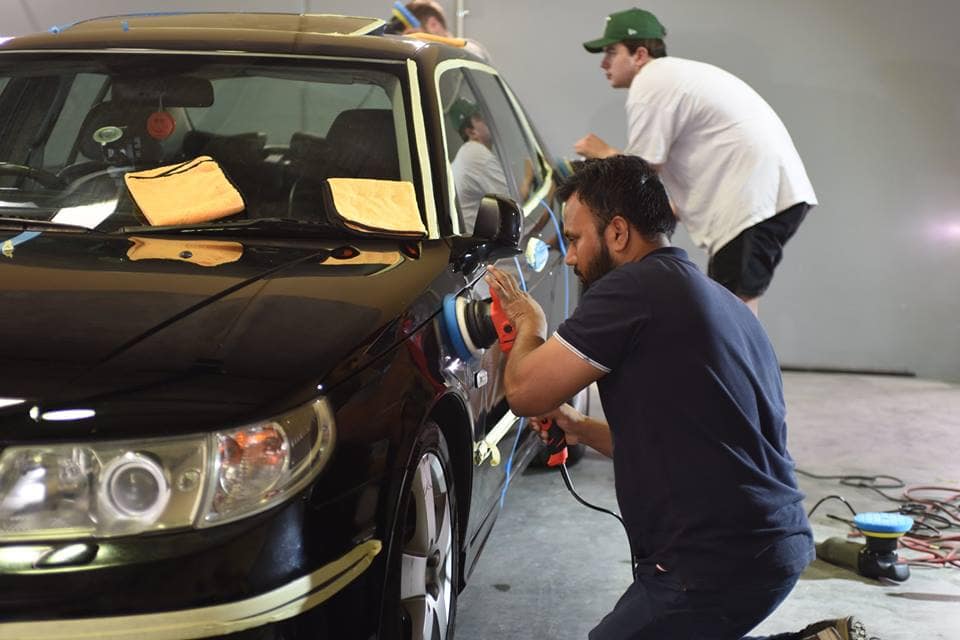
The second stage of the original course introduced machine polishing.
This is where people start to understand the difference between cleaning paint and improving paint.
Machine polishing can increase gloss, improve clarity and reduce light marks.
But it needs to be controlled.
The machine, pad, polish, pressure, speed and working time all matter.
Using the wrong pad or compound can make the paint worse instead of better.
This is why we explain polishing as a skill, not just a product.
Paint Enhancement Is Not Always Paint Correction
This is an important point.
Paint enhancement and paint correction are not the same thing.
A paint enhancement is usually a lighter polish designed to improve gloss and reduce some lighter defects.
It can make a car look much better without chasing every mark.
Paint correction goes further.
Paint correction is more focused on removing or reducing swirl marks, scratches, haze, oxidation and machine polishing defects.
That often takes more time, more testing and more stages.
For many cars, paint enhancement is enough.
For others, proper correction is needed.
The right choice depends on the vehicle, paint condition, customer expectations and budget.
For current services, see AutoFX WA’s Paint Correction Perth page.
Choosing Pads And Polishes
Polishing is not one-size-fits-all.
A softer paint may need a different approach to a harder paint.
A dark colour may show haze more easily.
A heavily marked car may need more cut.
A well-kept car may only need a light finishing polish.
The pad and polish combination should be tested before doing the whole car.
That test section tells you how the paint is responding.
It also helps avoid doing unnecessary work.
A good result is not always about cutting harder.
It is about getting the best improvement with the least unnecessary paint removal.
Protecting The Paint After Polishing
Once the paint has been polished, it should be protected.
Freshly polished paint usually looks better and feels smoother, but it is also exposed if nothing is applied afterwards.
Protection can be simple or more involved, depending on the job.
Some vehicles may suit a wax or sealant.
Some may benefit from a modern ceramic coating.
Some may need paint protection film in high-impact areas.
The key is to match the protection to the vehicle.
A daily driver, classic car, 4WD, weekend toy and prestige vehicle may all need different advice.
For current protection options, see AutoFX WA’s Ceramic Coating Perth page.
Week Three: Paint Correction Basics
The third stage of the original training covered paint correction.
This is where the work becomes more serious.
Paint correction is not just polishing until the car looks shiny.
It involves understanding defects, paint depth, polishing stages, pad choice, compound choice and how far it is safe to go.
Not every scratch can be removed safely.
Not every panel should be cut aggressively.
Some defects are too deep.
Some paint is too thin.
Some cars have previous repairs.
That is why judgement matters.
Understanding Scratch Depth
Before trying to remove a scratch, you need to understand what you are looking at.
Some marks are light surface marring.
Some are swirl marks.
Some are deeper scratches.
Some are through the clear coat.
If a scratch is too deep, chasing it can do more harm than good.
The paint only has so much clear coat.
Once too much is removed, you cannot polish it back on.
This is why proper paint correction requires judgement, not just confidence.
Sometimes the right answer is to improve the scratch, not completely remove it.
Cutting And Refining
Paint correction usually involves stages.
A heavier cut may be used to reduce deeper marks.
A refining stage may then be needed to remove haze or polishing marks left from the cutting stage.
The goal is not just defect removal.
The goal is clarity.
If the finish is hazy, hologrammed or uneven, the job is not finished.
A corrected panel should be checked under proper lighting before moving on.
This is where time and patience matter.
Lighting And Inspection
You cannot correct what you cannot see.
Good lighting is essential during polishing and paint correction.
A car can look good in shade and still show swirl marks in direct light.
Workshop lighting helps reveal defects, haze and missed sections.
Inspection is part of the process.
It should not be left until the end.
Panel by panel, the finish needs to be checked so the job stays controlled.
Why Safe Washing Supports Paint Correction
There is no point correcting paint if the car is going to be washed badly afterwards.
Safe washing keeps the correction result looking better for longer.
Poor washing can put swirl marks straight back into the paint.
That is why the training structure started with washing before moving into polishing and correction.
The foundation matters.
Wash properly.
Dry properly.
Use clean towels.
Avoid dragging dirt across the paint.
That is how the finish is maintained after the hard work has been done.
Where OPTIX Fits Today
AutoFX WA’s product direction has changed since the original 2018 course page.
Today, our current direction includes OPTIX products and coating systems.
The philosophy is still the same though.
The product needs to suit the job.
For after-wash maintenance on suitable vehicles, OPTiX Final Boost can help improve slickness, water behaviour and drying ease.
For ceramic coating work, products such as OPTIX OP888, FMJ Graphene and OP1 may be used depending on the vehicle and customer expectations.
But the product is never the whole answer.
The process matters first.
Training History And Current Services
This page is kept because it shows AutoFX WA has a long history of teaching and explaining detailing properly.
It is not just about doing the job.
It is about understanding why the steps matter.
Safe washing helps prevent damage.
Clay decontamination helps smooth the surface.
Polishing improves gloss and clarity.
Paint correction removes or reduces defects.
Protection helps maintain the finish afterwards.
That is the same thinking behind AutoFX WA’s current services.
Related AutoFX WA Services
For careful vehicle cleaning and presentation, see Car Detailing Perth.
For swirl marks, haze, oxidation and polishing defects, see Paint Correction Perth.
For longer-term gloss, slickness and easier maintenance, see Ceramic Coating Perth.
For physical stone chip protection, see Paint Protection Film Perth.
For coating maintenance after washing, see OPTiX Final Boost.
Final Thoughts
This old 2018 detailing course page still has value, but not as an outdated course notice.
It is now better used as a training-history and education page.
The basics are still important.
Wash safely.
Decontaminate properly.
Polish with control.
Understand the difference between enhancement and correction.
Protect the finish after polishing.
And most importantly, do not rush the process.
Good detailing is not just about products.
It is about technique, judgement and knowing what the vehicle actually needs.